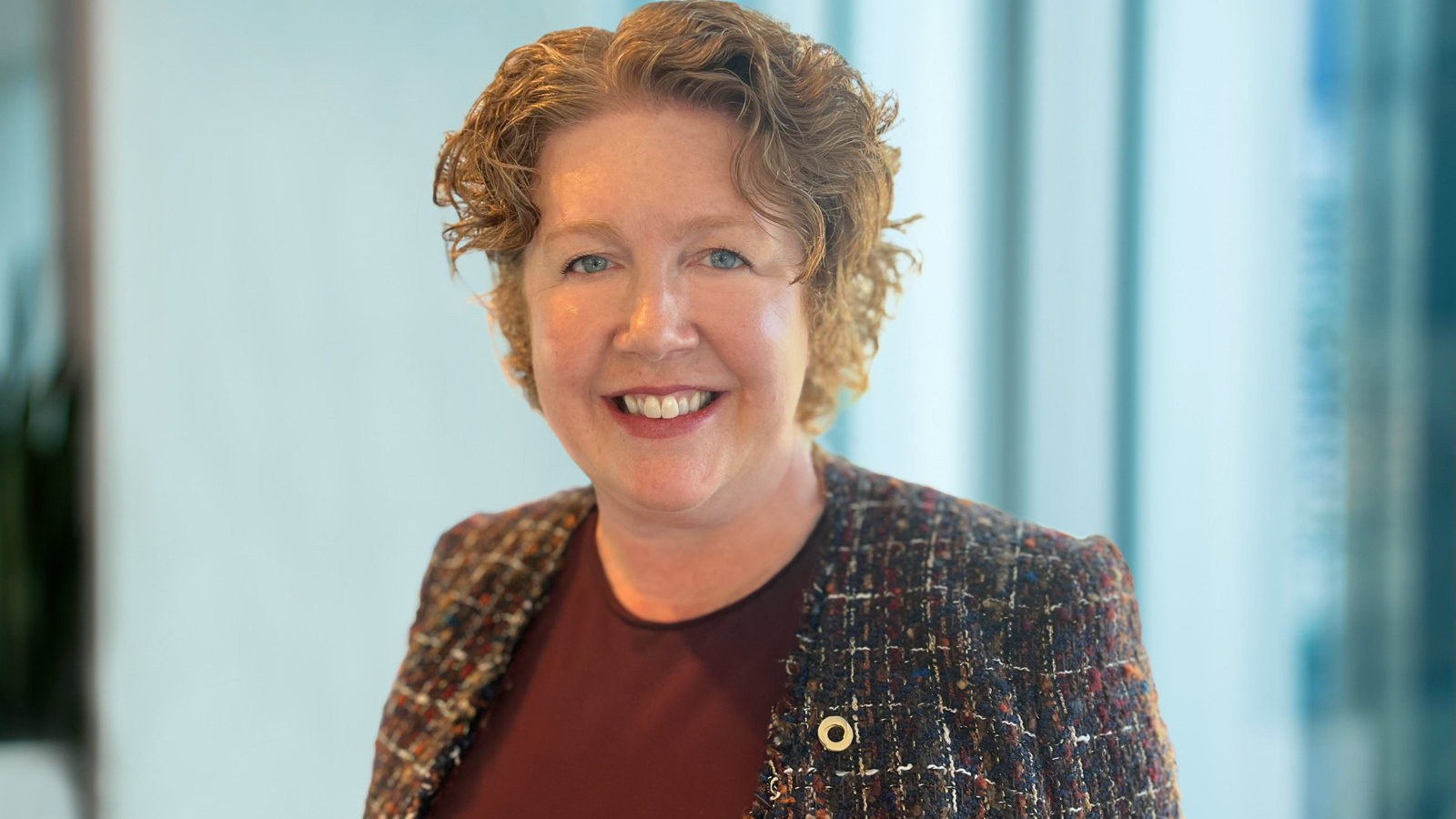
Katharine Preston: ‘climate is an integrated part of OMERS’ portfolio, not a trade-off’
Net Zero Investor sat down with Ontario Municipal Employees Retirement System (OMERS) to explore how the C$133bn fund is approaching the energy transition
A year after the launching its climate action plan, OMERS, the defined benefit fund investing on behalf of Ontario municipal employees, has reported a 52% carbon intensity reduction, exceeding its target of halving its portfolio’s carbon footprint by 2030.
As part of its climate plan, the C$133.6bn fund has also committed to investing $30bn in “green investments” by 2030, with an overall ambition for its portfolio and operations to be net zero by 2050.
“When it comes to climate, it’s an integrated part of our portfolio… as opposed to a trade-off,” explains Katharine Preston, vice president of sustainable investing at OMERS.
Sitting down with Net Zero Investor, Preston states that OMERS has committed $21bn so far to “green investments”, using the International Capital Markets Association’s green bond principles to define “green”.
Since 2022, OMERS has also issued two sustainable bonds, with the net proceeds of outstanding sustainable bonds allocated to eligible green or social assets.
The role of nuclear
OMERS clean energy investments are primarily focused on private markets, ranging from real estate to clean technology and renewables, Preston says. A key investment is OMERS’ commitment to Bruce Power, Canada’s only private sector nuclear generator, annually producing 30% of Ontario’s power.
“OMERS has been a long-term investor in the asset, so that's been a very key part of our decarbonisation story in terms of investing locally in that asset, and the role of nuclear in reaching net zero,” Preston adds.
Nonetheless, the classification of nuclear energy as green remains a topic of debate, with interest in the energy source varying over time.
When asked whether this was a consideration when investing, Preston explains: “It's been an interesting conversation since we issued our own sustainability bond, and the views of the advisors at the time on nuclear — Is it green? Is it not green?
“And through that two-to-three-year period that followed, it went from ‘not really sure, maybe it's kind of yellow’, to now being green through the EU Sustainable Finance taxonomy and also the market’s willingness to purchase green bonds issued by nuclear energy companies.
“There seems to be a much stronger view of the role nuclear will play in decarbonisation. Yes, there are challenges around the waste, but that seems to be ongoing and well managed by the organisations involved.”
Alongside investing in climate solutions, the pension fund has also earmarked C$3bn to a transition sleeve, specifically investing in high-carbon assets in need of funding for targeted decarbonisation.
Preston states that selections for assets to make up this portfolio are currently a “work in progress”.
There seems to be a much stronger view of the role nuclear will play in decarbonisation. Yes, there are challenges around the waste, but that seems to be ongoing and well managed by the organisations involved.
Are carbon credits off the table?
The debate around decarbonising the hard-to-abate sector is ongoing, with various stakeholders pushing for different approaches, some being technology such as green hydrogen and some being carbon capture and storage.
Preston explains that OMERS does not currently count offsets or credits towards its emissions reductions but acknowledges that the “net” in net zero means that by 2050, there will have to be some removals and offsetting of emissions. “One day it's going to be part of the equation,” she says.
“As our climate action plan makes clear, carbon offsets and credits will play a role in achieving net zero but we see that as part of the last mile to net zero not the start of the journey. Our strategy remains prioritising efforts that lead to direct decarbonisation of our portfolio, by supporting companies across all sectors in their emissions and reduction efforts.
“We have wildfires burning out of control in Canada, so how do we actually define nature-based credit that is sustainable over the long term, seems to still be a large question,” she says.
Preston states that OMERS recognises the role that carbon offsets will play in addressing the decarbonisation of the hard-to-abate industry, however for the time being, offsets are not without challenges.
We are seeing “more movement” in the carbon removals space through direct air capture, explains Preston, with “OMERS making an investment in a venture sized company called Deep Sky that is building a pilot plant in Canada to help with that.”
Oil and gas stance
Recently, some Canadian pension funds have come under fire for continuously investing in fossil fuels, being hit with greenwashing claims.
In a recent Canadian Pension Climate Report Card by Shift Action, there was some criticism that Canada’s pension funds are “clinging to the myth” that investing in oil and gas is consistent with a safe climate future.
Preston states that on the private asset side, OMERS has not made any investments in an “oil and gas related asset in some years”. However, where those investments tend to be is in public markets to “capture the shorter-term upside, but it is an ongoing conversation”, Preston says.
“When we started down this journey, we didn't have an exclusion related to fossil fuels, but as part of the climate action plan, we did implement a thermal coal exclusion policy. So, as we look to the future, recognising that coal is less of a part of that,” she adds.
The policy excludes direct investment in companies generating over 25% of their revenues from thermal coal.
When asked whether OMERS would consider divesting from oil and gas in the future, Preston explains: “We haven't divested oil and gas to date. I think it's an example of where we may pivot based on what's happening in the market. Using our thermal coal exclusion as an example of that, to say where we think it makes sense. That is something we may consider, but at this time, we haven't taken that step."
Finishing off the interview, Preston says: “We are making good progress when it comes to sustainable investing and I’m proud to have been part of that work since 2019. We are focused on the future and achieving net zero by 2050.
“It is great to see progress being made and that has really accelerated with our climate action plan which we introduced last year."
More news from OMERS:
OMERS, CDPQ and Wiltshire invest in emerging market transition debt