Could legal challenges block the EPA’s move to roll back greenhouse gas rules?
To discredit the endangerment finding on legal grounds, the EPA must first accept emissions are a ‘major’ issue
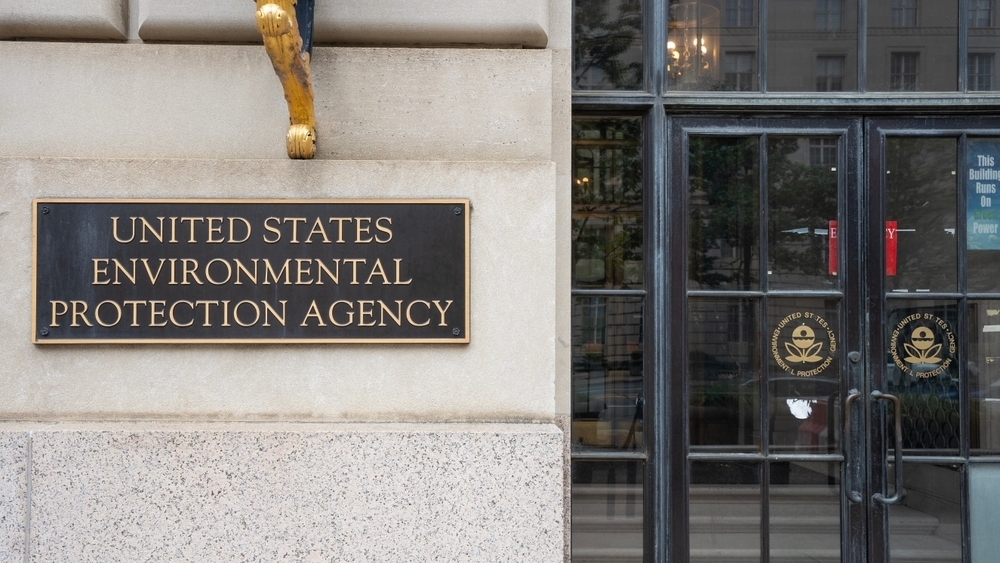
The EPA's 'endangerment finding, which links greenhouse gas emissions to public health risks, often dubbed “The Holy Grail of the climate change religion” was eliminated by US Environmental Protection Agency (EPA) Administrator Lee Zeldin last week. The repeal has faced backlash, including from investors who fear long-term regulatory turbulence.
The move will inevitably face legal scrutiny in the days ahead. The EPA’s principal defence will likely be the ‘major questions doctrine’ – a legal tenet that begins by accepting emissions are a significant issue.
Net Zero Investor’s Renewable Infrastructure Forum | 18th March 2026 | The Chesterfield, Mayfair
Steep hill
The repeal had been several months in the making. In August last year, the agency convened public hearings on the issue. The vast majority of testimonies over four days implored the EPA to reconsider its move. Testimonies came from medical professionals, scientists, lawyers, faith groups and elected representatives.
“Science has not wavered”, said a doctor from Florida. “I believe in the science that supports the 2009 endangerment Finding. I am not alone”, quipped a Virginia resident. “It's like listening to the doctor who is working for the tobacco industry who says that smoking is good for you”, a pastor warned.
“Why jettison this critical regulatory tool?”, asked Spenser Lotz, assistant attorney general for the state of New Mexico. “If EPA's attorneys are confused, they could perhaps look at the law”, he added.
The hearings made clear just how steep of a hill justifying the repeal on scientific grounds was.
“Facing a particularly hard road on the science side, it is not surprising that EPA is trying to discredit the 2009 endangerment finding on legal grounds”, writes David Hayes, a professor at Stanford Law School.
Heyes, a former climate advisor to President Biden, says the EPA seems to be putting all eggs in one basket – the claim that it lacks authority to do what the endangerment finding asks of it.
Major questions
When the EPA’s endangerment repeal comes under scrutiny, this defence will be in the spotlight.
“The major questions doctrine will probably be the principal legal argument that the Trump administration will raise in defending the inevitable lawsuits challenging its revocation of the endangerment finding”, explains Michael Gerrard, director of Columbia Law School’s Sabin Centre for Climate Change Law.
The doctrine is a critical determinant of how, when and why America’s regulatory agencies do what they do. If an issue is a ‘major question’, the doctrine says, agencies need congressional authorisation.
Put simply, for the EPA to justify its endangerment repeal on this basis it must make the case that emissions (from mobile sources) are an ‘issue of vast economic and political significance’ – a prevalent understanding of the term.
Apart from the contrarian conclusion it leads to, Hayes notes the argument defies historical precent. “Come on! EPA has effectively worked with industry to clean up tailpipe emissions of all sorts over the past 50 plus years”, he wrote in a blog for Stanford Law School.
Crucially for the EPA to have its way, America’s highest court would need to change the way it interprets a 2007 case involving the state of Massachusetts and the EPA.
“It held that the Clean Air Act gives EPA the authority to regulate greenhouse gases if EPA finds that GHGs endanger public health or welfare. The Trump administration now wants the Supreme Court to reverse the decision or to interpret it very narrowly”, Gerrard told Net Zero Investor.
Congressman Paul Tonko, a democrat ranking member of the House Energy and Commerce Subcommittee on Environment was among those who testified back in August. He reminded the EPA of congressional intent in this regard.
“I understand that the current Administration and I have fundamental disagreements about the best ways by which to regulate greenhouse gas emissions, but there can be no ambiguity that as recently as August 2022 Congress reaffirmed the general principle of the 2009 endangerment finding”, he said.
The Congressman’s concern was also that this repeal was “part of a larger, dangerous ideological crusade by the Trump Administration to erase climate science”.
Soon, two scenarios seem likely. The EPA’s decision will have its day in court, and the major questions doctrine will be part of its defence. In so doing, a scene will be set, to determine just how significant of an issue GHG emissions ultimately are.
Institutional Investment Conferences & Summits from Longview Networks