Net zero supply chains: a major market for investors?
The decarbonisation of supply chains is regarded as a huge opportunity for companies to reduce their carbon exposure
A huge opportunity for investors lies in the creation of net zero supply chains. Research conducted by HSBC revealed global supply chains need $100trn of investment by 2050 if they’re to achieve net zero.
As the globe hurtles towards impending climate targets, companies have been creating strategies to reduce their carbon emissions. This focus is being increasingly brought to companies’ supply chains where areas of carbon exposure (polluting subsidiaries, shipping and trucking logistical connections etc) may be lurking.
This will be a focus for investors who want their investee companies to be net zero across the board, but how can they play a role and support these transitions?
The investment opportunities of net-zero supply chains
Within supply chains, there are areas investors can bring positive net-zero change with their capital – including new opportunities in innovative companies still working their way into major supply chains.
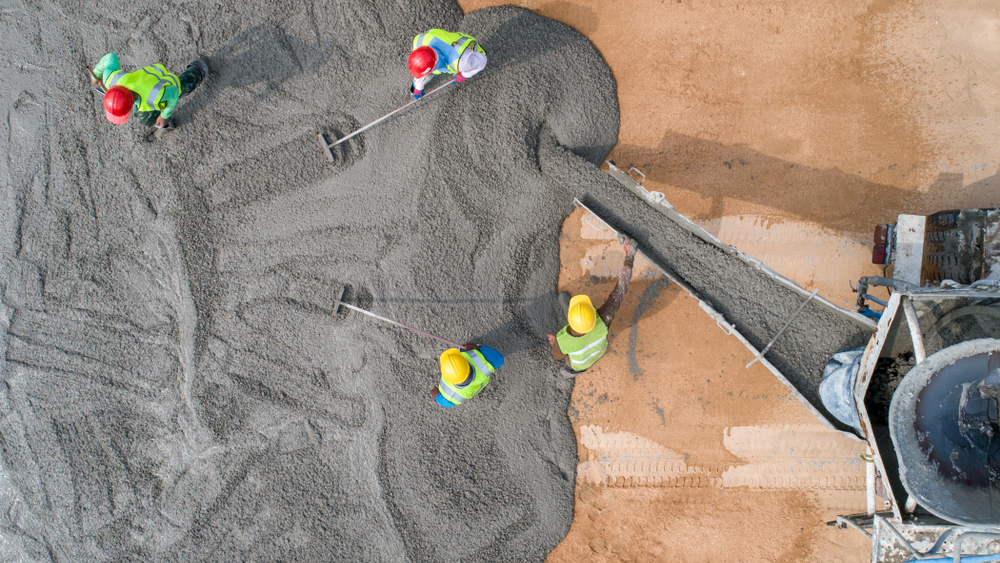
“The investment opportunity is there for companies that can supply critical materials such as steel or aluminium in a car, the cement or bricks within a house, or the steel within infrastructure, at the lowest carbon intensity,” states Martin Todd, sustainable global equity portfolio manager at Federated Hermes.
As showcased, a huge opportunity for investors could be supporting the creation of critical materials with reduced carbon emissions. Investors could support businesses that are striving to produce low carbon materials to decarbonise supply chains and increase their value.
Tal Lomnitzer, senior investment manager at Janus Henderson Investors, supports this viewpoint referencing the work the firm has made in investing in net-zero supply chains and the importance of bottlenecks.
“The greatest opportunity is in the provision of the raw materials that enable the decarbonisation process to occur, specifically metals such as lithium and copper,” he says.
“The way we think about net-zero supply chains is we start from the very earliest stage, such as obtaining the copper that goes into the cables connected to a turbine in a wind farm.
The investment opportunity is there for companies that can supply critical materials at the lowest carbon intensity.
“We seek bottlenecks within that chain because they are where excess return can be generated and excess return incentivises the capital needed to flow into the area in order to resolve the bottleneck.”
The decarbonisation of supply chains is an opportunity in itself. Investors could have a hand in producing a clear-cut plan to reduce scope 3 emissions, which Todd says accounts for around 80% of total emissions, creating an efficient supply chain that also increases profitability.
“Businesses know if they can demonstrate a more efficient supply chain, and evidence a credible plan for achieving a net zero supply chain, it can be a point of differentiation and commercial competitive advantage, as well as reducing environmental damage,” says Todd.
Challenges facing investors in making supply chains net zero
Despite the opportunities investors face in helping create net-zero supply chains, there are obstacles to overcome – with the most obvious being the sheer scale and complexity of global supply chains.
“Net-zero supply chains are challenging given the limited influence companies often have on their direct suppliers, let alone the suppliers to the suppliers,” Todd said.
“Vertical integration can help as a company can provide traceability from raw materials through to the finished product as they are less reliant on suppliers. More often though it involves greater collaboration with suppliers to co-invest and partner with them on what is typically a multi-year journey.
“Collaboration is needed because the technology required to decarbonise is often more expensive in the short-term, but with medium and long-term pay-offs.”
Businesses must select suppliers that have been able to clearly showcase a drop in their supply chains. However, to achieve this, clear disclosure and measuring of carbon emissions is required – something that is already an obstacle.
“Measuring what is going on through your tiers is a mammoth undertaking,” states Barry Middleton, partner at PwC. “It is fraught with inconsistencies, it’s very labour intensive, and some businesses might have hundreds of suppliers.”
Coralie Nore, principal consultant-sustainable procurement at Ricardo, an engineering, environmental and strategic consultancy, agrees supply chain visibility is key not only for tracking carbon emissions, but also to facilitate potential changes in regulation in the future.
“Businesses need to extend their supply chain visibility and engagement. At the beginning of the scope 3 reporting journey, it is essential to prepare for potential future changes in legislation, carbon reporting and commitments towards scope 3,” she says.