‘Tipping points could become material over five to ten years’: how USS approaches climate risk
As USS publishes its ninth TCFD report, the UK's largest private pension scheme explains why it is moving away from precise climate forecasts in favour of a greater focus on near-term tipping points, macroeconomic resilience and portfolio flexibility
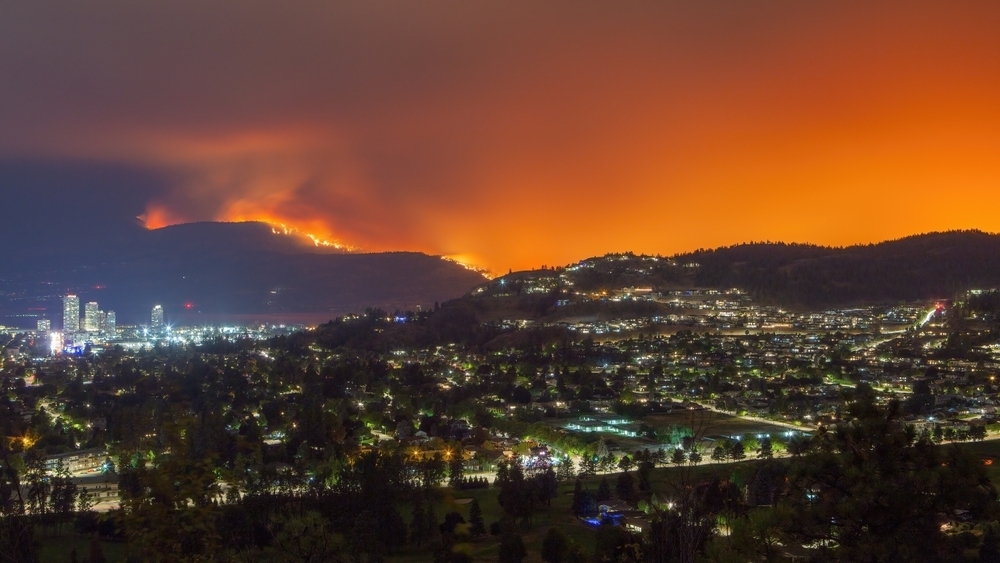
When residents of Toronto woke up one morning in July, they needed little reminding of the tangible impact of climate change. Their city was transformed by eerie orange skies and thick smoke that resembled a Martian landscape, while severe air quality warnings were issued. In the UK, wildfires have burned from the Cairngorms National Park in Scotland to County Durham, Manchester and East and West Sussex. At the height of summer, it takes little convincing that climate change is already having a visible impact.
While most of the UK's largest pension funds are now required to file TCFD reports and many disclose climate risk modelling, these often translate into abstract pathways and artificially precise forecasts, estimating that a global temperature rise of X degrees would result in portfolio values of Z. Critics argue that these seemingly precise forecasts can underestimate the potential impact of climate change.
NZI Transition and Climate Investment Conference | 22 October | London | Register here
You can't diversify away from climate change
Yet this is precisely the question USS set out to address when it first began filing voluntary TCFD reports in 2018. Today, it is filing its ninth TCFD report and the scheme's approach to measuring climate risk has undergone significant change.
USS, which now manages £79.8bn in assets, has been working with the University of Exeter for the past three years to develop a new approach to climate risk modelling.
The motivation is simple, USS Investment Management CEO Simon Pilcher explains: "We see a hot world as being a profoundly damaging world for our scheme. We think climate risk is a huge financial factor, we think it's very real indeed, and the risks to the scheme are not risks to certain assets. They're risks to all assets."
Put differently, rather than seeing climate change as a risk of individual assets becoming stranded, global warming is set to affect overall performance. "Our big risk is not that one area gets flooded or another becomes desert. The big risk is a permanent reduction in economic growth," he adds.
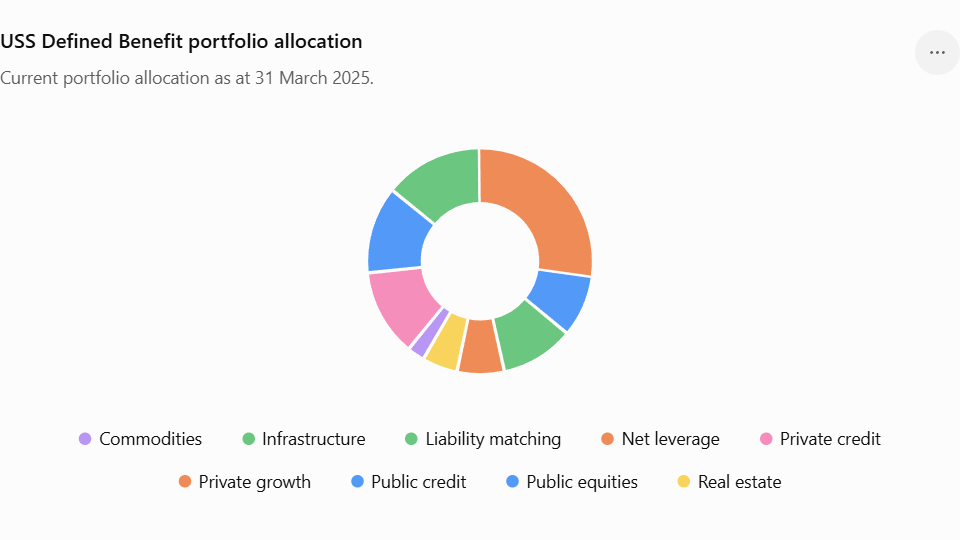
As a hybrid, open scheme, USS has a DB and DC section with liabilities stretching well beyond 2050. Its portfolio is also much more broadly diversified than the typical UK DB scheme, which tends to be closed to further accrual and invested predominantly in fixed income. In contrast, just over a third of the DB section of USS remains invested in listed equities, while the fund also has considerable exposure to private markets, with more than 10% invested in infrastructure alone. The DC section has close to 60% invested in equities and more than 12% in infrastructure.

But the portfolio impact of climate risks is too complex to translate into calculations of specific stock market corrections.
"A three-degree or a four-degree world will involve not just huge shifts in temperature and rainfall patterns, but also population movement, failed states and major changes in economic potential. It is not just certain assets that will struggle. It's almost all assets that will struggle," Pilcher warns. The corollary, he says, is that investors cannot diversify away from climate change.
A different approach
This translates into a fundamentally different approach to climate risk modelling, explains Mirko Cardinale, head of investment strategy at USS.
"Our approach differs from traditional climate risk modelling because we start with the narrative. Rather than focusing solely on climate pathways, we consider a broader set of macro drivers, including energy, technology and geopolitics," he explains.
"Instead of relying on precise forecasts, we think in terms of ranges of outcomes and their implications for portfolio construction. Across many scenarios, one recurring theme is a higher and more volatile inflation environment. We are not trying to predict exact inflation rates, but the direction of travel is enough to inform investment decisions."
"We also identify which scenarios appear more plausible, without assigning precise probabilities. AI and other tools help us monitor developments and reassess our views over time."
Another key difference from more conventional climate risk modelling approaches is the scheme's focus on the near term.
"We deliberately focus on a five-to-ten-year horizon. Looking much further ahead makes it difficult to quantify outcomes without creating a false sense of precision," he adds.
Tipping points
There is a reason why USS believes the long-term impact of climate change is harder to predict: the growing risk of crossing critical thresholds in the Earth's system, where gradual warming causes abrupt, irreversible changes that trigger self-reinforcing feedback loops.
"Physical risks are not a distant concern. We are already seeing the effects through heatwaves, wildfires and other climate-related events," Cardinale says.
"Our work with the University of Exeter highlighted the importance of focusing on near-term physical risks. Tipping points could become material over a five-to-ten-year horizon, particularly towards the end of that period, but they are extremely difficult to model with precision."
"As a result, we treat them primarily as qualitative risks. It is important to acknowledge uncertainty rather than present precise numbers that create a false sense of confidence."
Portfolio implications
But translating these insights into an investment strategy remains far from straightforward. Like many of its peers, USS has worked to decarbonise its portfolio but is increasingly coming to terms with the fact that progress on paper does not necessarily translate into lower real-world emissions, as Jayesh Shah, deputy head of responsible investment at USS, explains.
"Portfolio decarbonisation has not really aligned with where we see the biggest risk to the scheme. That's why we're placing greater emphasis on policy advocacy and on the role investors can play in encouraging the right policy environment."
Having said that, there are steps that can be taken without pinning future risks down to precise numbers, Cardinale says.
"This uncertainty reinforces the importance of diversification and flexibility. Portfolios need to be resilient to different scenarios rather than positioned for a single expected outcome."
Specific examples include inflation hedging and liquidity management.
"Market volatility can create pressure on liquidity and collateral positions, so maintaining sufficient flexibility is critical. The aim is to withstand shocks, avoid becoming a forced seller and retain the ability to reposition when opportunities emerge."
With our conversation taking place just days before Andy Burnham takes office, it is tempting to ask what the USS team makes of mounting speculation around North Sea oil and gas drilling. But Pilcher politely avoids being drawn into a polarised debate.
"The question is not where you're getting your gas from. The question is what your overall energy mix looks like and whether you're choosing options that, in the long term, are going to be lower carbon."
"If you want to see a decarbonised and growing electricity network, you've got to have more power going into it, not less. You're going to have to invest in nuclear, solar, wind and interconnectors," he adds.
As our conversation comes to an end, I ask how feasible it is for smaller schemes to replicate this approach to climate risk modelling. Pressures on pension funds have mounted, with some smaller schemes saying they struggle to find the resources to model climate risk effectively. For Cardinale, however, that is precisely the point. Pension funds need to acknowledge that they cannot produce precise forecasts.
"The objective is to remain in a position to take advantage of opportunities created by volatility rather than being constrained by it," he concludes.