‘We will not retreat one inch’: NYC pension funds double down on climate commitments
New York City comptroller pushes back against a US climate rollback, accusing Trump government of 'climate denialism'
The New York City comptroller, who acts as custodian and trustee for five major retirement funds collectively managing around $284.2bn, has pledged to increase climate disclosures and step up investments in climate solutions, defying the US government’s retreat from climate action.
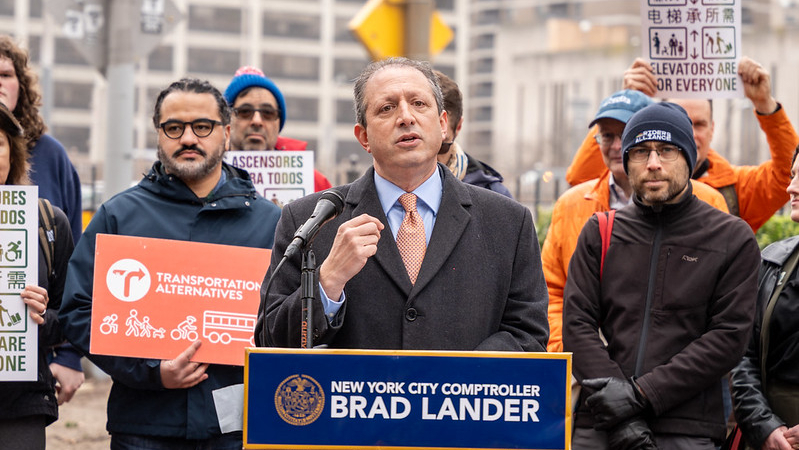
“We will not retreat one inch from our strong action on climate risk, which is entirely consistent with our fiduciary duty. Climate risk is financial risk, and everyone can see it – in unprecedented wildfires, extreme flooding and dangerously hot temperatures,” said New York City comptroller Brad Lander.
His comments come ahead of the New York mayoral election in November, where Lander is one of the candidates. They also reflect the increasingly difficult environment for climate-focused investors in the US, with some of the largest pension funds being accused by Republican lawmakers of being part of a “woke ESG cartel” and violating anti-trust laws.
Calling out the Trump administration’s departure from the Paris Agreement, Lander warned: “Others may walk back their climate commitments and cave to the current administration’s climate denialism, but we will not be cowed.”
Climate solutions
The New York City pension funds have long taken a vocal stance on climate change, divesting from fossil fuel reserve owners in 2018 and becoming the first major city pension fund to introduce fossil fuel divestment policies. In 2023, they voted to exclude upstream fossil fuel investments across their private markets holdings.
These divestments have been a key reason for the significant drop in Scope 1 and 2 emissions, the funds report. NYCERS, TRS and BERS, the three funds backing the divestments say they have exceeded their interim targets , bringing down their Scopes 1 and 2 financed emissions by more than 30% across equities and corporate bonds.
The funds are now working to scale up their investments in climate solutions, while aiming to reduce the carbon footprint of their portfolios to net zero by 2040.
TRS, the largest of the five funds with $109bn in assets under management, has pledged to invest $19bn in climate solutions by 2035, with $5.9bn already deployed, according to the city’s latest climate progress report. NYCERS, which manages $89bn, plans to invest $17bn in climate solutions by 2035 and has deployed $4.47bn to date.
Stewardship: focus on lenders
The funds are also pursuing an active stewardship agenda, with a particular focus on engaging with banks and aligning stewardship practices with asset managers.
This year, the systems have pushed for fossil fuel finance disclosures to be included on the ballots of three major US banks: Bank of America, Goldman Sachs and Wells Fargo. Despite efforts by the banks to block these proposals through so-called ‘no action requests’, the SEC ruled that the proposals should be heard.
Such decisions have become increasingly rare. Corporate ‘no action requests’ in the US have more than doubled over the past two years, with 217 filed in 2024 alone, compared to just over 100 in 2023, according to research by Net Zero Investor.
Last year, the New York City pension funds reached agreements with JPMorgan, Citi and the Royal Bank of Canada to disclose their energy financing ratios. JPMorgan became the first major US bank to publish these figures in 2024.
In addition, the systems are also working on closer stewardship alignment with their external managers, with most of the assets being managed by external managers. The comptroller’s Office has distributed a letter setting expectations for each systems’ net zero commitments and implementation plans to the respective managers accompanied by an annual ESG questionnaire for asset managers, with some 90% of managers responding to the survey.
NYCERS, TRS and BERS said that they expect their public markets managers to submit net zero or alternative decarbonization plans by June 30 2025.
Long-term asset owners who are concerned about climate change are increasingly using their mandates to exercise pressure on managers, with some major European pension funds divesting from large US managers over a lack of stewardship alignment.
SEC no action requests 2024: the climate resolutions companies don't want to discuss
NYC comptroller's John Adler: 'everything we do is in the name of fiduciary duty'
NYC comptroller proposes fossil fuel ban for new private market investments