
How BNP Paribas Asset Management integrates nature factors across its portfolios
Ahead of the UN Biodiversity COP17 in Azerbaijan this month, four BNP Paribas AM experts explain how they integrate nature factors into their distinct investment strategies
Nature investing has moved beyond being a niche theme for specialists; it is now a material factor in credit risk, equity selection, and private market deal-making. At BNP Paribas Asset Management, this integration is not a single monolithic strategy but rather a coordinated effort across distinct asset classes. Each team approaches nature through the lens of its specific market mechanics, yet they share a common foundation: the belief that protecting and restoring natural capital is essential for long-term economic stability.

Robert-Alexandre Poujade, head of Nature at BNP Paribas Asset Management:
“First, it is important to recognise that nature loss is a systemic risk. It affects the whole economy, and as universal owners, we are exposed to all those risks simultaneously. This is why we put a lot of effort into engagement to bring companies’ policies and practices into line with prevailing best practice and global agreements or frameworks, such as the Global Biodiversity Framework or the Taskforce on Nature-related Financial Disclosures, which I’m involved with. My role is about coordination and coherence, ensuring the organisation is equipped to make credible choices. For example, with Finance for Biodiversity Foundation, we are working on defining what ‘nature transition’ actually means for companies so that investors can speak the same language. If we want to scale nature investments, we need clarity and standards. Also, you can’t just launch products without a credible roadmap. So my job is to bridge the gap between high-level strategy and the day-to-day work of our investment teams, making sure they have the right data and tools.”

Adam Gibbon, natural capital lead at BNP Paribas Asset Management Alts
“We position ourselves at the intentional positive impact end of the spectrum. We don’t just avoid the worst offenders; we derive the core economics of our transactions from protecting or restoring natural capital. I think we’re going through an economy-wide shift. Historically, the economy has turned natural capital into monetary capital through destructive processes. In the future, our conviction is that returns will come from protecting, restoring, and sustainably managing that capital – monetised through payments for ecosystem services. That’s where we invest. We take equity stakes in project developers and provide project finance for them to scale. For example, with our Brazilian developer Mombak, we buy degraded cattle pasture in the Brazilian Amazon and plant multiple native species. With Sistema Bio we finance biogas systems that capture methane from cattle manure and with Forest Carbon and Pantheon restore peatlands in Indonesia and the US. Nature is becoming a scarce resource, and value is being priced accordingly. Our funds have an emerging markets tilt because that’s where we see the biggest opportunity for high impact at lower costs. And importantly, this isn’t concessional—we aim for market-rate returns while giving investors priority access to scarce carbon credits.”

Aida Hemery, sustainability analyst Fixed Income at BNP Paribas Asset Management:
“From a fixed income perspective, nature has been quite niche, but it’s increasingly recognised as material to credit risk. I focus on labelled bond markets, specifically green bonds where nature is a subset. What I look for is consistency. Does the issuer’s use of proceeds align with their broader transition strategy? Are there quantified commitments? Do they adopt disclosure standards like TNFD? We see opportunities in ecosystem restoration, flood defence, and habitat preservation. Blue bonds are an emerging area too—they focus on marine ecosystems and sustainable fisheries. In terms of financing, nature remains a small but growing segment of the market-approximately 6% of labelled bond proceeds since 2014, with a higher share of 12% among sovereign issuers. Such issuers are often better suited for these because they have the mandate and ability to execute projects under benchmark size issuance. Sovereign issuers are often better suited for these because they have the mandate and ability to execute projects at benchmark size. We also monitor innovative structures like debt-for-nature swaps. Alongside sustainability commitments and project credentials, robust impact metrics and reporting are key considerations for fund eligibility. Rigour is key.”
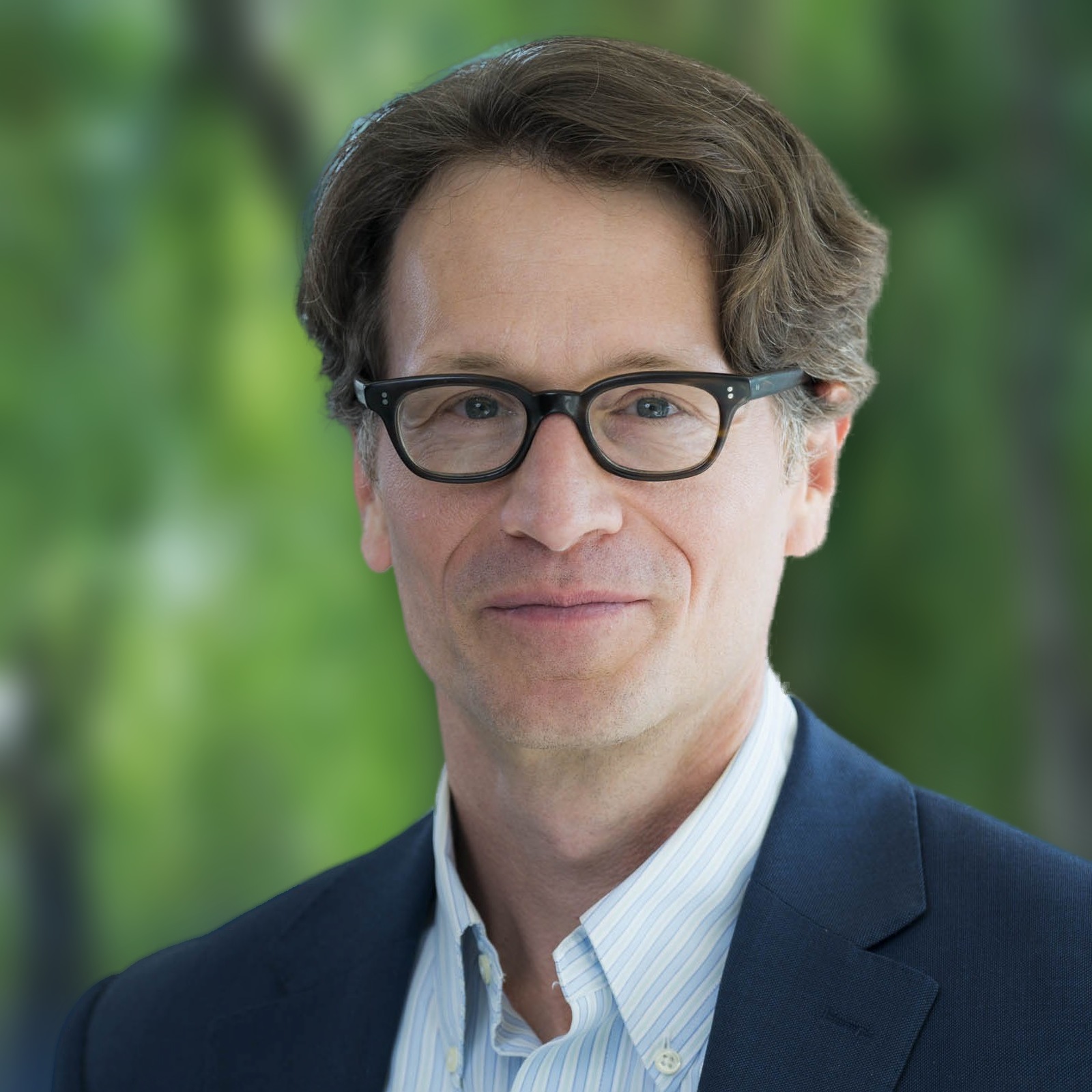
Edward Lees, co-CIO, head of Investment Team, Environmental Strategies Group at BNP Paribas Asset Management:
“When my partner and I started our environmentally focused funds in 2019, we deliberately avoided screened funds. We wanted to focus on solutions: where are companies getting their revenues from? Where are they spending their R&D dollars? We prioritise real-world outcomes. It hasn’t always been easy. Many pure-play ag-tech startups struggled, and frankly, some shouldn’t have been public. But today there is a range of established companies touching agricultural security, water treatment, and circular economy that are providing meaningful solutions. That said, I’m frustrated by the gap between public discourse and actual capital flows. Many talk about biodiversity, but the money mostly goes to energy or broader ESG funds. We try to demonstrate that positive environmental outcomes are possible in listed markets, indeed even that impact is possible We engage directly with CEOs and CFOs. For example, we once introduced two portfolio companies—one developing algae-based fish feed -and one using conventional fish feed - to help reduce bycatch. That’s the kind of practical stewardship we believe in. We also do no significant harm tests and divest when necessary. As for all funds we have to be good stewards of capital to keep investors onside so the business case has to exist for each investment. But not only are we convinced that integrating natural capital considerations is essential for long-term success, we also see strong demand today for needed solutions, both for migration and adaptation, from our company universe."
Together, these four perspectives illustrate how BNP Paribas Asset Management integrates nature factors across its diverse platforms. From Robert’s strategic coordination to Adam’s on-the-ground deployments, Aida’s bond screening, and Edward’s equity innovation, the firm demonstrates that effective nature investing requires tailored strategies for each asset class. By combining deep expertise with a commitment to real-world outcomes, BNP Paribas Asset Management shows that addressing nature-related risks and opportunities is a key component of modern investment strategy