COP 30: Brazil’s Tropical Forest Forever Facility needs $100bn of institutional capital
At COP30, Brazil is planning the launch of a new Tropical Forest Forever Facility (TFFF), the blended finance investment fund could become one of the world's largest emerging market investment vehicles
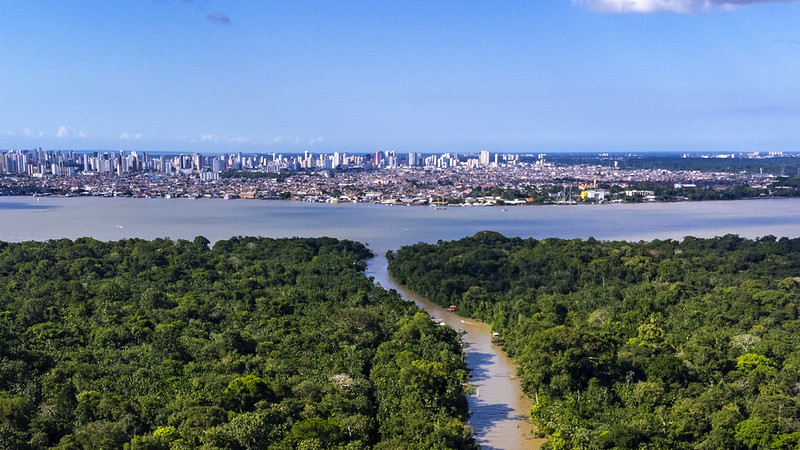
On November 6, at the COP30 leader’s summit in Belém, Brazilian President Luiz Inácio Lula da Silva announced the launch of the Tropical Forest Forever Facility (TFFF). At the heart of the TFFF, is an investment fund aimed at financing tropical forest conservation.
“In just a few years, we will begin to see the fruits of this fund. We will take pride in remembering that it was in the heart of the Amazon rainforest that we took this step together”, remarked President Silva.
The host country’s finance minister Fernando Haddad outlined that the idea of the fund was conceived two years ago. Now, Belém provides a platform for the Brazilian presidency to steer a conversation with potential investors and solidify the fund’s political backing.
Institutional capital
The TFFF launch declaration outlines the fund’s raison d’être – investing in tropical forest conservation that is ‘predictable, permanent and large scale’. Crucially, the fund disclosures state that TFFF does not intend to generate carbon or biodiversity credits.
To do so, its capital structure blends sovereign capital with private sector funding. It has a medium-term goal of raising $125bn, of which institutional investors are expected to fund $100bn.
"Lots of modalities remain to be put in place, but fundamentally we see this as a quite sensible idea", says Ulf Erlandsson, founder and chief executive officer of the Anthropocene Fixed Income Institute. "Creating a leveraged fund with very patient capital, and allow that vehicle to extract long-term risk premiums and then pay out those premiums for purposes of tropical forest protection, could work well", he added.
Institutional financiers will invest through senior debt instruments that appeal to their risk appetite. That appeal is seemingly linked to the fund’s sovereign backers who will provide the remaining $25bn through long-term loans or concessional instruments such as grants and guarantees. "To have mainstream bond investors taking on more EM and deforestation-impact type of bonds is an important task at hand", Erlandsson notes.
Norway, which has conditionally committed $3bn over the next decade. Brazil and Indonesia have committed $1bn each. Other backers include Portugal, France and the Netherlands. 19 potential sovereign investors have endorsed TFFF thus far.
According to TFFF
disclosures, the terms of financing will be comparable to fixed income instruments issued by multilateral development banks. The disclosures also state that target audience for the fund include pension funds, insurers and fixed income fund managers.
Investment strategy
Fund deployment is expected to take the form of an investment portfolio aimed at ' liquid public market bonds' issued by both sovereign and large corporate issuers. The weighted average credit rating of the investment portfolio is expected to be BB+.
According to the fund’s proposed design, a significant share of that capital will be invested in developing countries – particularly those classified as ODA eligible by the OECD. An emerging markets tilt in investment strategy is one of the fund's key characteristics.
"The TFFF would not only have an effect through proceeds going to emerging countries, but also it would become one of the world’s biggest investor in EM bonds, further improving liquidity in that space. $125bn is quite a chunk", Erlandsson told Net Zero Investor.
Returns from this portfolio will then finance payments to developing countries with the payments linked to declining deforestation rates.
Mandates ahead
It was expected that a AAA-rated multilateral bank will be appointed to administer the fund. It has now been confirmed that the World Bank will be the fund’s trustee.
In addition to the mandate for treasury services and capital market operations, bringing the fund to life is also expected to result in mandates for asset managers. TFFF disclosures suggest that the fund’s administrator will “contract out the management of much of the fund’s investment portfolio to various leading asset managers”.
The intent and political vision for Brazil’s forest conservation fund will likely shape these mandates. Making the negotiations at COP 30 a source of vital and timely information for those potentially vying for mandates.