Exclusive: Net zero future more likely after Ukraine war, says sustainability chief
Willis Towers Watson's head of sustainable investment Adam Gillett discusses the 'massive macro transition' to net zero
There is currently a collective failure across regulators and in the financial space, a sustainability heavyweight in the insurance sector warns today.
This is also the case on an individual basis in facing up to the challenge of combating climate change.
“We’re on the wrong climate path, so all of us collectively, individually and organisationally need to do better”, sai Adam Gillett, head of sustainable investment at insurance behemoth Willis Towers Watson (WTW).
Gillett, who has been in his role at WTW since 2013, was previously a senior audit associate at KPMG.
As a firm, WTW has shown a level of sincerity in both its engagement and wider sustainability activities, says Gillett, who works with the organisation’s nearly 100-person strong Climate and Resilience Hub.
Within his own position, he caters to predominantly institutional asset owners, growing out of a WTW heritage of consulting to primarily pension schemes.
An 'orderly' transition
Through his work with the hub, Gillett is paying close attention to the notion of the “disorderly” vs. “orderly” climate transition, currently a topic of keen debate in the asset management industry.
“The massive macro transition [to net zero] is actually dozens and hundreds of micro transitions across different areas and industries and regions and commodities," he notes.
“The more orderly end of that transition spectrum is one where there is greater global coordination across the full chain, from a regulator and a policymaker through different industries, corporates, to investors. That is a kind of vertical and horizontal coordination.
“Then there is the disorderly, which I think is already happening to some extent. Whether that is nations acting at slightly different times in slightly different ways, or whether that is demand and supply not matching up neatly which leads to some lurches and shortfalls, and the spikes and prices and volatility that come as a result.”
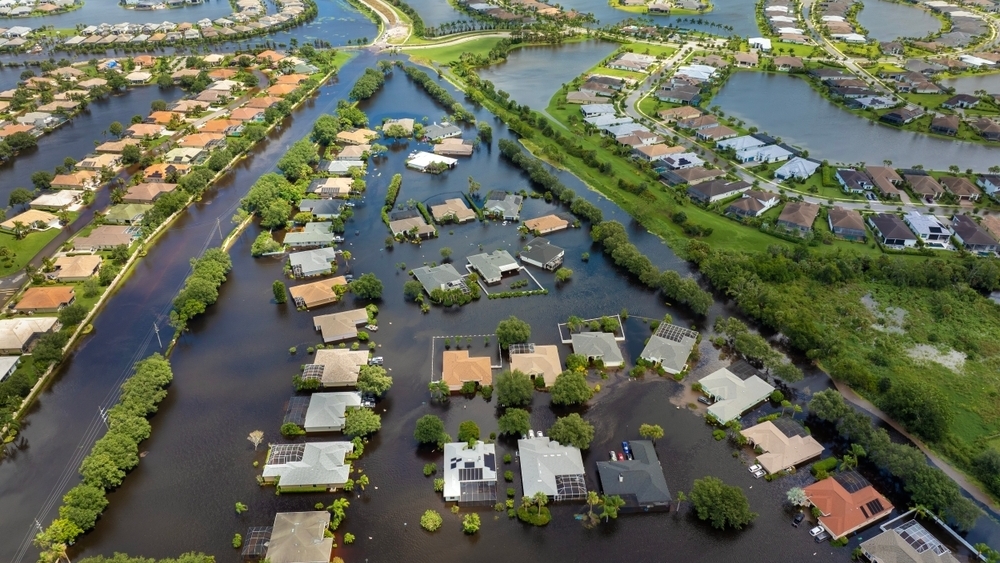
A 2022 report from the World Economic Forum named “climate action failure” as the number one risk to the financial and wider world over the coming decade. The most documented risks associated with climate action failure were physical risks, such as an increase in the frequency and severity of severe weather.
.All of us collectively, individually and organisationally need to do better.
The war in Ukraine
It has been over one year since Russian forces entered Ukraine, sparking a seemingly intractable war. The ensuing months have seen a humanitarian catastrophe, not only in Ukraine itself but through global food shortages.
European energy prices have also spiked, the effects of the war being a contributing reason for many oil and gas companies record profits.
While fully acknowledging the deeply dark clouds surrounding the war and its impact, Gillett believes that in the long run the invasion could in fact be a benefit to the net zero energy transition.
“Longer term, the war does seem to have aligned some things in a positive way. There is now a greater push towards national energy security and less reliance on exported fossil fuels. You can see in that positive alignment with a climate transition," he explains.
“Because those two necessities are both stronger now and working in concert, then overall the transition may be strengthened and emboldened.
At a macro level, [the war in Ukraine] has made things more disorderly and delayed and more complex. However, perhaps it's made the transition overall more likely to happen sooner than it would have otherwise done.”
Irene Lauro, an environmental economist at Schroders, also argues that higher fossil fuel prices are key to reducing high-carbon energy consumption and incentivising the net-zero transition, something currently happening in Europe as a result of the war and the tightening EU Emissions Trading Scheme.
Counter to disparate issues now being seen as a collective solution is wider concerns being combined as a wider problem such as in the case of the “energy trilemma”; accelerating climate change, challenges to energy security and rising costs all serving as potential risks to climate action.
Executive renumeration
An investigation by WTW in December 2022 showed that 69% of companies on the S&P 500 index tie incentive compensation to at least one ESG performance measure, a 9% increase compared with 2021.
Two thirds of the S&P 500 companies linked pay to social metrics such as employee health and safety, or to diversity, equity and inclusion.
On whether executive could be further developed for a net-zero impact, Gillett says: “One of the engagement strands that people are pulling at is looking at how to encourage better management of climate risks and better exploitation or climate opportunities within firms.
He added: "One area of this is linked through incentive structures and executive remuneration and compensation."
“Figuring out what metrics and measures to put in there is really tricky, but I think that's the same across all compensation structures. Sustainability and climate is not unique in being hard to measure and put accurate numbers on," Gillett concluded.