Inside ABP’s push to support climate start-ups and scale-ups
Europe’s second largest pension fund is bypassing venture capital funds to make direct investments in early stage climate solutions
With more than €500 billion of assets under management, Dutch pension fund ABP is one of the world’s largest asset owners.
It is also relatively strong on climate change. Since its 2021 commitment to cut €15 billion in exposure to fossil fuels, ABP has exited all assets in oil, gas and coal - including liquid assets worth about €10 billion.
By 2030, ABP aims to reduce its greenhouse gas emissions by 50% compared to 2019 levels and achieve net-zero emissions by 2050.
The fund also plans to invest €30 billion in the climate transition, including €10 billion in impact investments.
A sliver of this climate transition money – €250 million – is earmarked for direct investment in start- and scale-ups, (or, to use venture capital jargon, late Series A and early Series B investments) via the ABP Dutch Energy Transition and Biodiversity Fund (ANEB), which is managed by APG.
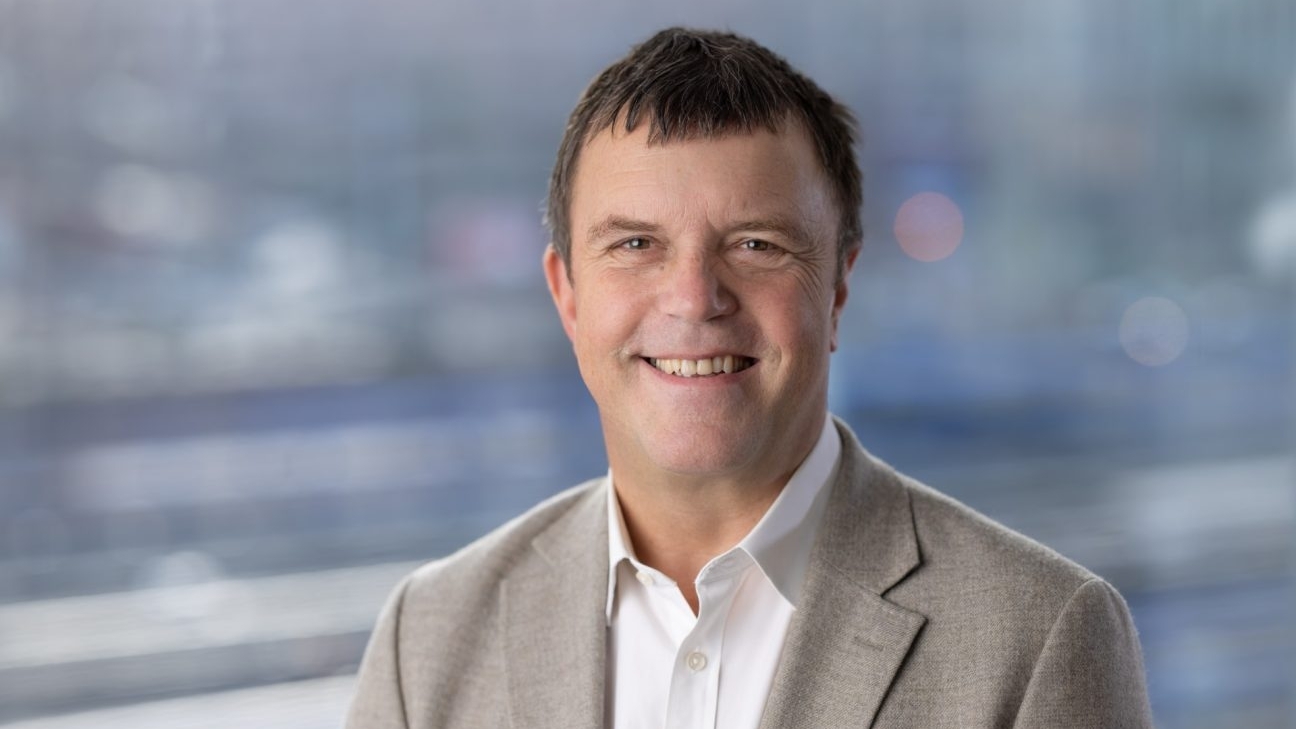
“European pension funds typically delegate early stage investments to external venture capital fund managers,” said Martijn Olthof, ANEB’s portfolio manager on behalf of APG, ABP’s asset manager. "But we're making our own investments. That's what makes this mandate so unique."
Net Zero Investor was keen to learn more.
Why did ABP set up this mandate?
The big idea is to fill a funding gap for innovative Dutch companies active in the energy transition, while also aiming to make a decent risk-adjusted return.
These are high risk and potentially high return investments.
Given it’s a small fund, the tickets are also relatively small, around €10-15 million each. Originally, the mandate was asset class agnostic, meaning we could invest in private equity and debt structures, as well as other funds, but the mandate changed. Now we only make direct investments in early stage start- and scale-ups. All our holdings are minority stakes.
The mandate has also evolved to include more themes. In addition to the energy transition, we now have circularity, sustainable food and agriculture, and biodiversity to align with ABPs Biodiversity policy.
So far, we’ve made six direct investments and three fund investments with more than €100 million of exposure.
You buy private equity. How about private credit?
That’s actually a different ABP mandate, which is managed by our alternative credit team. That team recently issued a €27m loan to H2 Green Steel, a Swedish, low-carbon steel company.
Our fund only invests in private equity.
Could you talk about a recent investment you made and why?
We recently invested in Soly, a solar panel installation firm whose innovative approach and customer engagement strategy has made them pretty successful. Even though solar panel installations have experienced a downturn, we expect the sector to bounce back.
We also own a company called Triple Solar, which combines solar panels with heat pumps. Smaller and quieter than a traditional heat pump, the Triple Solar solution is a much less invasive way to have a heat pump in your house.
On the technical/AI side of the transition, we have invested in a company called NET2GRID, which uses AI to sift through smart meter data and other data to make personalised energy saving tips.
We also have a company called viktor.ai, which helps engineers reduce emissions within the construction industry.
Then there’s Taylor, which optimises solar panel performance, and Methaplanet, which produces pellets from horse manure to optimise biomethane output from anaerobic digesters.
Investments in anaerobic digestors themselves tend to be bigger tickets, more suitable for an infrastructure fund than our smaller start-up focused venture capital fund.
Our infrastructure team, for example, recently invested €250 million in a UK-focused bioenergy fund, BioticNRG.
Why is there a funding gap?
Most of the companies that we fund also attract interest from commercial venture capital funds. For example, US venture capital firms participated in a subsequent funding round for Soly. But those firms weren’t there at the beginning.
So there's definitely a funding gap for early stage start-and scale-ups. There are also are bigger funding gaps in other parts of the venture capital universe which are simply too risky for us. In those instances, the only solution is government funding.
How are the investments performing relative to other venture capital funds?
Soly is doing very well, as are most of our companies, but we can’t say too much because we don’t really externally report at such a granular level.
Any specific areas you’re looking to move into?
In accordance with our newly updated mandate, we’re especially interested in investments that connect circularity with the energy transition. Methaplanet was a first step in that direction. We're also looking at businesses that develop new methods to make food production carbon-neutral, deforestation-free, and waste-free, as well as businesses that produce proteins more efficiently and humanely.
Transforming the world food system is a critical part of the fight against climate change and biodiversity loss. The effective deployment of institutional capital can help accelerate this urgently needed transformation.
What else can help?
Governments have many tools to accelerate the food transition, as they do for the energy transition, but sometimes bureaucracy gets in the way.
For example, it’s much harder to get novel food ingredients approved in the EU than the US or Asia. So the EU should certainly try to smooth the process or risk losing a market. That’s a specific example, but as a general rule, removing barriers-to-entry is highly impactful.