Investors urge Andy Burnham to provide clarity on North Sea oil and gas policy
The UK's incoming prime minister has been urged to 'stand firm' on net zero, as investors highlight the importance of policy certainty for long-term capital allocation
Before the UK's new Prime Minister, Andy Burnham, had been sworn in, mounting speculation over his energy policy agenda reached the White House, where US President Donald Trump claimed on social media that people in Aberdeen were "dancing in the streets" because Burnham intended to expand North Sea oil extraction.
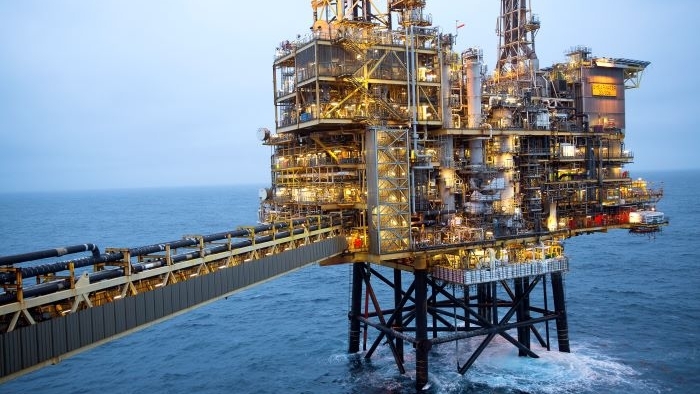
While Burnham has made no such commitment, speculation is mounting that he could retreat from one of Labour's key election pledges by easing restrictions on new North Sea oil and gas developments.
NZI Transition and Climate Investment Conference | 22 October | London | Register here
Speaking to the BBC on Sunday, Labour deputy leader Lucy Powell rejected suggestions that the government would abandon its manifesto commitment not to issue new exploration licences, but hinted there could be "a change in emphasis".
In practice, this could mean greater flexibility for tie-backs, the development of new wells connected to existing offshore production infrastructure via subsea pipelines, rather than new frontier exploration.
A key question, however, is whether such projects would attract sufficient investor backing.
Ahead of Burnham's policy announcement, long-term investors stressed that stable and predictable policy is essential for capital allocation.
"Pushing ahead with further North Sea fossil fuel extraction runs completely out of step with the global shift to clean energy," warned James Alexander, chief executive of the UK Sustainable Investment and Finance Association (UKSIF).
"This decision risks leaving investors questioning the government's policy direction on clean energy, just as global competition for infrastructure capital is intensifying. The new prime minister must stand firm on commitments to reach net zero emissions by 2050, so private finance has the confidence to invest in the transition," he added.
Bruno Gardner, head of Climate Change and Nature at Standard Life, also emphasised the need for continuity.
"From a long-term investor perspective, the priority for any incoming government should be providing stability, policy certainty and a clear framework that gives businesses and investors the confidence to commit capital over the years ahead."
According to Wood Mackenzie, UK upstream oil and gas investment fell to £4.4 billion in 2025 and is forecast to decline further to around £2.5 billion in 2026, reflecting a broader slowdown in investment across the basin.
The UK remains Europe's second-largest oil producer, but around 80% of UK crude oil is exported, largely because domestic refineries are designed to process different grades of crude. As a result, higher North Sea production would not necessarily reduce UK energy prices, which are largely determined by global oil and gas markets.