Keller: over 90% of ESG indices ‘not aligned to EU taxonomy’
ESG framework ‘not fit for purpose’, Lombard Odier managing partner tells World Forum.
Over 90% of MSCI’s environmental, social and governance (ESG) indices “are not aligned to the transition” to a sustainable economy, according to the senior managing partner at Lombard Odier Investment Managers.
Speaking at the World Forum on Enterprise and the Environment, hosted by Oxford University, Hubert Keller claimed that less than 10% of MSCI’s ESG indices are aligned to the EU taxonomy framework. This is the green classification scheme that helps investors to understand whether an economic activity is environmentally sustainable.
MSCI is the world’s largest provider of ESG indices designed to help institutional investors benchmark sustainable investment performance and manage, measure and report on mandates.
He said: “The MSCI World ESG index is currently the one that is driving the $30 to $35trn of ESG investing. The most leading ESG indices show an alignment to the EU taxonomy of less than 10%. That's basically saying that over 90% of the ESG index is not aligned to the transition.”
As an industry, we’ve been working with the ESG 1.0 framework. Unfortunately, I admit that this framework is absolutely not fit for purpose.
Environmental footprint
Keller highlighted that the current ESG framework is not assessing the true sustainability of companies as it is focused on the environmental footprint of an organisation rather than its economic activities.
“As an industry, we’ve been working with effectively what we all know as the ESG framework, which I would refer to as the ESG 1.0 framework. Unfortunately, I admit that this framework is absolutely not fit for purpose,” Keller added.
He highlighted that the current framework is relying on data that is failing to assess whether a company is “active in the right or wrong activities”. This will enable the transition to an environmentally positive economy.
Keller also said that under ESG 1.0 most companies are deemed to be sustainable, which meant that companies that are “clearly harming the transition” are included in a sustainable portfolio.
“This is where a lot of greenwashing issues have surfaced and this will continue to be the case until our industry moves more decisively to a more rigorous and tighter analytical framework,” he continued.
Sustainable finance
James Corah, CCLA’s head of ethical and responsible investment, said that the problem with the current ESG indices is that most of them are focused purely on one type of materiality, which is financial risk over a relatively short term.
He said: “So you get these crazy mismatches between what actually is and isn’t a sustainable company. It's just not really achieving what we set out to achieve, which is sustainable finance that will make the world a better place.”
In his speech, Keller stated that regulators are now encouraged to move towards ESG 2.0, which involves adopting an activity-based assessment framework.
He said the new ESG framework assesses whether a company is sustainable or not by focusing “on whether it has the right mix of activities, and whether these activities are well aligned to what we need for the economy to transition”.
Keller stated that the shift towards adopting the ESG 2.0 framework could happen any time “between now and the next six to 12 months”.
In addition, Keller pointed out that this could be “quite a big wake-up call for asset owners”.
“Asset owners will be very surprised when they realise that their ESG indices are very poorly aligned to the transition framework set by the EU taxonomy,” he continued.
In response to Keller’s comments, an MSCI spokesperson said that its ESG and climate indices are created by working closely with clients to provide index methodologies that best meet their objectives and requirements.
“These indexes draw upon different datasets from MSCI ESG research to exclude, select and reweight securities based on their involvement in positive and/or negative business activities, management of material ESG risks and opportunities, or preparedness in terms of the transition to a low-carbon economy."
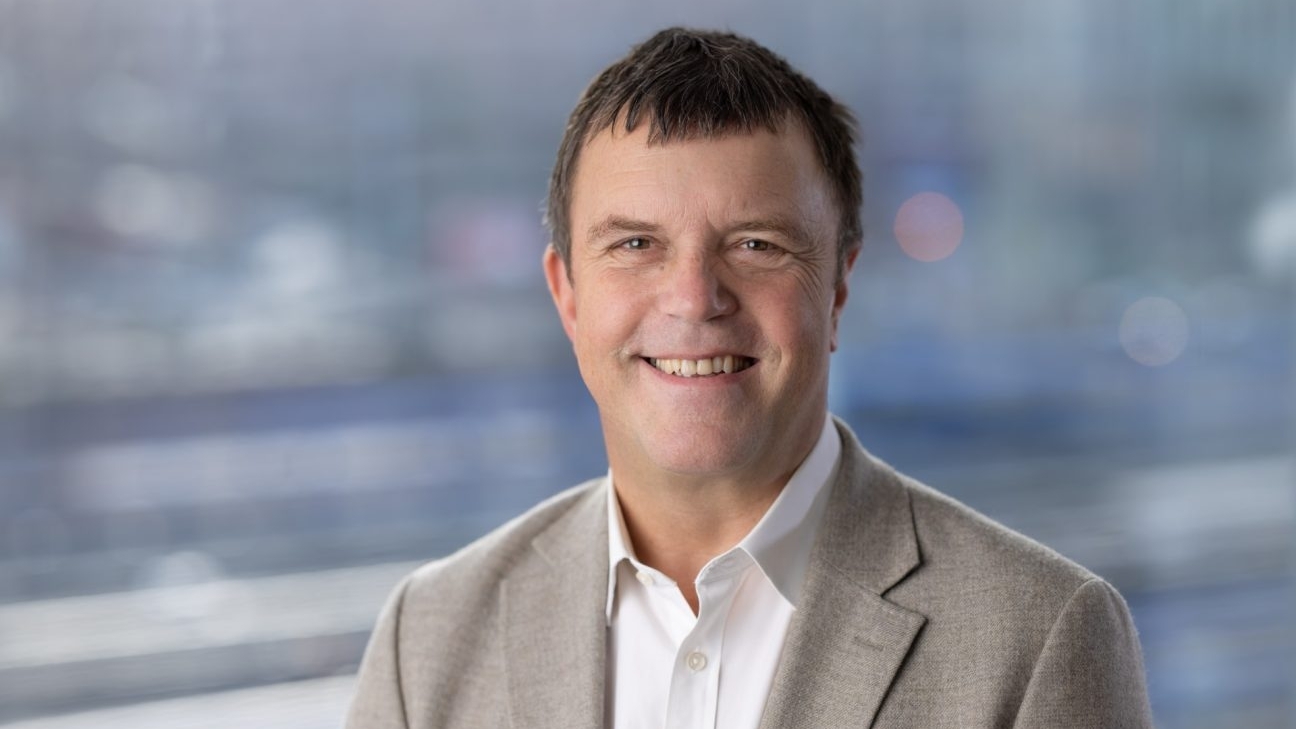
Photo credit: John Cairns