Nature takes centre stage as London kicks off Climate Action Week
The nexus between nature and climate is emerging as one key theme at London’s Climate Action Week, with investors highlighting the opportunities in supporting ecosystem restoration
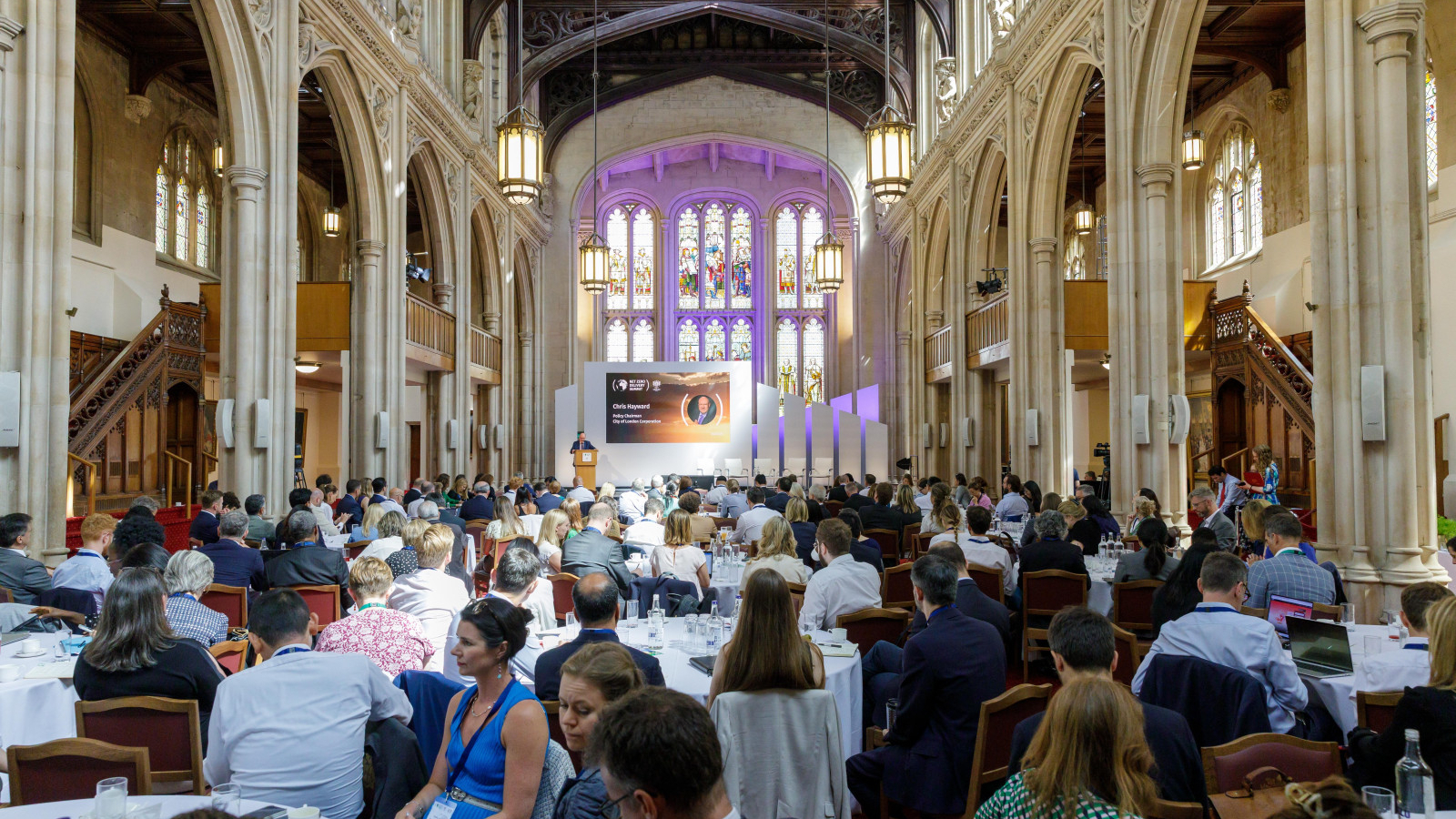
Putting a price on nature has emerged as a key challenge that investors hope to address, as industry leaders gathered at London’s Guildhall to launch this year’s London Climate Action Week. The event aims to kickstart debate ahead of the COP30 summit in Brazil, home to the Amazon rainforest, where nature is also expected to feature high on the agenda.
A sign of growing investor interest is the more widespread adoption of TNFD reporting, suggested Tony Goldner, CEO of the Taskforce on Nature-related Financial Disclosures (TNFD), who described the process as “nature hushing on steroids”.
At COP16 in Colombia last year, over 500 financial organisations representing some $17trn in assets under management had committed to TNFD reporting. Seven months on, that figure has grown to nearly 600 backers representing almost $20trn in assets, Goldner said. “There is a huge amount of work that is going on under the surface,” he shared.
Claudine Blamey, chief sustainability officer at Aviva, disagreed with the idea that nature hushing is on the rise, arguing that investors have become increasingly vocal about the need to recognise the financial risks of nature loss.
NZI Climate Solutions Summit | 11.09.2025 | London | find out more here
“The challenge comes from an operating model that is not giving nature a value,” she said, stressing: “We need to stop calling nature an externality and internalise the costs of nature loss.”
Aviva recently launched a carbon removal fund, which invests in a combination of nature-based and engineered carbon removal solutions, targeting an average annual return of 8% over a 25-year period. Last week, UK master trust NatWest Cushon announced its backing for the strategy.
The fund is currently invested in a mix of carbon forestry and restoration, with scope to invest in engineered carbon removal ten years down the line. For now, however, nature remains the focus. “We are seeing great potential in nature-based solutions for carbon removal because they have prices attached to them,” Blamey said. “We need to attach prices to other bits of nature to be able to do the same.”
A key challenge in turning insights on nature loss into investment decisions has been a lack of clarity on the type of information investors need, argued Nicola Ranger, executive director and professor in practice, Natural Capital, Risk and Finance at the London School of Economics.
“We often get confused between biodiversity data and data on ecosystem services,” she said, arguing that the latter is especially crucial for understanding nature’s impact on investments. “You need to know about water, soil quality and pollinators to understand if your investments in wheat are going to be operational,” she added.
The LSE is expected to publish an in-depth study on the financial materiality of nature later this week, drawing on over 600 pieces of evidence. The theme of financing nature will also be explored further on Friday, when the Inter-American Development Bank (IDB) and the Grantham Research Institute at LSE release new research examining opportunities for strategic investment in bioeconomy solutions.