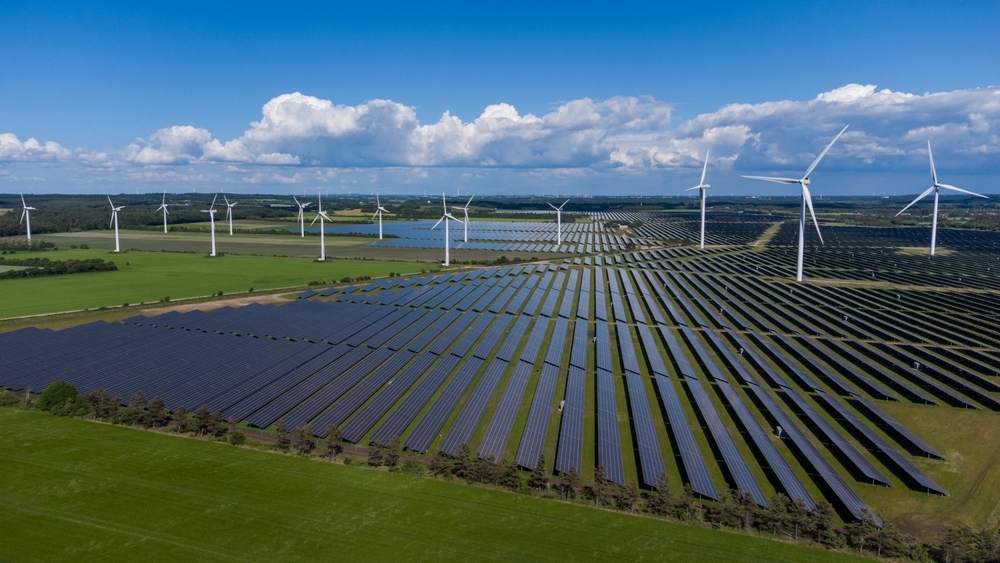
NBIM increases renewables allocation amid rising capital costs
Norges Bank Investment Management's latest report warns of investment risks attributable to rising cost of capital in private markets
Norges Bank Investment Management (NBIM) – the asset management division of Norges Bank – has announced a new capital allocation to unlisted renewable energy infrastructure. The €900m investment is the outcome of an agreement with Copenhagen Infrastructure Partners - a Danish asset manager.
The allocation is an indirect investment into CIP’s fifth flagship fund – “CI V”. According to CIP, “CI V” is focused on “greenfield investments within large-scale renewable energy infrastructure”.
Its geographical scope is broad, ranging from North America and Western Europe to assets located in developed economies in the Asia Pacific region. In terms of technologies, CIP says the fund will focus on a diverse base of assets such as energy storage, offshore wind, onshore wind and solar. The fund reached a first close, at €5.6bn in June 2023.
For NBIM, the agreement with CIP fits into a management mandate received from the Norwegian Ministry of Finance in 2019 which allows asset allocation into unlisted renewable energy infrastructure.
Mie Holstad, CIO Real Assets at NBIM said, “This agreement will enable us to invest in renewable energy projects in the development stage. The investment is a valuable addition to the portfolio we are currently building. It will provide further investment possibilities and exposure to other parts of the value chain, as well as the opportunity to continue building knowledge and experience with new markets and technologies”.
Norway’s sovereign wealth fund has been increasing its exposure to unlisted renewable energy assets. A €307m investment into a portfolio of Spanish solar and onshore wind assets was announced in January 2024. This was followed up with two investments in April – a 40% stake in two solar plants in Spain for €203m and a 37.5% acquisition of an operational offshore wind farm in the UK – Race Bank – for £330m.
However, the Government Pension Fund Global's latest half-year report published in August warns of the investment risks. For the first half of 2024, the fund’s investments in unlisted renewable energy infrastructure yielded a negative return of -17.7%. NBIM says this was attributable to the rising cost of capital.
“A higher cost of capital adversely affected the value of the investments during the period. Besides projects already in operation, we have invested in a project under construction and committed capital for future projects. These projects are expected to generate net income in the future. This future net income will also be negatively affected by the current higher cost of capital”, the report says.