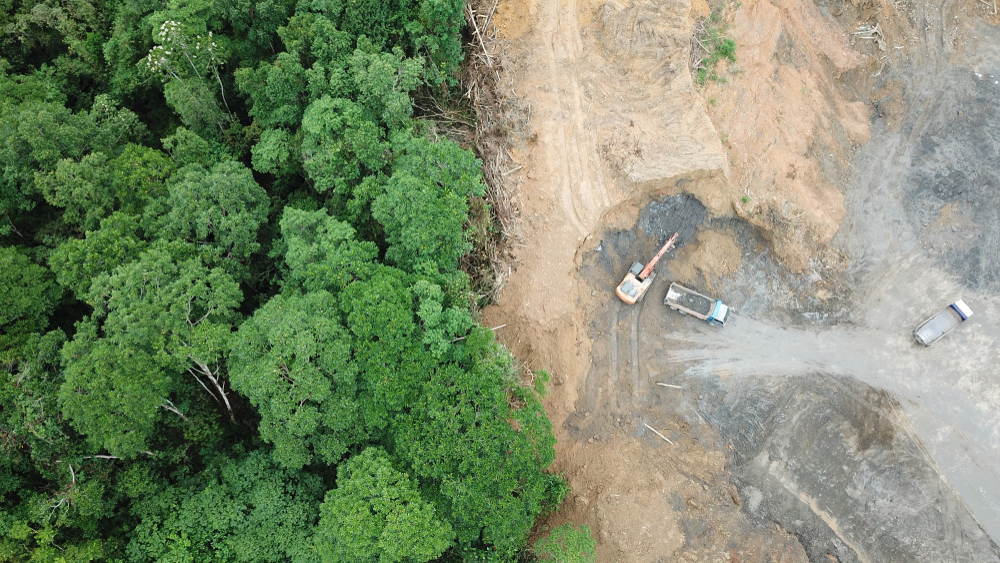
Revealed: the companies with exposure to deforestation debt and how investors can engage
Multinational companies have raised more than $60bn of debt with exposure to deforestation in the first quarter of 2025 alone, but bond maturities offer investors a crucial window to engage
It is no secret that multinationals in the global food industry are heavily exposed to deforestation, with ingredients such as palm oil now found in more than half of all packaged goods.
Yet while the issue has gained attention from equity investors, the role of bondholders in addressing deforestation risks is often overlooked. A new report by the Anthropocene Fixed Income Institute (AFII) seeks to address this gap by focusing on the largest corporate bond issuers linked to nature loss and environmental degradation.
The research is part of AFII’s new Deforestation Debt Universe, a resource aimed at improving transparency around nature-related risks for fixed income investors.
The scale of exposure is substantial. In the first quarter of 2025 alone, companies issued more than $62bn of debt linked to deforestation risks. The largest issuer is Mars ($26bn), followed by Johnson & Johnson ($9.2bn) and PepsiCo ($3.5bn).
For fixed income investors, bonds nearing maturity represent an important opportunity to engage, and the coming months are expected to provide key moments for intervention. More than $64bn of deforestation-linked debt is due to mature in the second and third quarters of the year, giving investors a vital chance to raise their concerns. Among the companies expected to seek new financing are Amazon, Shell, Target, PepsiCo and GSK, all of which have bond issuances maturing within the next three months.
AFII notes that Amazon, Shell, GSK, Target, BASF, L’Oréal, PepsiCo and Home Depot do not currently disclose their full deforestation footprints, although PepsiCo has released a partial footprint for 2022.
The research also underlines the significant role played by banks, which earn syndication fees from the issuance of bonds associated with deforestation risks. Citi, JP Morgan and Bank of America Securities are identified as major beneficiaries of these deals.
Many of these banks already have partial deforestation policies in place. However, such policies often focus only on the upstream value chain, failing to account for risks emerging in the downstream supply chain. AFII recommends that investors engage with these banks to broaden the scope of their policies, ensuring that companies involved in the final sale of products are also scrutinised for deforestation exposure.