Revealed: the leaders and laggards on climate in the insurance sector
Insurers are under increasing pressure to cease underwriting fossil fuels as climate-related weather events significantly impact profit margins. But who are the leaders and laggards in the insurance sector?
In October this year, Italy’s Generali made history as the first major insurer to commit to ending its underwriting of new oil and gas projects, including methane LNG terminals and gas-fired power plants.
While Generali chose not to make much noise about the announcement—quietly slipping the news into a technical note on its website—the move could mark a turning point for the industry. Currently, underwriting commitments for renewables are less than a third of those for the fossil fuel sector, according to campaign group Insure Our Future.
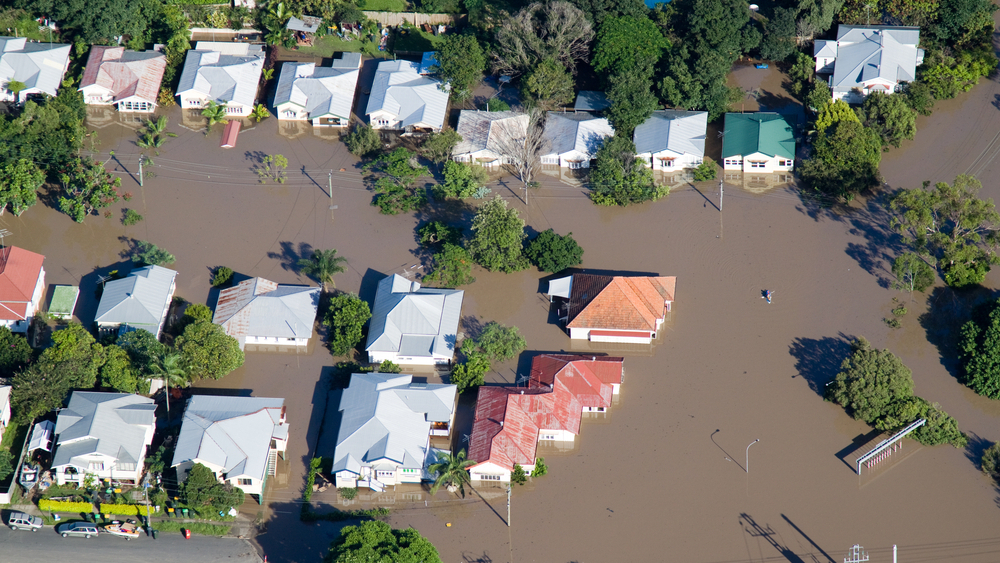
This announcement comes at the end of a year marked by climate-related weather disasters, with severe storms, floods, extreme heat, wildfires, and hurricanes wreaking havoc globally and causing billions in losses for insurers. Climate-attributed losses now account for nearly 40% of overall weather-related losses, underscoring the urgent need for decarbonisation to address an escalating insurance crisis. Rising premiums and the refusal of firms to underwrite the riskiest regions only add to the urgency.
Generali’s decision has propelled the company to the top of Insure Our Future’s annual ranking of leaders in the insurance sector, overtaking its peers Allianz, AXA, Zurich, and Swiss Re.
Zurich has also pledged to stop underwriting new oil, gas, and metallurgical coal projects. However, the company has faced criticism from Insure Our Future for failing to include customers’ Scope 3 emissions in its reduction targets.
Generali’s move is expected to increase pressure on its peers, particularly Munich Re and Allianz, which have set a deadline of 1 January 2025 to restrict coverage for new fossil fuel projects but have yet to detail enforcement mechanisms.
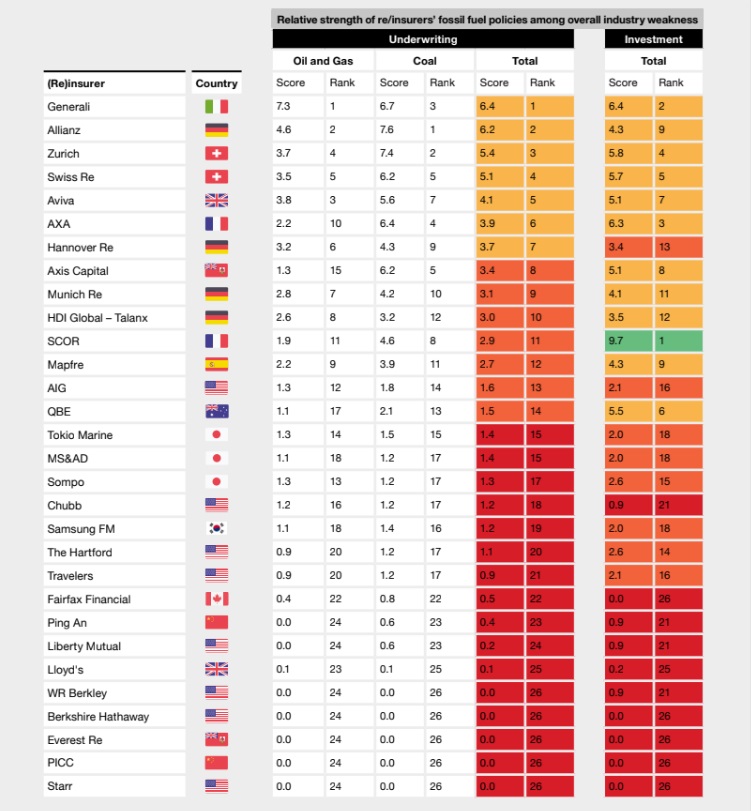
While European insurers have made notable strides in excluding new upstream oil and gas projects, Lloyd’s remains a laggard in Europe. Insurers also play a key role in underwriting the expansion of LNG capacity, which the International Energy Agency (IEA) warns could lead to a drastic oversupply by the end of the decade. LNG, often labelled a “transition fuel” for its lower carbon footprint compared to coal, continues to receive backing from insurers including AIG, Allianz, AXA, Liberty Mutual, and Chubb.
Insure Our Future has raised concerns about the environmental impact of LNG expansion, particularly in the US, where pollution disproportionately affects vulnerable communities. These communities are also being hit with rapidly rising insurance premiums, compounding the challenges they face.
At the bottom of the league table is a long list of insurers that continue to underwrite fossil fuels, including new coal projects. Chinese and Japanese firms dominate coal underwriting, with companies such as Yingda Taihe, PICC, Tokio Marine, and Sompo scoring poorly for their continued support of the fossil fuel.
In the oil and gas sector, major underwriters include AEGIS, Chubb, Fairfax, Allianz, MAPFRE, and AXA, with FM Global joining their ranks recently, according to Insure Our Future.
Are insurer's climate risk models fit for purpose?
EIOPA's fossil fuel shakeup: are insurers rethinking their investment strategies?