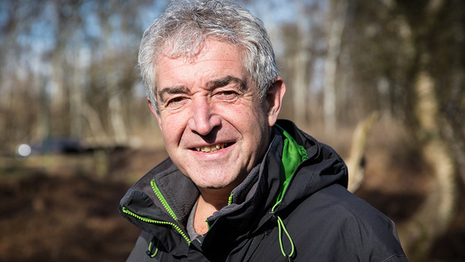
Tony Juniper: “Nature recovery and sustainable farming are an opportunity, not a constraint for investors”
Natural England's chair explains why a combination of technological innovation and the UK’s supportive policy environment have the power to transform agriculture
When, in 2024, hundreds of farmers burnt hay, toppled statues and fought with police in Brussels as they protested environmental regulation, agricultural interests and environmental policy seemed irreconcilable.
These angry business owners were adamant that progressive laws threatened their very existence and they wanted to stop them.
Yet pitting healthier ecosystems against economic gain is often a false dichotomy, especially in countries like the UK, where a supportive policy environment can help farmers transition to sustainable practices.
“I sympathise with the difficulties faced by farmers,” said Tony Juniper, chair of Natural England. “But their struggles are often less to do with environmental requirements than wider factors, such as trading conditions and their relationships with processors and retailers.”
That’s not to say that taking steps to improve the environment don’t pose challenges for farmers, but that the opportunities offered by transitioning to sustainable practices also offer significant long-term benefits, not just for the environment but the wider society. That is also the premise of his latest book, "Just Earth" which came out this month and argues that socio-economic inequality is a main obstacle to tackling environmental challenges.
Many farmers in conversation with Juniper see clearly that “food security and farming are the first casualties of the changes that come with the decline of pollinating insects, loss of soils, water insecurity, and the impacts of drought.”
Reversing nature loss and investing in sustainable practices is therefore a win-win situation both for planet and the long-term viability of farming businesses.
He urged pension funds that own agricultural assets to think carefully about their nature and climate strategies. “If you are making investment choices to ensure the well-being of people two, three, four decades hence, then it makes perfect sense to avoid climate change and ecological collapse as a consequence of your investments,” he said.
“Some pension funds are happily beginning to see this and plan more seriously for the future.”
The opportunities
Vertical farming, robotics, precision deployment of chemicals via AI and GPS and “all of the conversions of these technologies” present huge opportunities for both innovation and economic gain, according to Juniper.
He is especially excited about “precision agriculture”, which allows farmers not only to reduce their cost base by avoiding expensive pesticides and fertilisers, but also produce more food as a result of restoring the farmed landscape.
Scientific research shows that chemical use, particularly pesticides, is a major factor driving the decline of biodiversity globally, with agricultural landscape experiencing some of the most dramatic biodiversity losses linked to pesticide use. In Europe, populations of field birds and meadow butterflies have declined by more than 30% since 1990. While multiple factors contribute to this decline, including field size and lack of landscape features like hedgerows, the use of chemicals such as synthetic pesticides plays a significant role, according to German political foundation Heinrich-Böll-Stiftung.
“There are huge benefits to restoring biodiversity in farmed landscapes,” Juniper explained. “Bats, insectivorous birds, and aphid-hungry lacewings and ladybirds make a material difference to fruit and vegetable yields. Unfortunately, we are killing these very helpers via the overuse of chemicals. That needs to stop.”
The answer is putting “sophisticated technology in partnership with ecology and agriculture”. While banning the worst chemicals is obviously useful, it’s also essential to initiate “a mindset shift among the farmers themselves”.
UK’s supportive policy
Switching to sustainable practices may require significant upfront costs that could daunt farmers who already feel challenged. To ease the transition, the UK has implemented a comprehensive suite of agricultural programs designed to accelerate the transition to sustainable farming practices.
Central to this effort are three key initiatives: the Farming Innovation Programme (FIP), the Farming Equipment and Technology Fund (FETF), and Environmental Land Management (ELM) schemes, which target technological advancement, equipment modernisation, and ecological restoration.
Examples of projects include FETF-funded closed transfer sprayer systems, which reduce pesticide drift by 85% compared to conventional methods, while FIP-supported CRISPR-edited poultry feed additives aim to decrease ammonia emissions by 40%, lowering the need for chemical air scrubbers, and ELM's Integrated Pest Management premiums have led to a 22% reduction in synthetic pesticide use on enrolled farms since 2023.
The Sustainable Farming Incentive, which is an ELM scheme, already has 37,000 live agreements, and, as of March 2025, has allocated 100% of its £1.05bn budget for 2024-26, prompting Defra to halt new applications until the next spending review.
South Yorkshire Pension Authority’s George Graham recently told Net Zero Investor that the fund is looking to benefit from all relevant government support schemes in its push to integrate sustainable farming practices into its 25,000 acres of agricultural land. West Yorkshire Pension Fund and Oxfordshire Pension Fund are also exploring nature restoration and sustainable agriculture opportunities.
“Many farmers and investors already see the benefits of going down this route,” Juniper said. “Government incentives help as early adopters may take on more risk and some of the equipment is expensive. However, as these technologies become more refined and mainstream, prices will drop. They will become manufactured at scale and deployed as part of good farming business, irrespective of what government is incentivising.”
UK leadership
Incentives aside, governments can also boost nature restoration efforts through a systems-wide approach to policymaking that includes sectors that may not be considered on the environmental frontline.
This is "happily occurring" in innovative policy initiatives such as net gain biodiversity rules, which obligate property developers to purchase strictly regulated biodiversity offsets to compensate for the impact of their developments, Juniper said.
During his time at the latest biodiversity COP in Cali, he noted interest in the rules, which obligate property developers to purchase strictly regulated biodiversity offsets to compensate for the impact of their developments from “a diverse range of actors looking to develop similar policies and even private sector strategies in their respective countries.”
He was also struck that the UK’s ELM scheme, which replaces harmful subsidies with positive incentives, is one of the “few policies globally” that was actually being delivered as opposed to just talked about.
Earlier this week, the UK government launched its first action plan on pesticides in a decade. The plan sets out how the government intends to work with farmers to minimise the impacts of pesticides on people and the environment, aiming to reduce “environmental risk” from pesticides by 10% over the next five years.
Unfortunately, the world is not yet on track to reach the Kunming-Montreal biodiversity targets, such as reversing biodiversity loss by 2030, Juniper lamented. And time is running out.
“Five years to halt and reverse trends that have centuries of momentum behind them is not going to be easy,” he said. “It requires a gargantuan effort across societies, not just from governments, but also from the private sector, finance, and individual citizens. The connections between biodiversity decline and our economic and social system are profound and intertwined.”
None of the 20 global biodiversity targets agreed in Nagoya, Japan, in 2010, were met, he added. “If it’s going to be different this time, we need a step change in effort and ambition”.
Risky start-up or steady infrastructure asset? Oxfordshire is branching out into nature
Growing returns: West Yorkshire's Darran Ward on cultivating natural capital investments