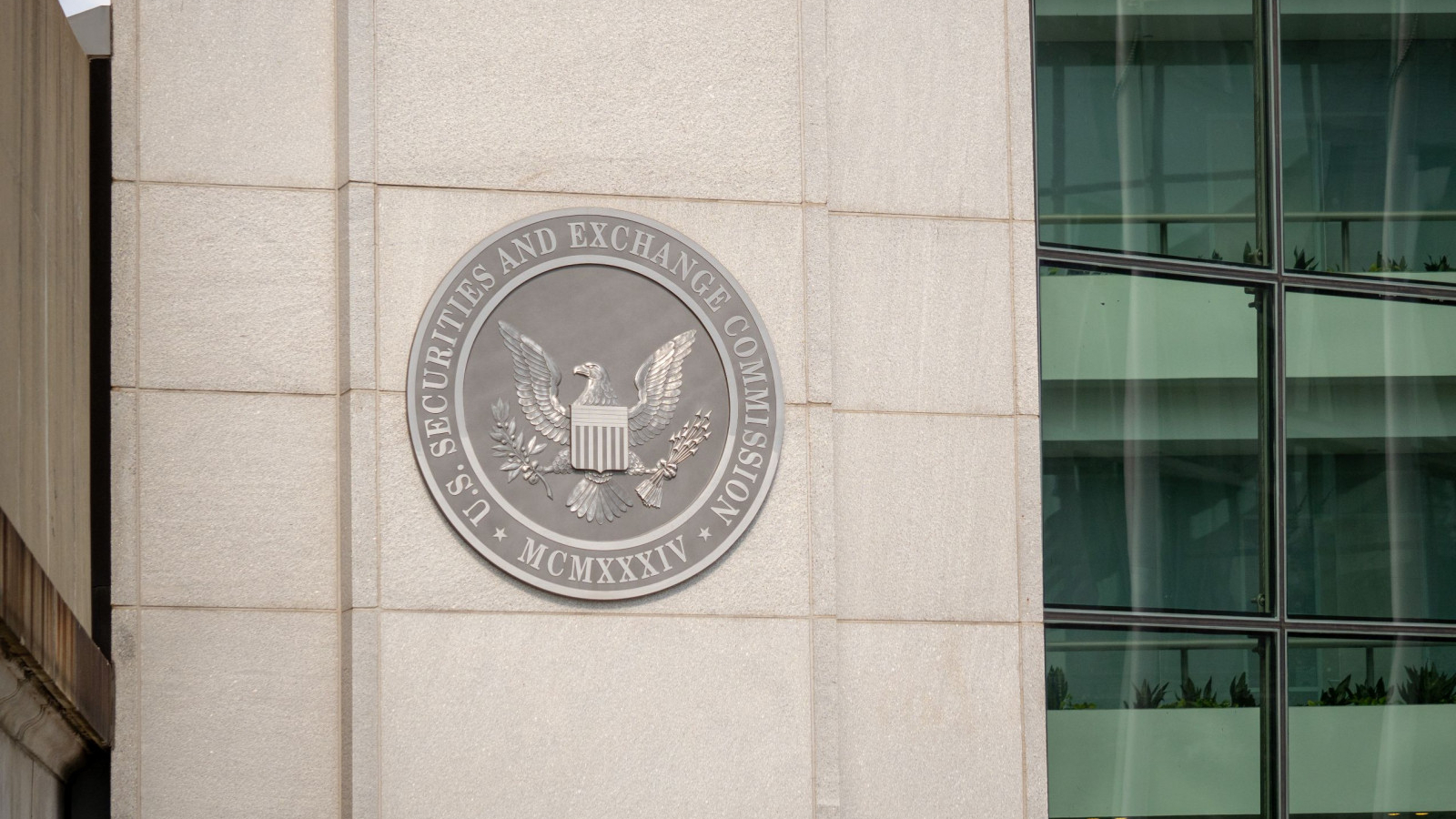
US regulators no longer see climate as a material financial risk
While the SEC has frozen plans for climate-related disclosures, the Federal Reserve, FDIC, US Treasury Department, and OCC have all walked out on Network for Greening the Financial System
US financial regulators and supervisors are sending a clear message: climate risk does not pose a material financial risk; therefore, companies need not report on it and investors need not worry about it.
This message contradicts the findings of not only climate scientists and non-US financial regulators, but also those same institutions in pre-Trump times.
The battle for a regulatory endorsement of the financial materiality of climate change has been an arduous one - both inside regulatory agencies and outside them, often in courts.
Now, America’s financial regulators seem to be casting a shroud of doubt over that hard fought consensus.
The SEC and climate risk
America’s securities regulator, the SEC, is tasked with a complex duty – protect investors, maintain fairness and efficiency in the markets and ‘facilitate’ capital formation. It is the first of those three duties – investor protection – that climate risk’s financial footprint is closely tied to.
Back in 2022, the SEC proposed its long-awaited climate-related disclosure rules. Rules that the SEC argued would give investors “reliable information about climate risks to make informed investment decisions”.
In March 2024, the Commission adopted these rules by a narrow margin. Mark T. Uyeda, a SEC commissioner at the time and now the acting chairman of the SEC, had voted against the rules. So did commissioner Hester M. Peirce, who claimed that they were effectively aimed at “the disclosure of information not clearly related to financial returns”.
The SEC under Uyeda’s leadership has claimed that not only are these climate disclosure rules “ deeply flawed” but they are also beyond the SEC’s statutory authority. In response to multiple lawsuits, the SEC voluntarily stayed the rule's effective date on April 4, 2024, pending judicial review. Now they will be frozen indefinitely.
Crucially, the SEC’s assertion is that climate disclosures would require a large volume of “financially immaterial” information – a clear indication that America’s securities regulator no longer sees climate risk as financial risk.
The SEC has also made it more challenging to steer climate related shareholder resolutions through the proxy season. Its new guidance on the infamous rule 14a-8, which guides the SEC's approvals of no action requests, raises the threshold of proof for filers. Updated advice on 13G and 13D filings increases the SEC’s scrutiny of shareholder intentions, making investor stewardship more challenging to pursue in an AGM.
Uyeda's SEC seems increasingly aligned with the Trump administration's priorities, which include an anti-climate agenda - withdrawing from the Paris Agreement, rescinding all climate-focused executive orders made under the previous administration, and pushing for fossil fuel expansion.
NGFS exits
Since Trump’s return to the White House, the US Treasury Department, the Federal Reserve, the Office of the Comptroller of the Currency (OCC), and the Federal Deposit Insurance Corporation (FDIC) have all withdrawn from the Network for Greening the Financial System (NGFS).
The NGFS is a global coalition aimed at mobilising green finance and developing climate-risk management strategies for the financial sector.
Similar to the SEC’s “statutory authority” argument, the main stated reason for withdrawal is that the NGFS expanded the scope of their activities beyond their mandate under US law. This implies that the regulators no longer see climate change as a financial stability concern.
Acting comptroller of the currency Rodney Hood said: “The OCC’s primary mission is to ensure the safety, soundness and fairness of national banks and federal savings associations … While severe weather events may be a broader societal concern, they do not fall within the OCC's statutory mandate.”
This marks a stark contrast to acting comptroller of the Currency Michael J. Hsu’s statements in 2021: “The harmful impacts from climate change are real, recognize no geographic boundaries, and cannot be ignored … I have prioritised the need to incorporate climate change into risk management frameworks to address the safety and soundness of the federal banking system. The OCC is working to take a leadership role to understand these significant and complex challenges.”
The Federal Reserve’s NGFS withdrawal announcement also stressed the "not my mandate" argument: “While the Board has appreciated the engagement with the NGFS and its members, the work of the NGFS has increasingly broadened in scope, covering a wider range of issues that are outside of the Board's statutory mandate.”
In addition to leaving the NGFS, the Treasury Department suspended a climate-focused data collection initiative launched by the Treasury's Federal Insurance Office (FIO) back in March 2024. This was a coordinated effort with state insurance regulators to collect data assessing the effects of climate risk on US insurance markets.
In response to the Federal Reserve's exit, the NGFS released a short note saying that its "community of central banks and supervisors stands as strong and determined as ever, mobilised through its Coalition of the willing".
That community includes the European Central Bank, which identifies climate change as a "a source of systemic risk, with potentially severe consequences for financial institutions and financial markets alike".
Note:
The OCC charters, regulates, and supervises all national banks and federal savings associations in the United States.
The Federal Reserve is the central bank of the United States, responsible for conducting national monetary policy, promoting financial system stability, supervising and regulating financial institutions, fostering payment and settlement system safety and efficiency, and promoting consumer protection and community development.
The Federal Deposit Insurance Corporation (FDIC) is an independent agency that insures deposits, supervises financial institutions for safety and consumer protection, resolves large financial entities, and manages receiverships.
The Treasury Department manages federal finances by collecting taxes, paying bills, managing currency, government accounts, and public debt, and enforcing finance and tax laws.