Why the UK’s foreign office is backing a $100m blended finance climate fund in the Pacific Islands
Camco has received backing from the UK Foreign Office and the New Zealand government to launch a first-of-its-kind fund in a bid to crowd-in private capital into the region’s energy transition
It has been nearly four years since the UK’s Foreign, Commonwealth and Development Office (FCDO) launched the COP26 blended finance platform. The platform was aimed at steering institutional capital into climate solutions in developing countries. The conviction at the time, was that blended finance was an ‘under utilised’ financing structure.
Since then, momentum in blended finance has been growing steadily. On last count, flows into blended finance funds grew by 70% and blended climate bonds nearly doubled their volume, according to Convergence, a non-profit.
A $100m first-of-its kind blended finance fund by Camco, a fund manager, is hoping to capitalise on that momentum. It has now received the backing of governments in New Zealand and the UK.
Powering the Pacific
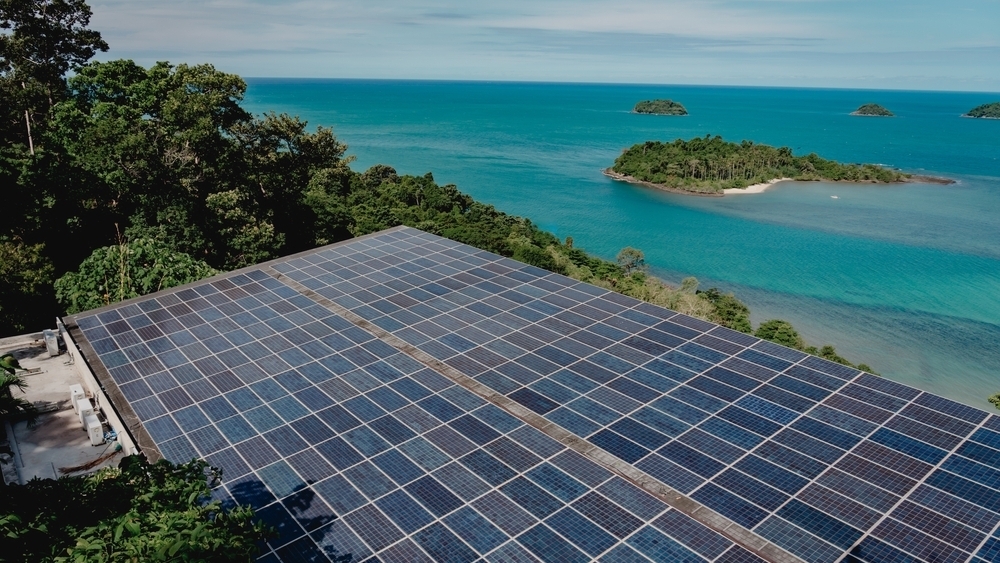
The fund, called TIDES, will finance renewable energy projects in six Pacific Island countries - Fiji, Tonga, Samoa, Cook Islands, Vanuatu and Solomon Islands.
For these countries, the energy transition is an urgent proposition. The region’s current reliance on imported energy – mostly diesel – is an expensive arrangement and the physical risks of climate change are quite literally at their shores.
“Many countries in the Pacific have adopted substantial renewable energy commitments but have no clear path to achieving them due to a lack of available financing at the scale required. Most renewable energy in the region has been financed with grants or concessional loans”, says Sidney Muturi, regional manager, Pacific at Camco.
A new financing structure that could attract institutional capital, Muturi says, was the need of the hour.
The missing middle
20% of the capital for TIDES will come from government donors in the form of junior equity structures as a first loss tranche. The remaining, split between debt and senior equity, will be financed by private investors.
The FCDO, which is backing the fund, believes TIDES offers an innovative alternative to finance the region’s energy transition. The ‘missing middle’, the FCDO calls it.
Charlotte Coles, head of the FCDO’s Indo-Pacific department told Net Zero Investor : “As outlined by our foreign secretary, the UK is keen to support the drive for new renewable energy investment in the region. TIDES represents a unique and innovative fund, blending much need public and private investment for renewable energy and in particular targets the ‘missing middle’ ”.
The catalyst
The challenge for TIDES is to address, to a reasonable degree, concerns over project risk. Its funding model could work in its favour. TIDES will finance a portfolio of renewable energy assets using off-balance sheet, flexible funding.
“This will mitigate individual project risk and give investors access to a diversified portfolio of renewable energy projects in the Pacific at a scale that is large enough to allow them to deploy material sums of capital”, Muturi told Net Zero Investor.
Additionally, what might attract asset owners is a regional buy-in from Pacific Island pension funds.
“We expect that local pension funds may provide some of the senior equity we are seeking which could potentially leverage investors from outside the region”, Muturi adds.
The backing of FCDO and New Zealand’s Ministry of Foreign Affairs and Trade (MFAT) could help TIDES navigate a complex pitch to prospective investors.
Yet, blended finance is far from a silver bullet for climate solutions. Critics such as Mariana Mazzucato – an economist at UCL – point to limited private sector participation in some funds and an overemphasis on de-risking at the cost of factoring in impact.
These criticisms could find an audience in potential investors. In that case, even with government support, the onus will be on Camco and TIDES to alleviate these concerns.