Australia could become a major clean energy exporter: will super funds finance the dream?
At the ACSI 2024 Annual Conference, asset owners discussed their role in redefining Australia’s economic identity
“We are at a real turning point in Australia” said Monique Miller, chief investment officer for the Australian Clean Energy Finance Corporation’s renewable energy portfolio. Miller was speaking at the Australian Council of Superannuation Investors (ACSI) 2024 Annual Conference in Melbourne. The event was an opportunity for Australian asset owners to reflect on the country’s energy transition and the role they might play in accelerating it.
The turning point that Miller referred to is a shift in Australia’s economic identity. An identity steeped in the country’s ability to extract and export. Over 60% of Australia’s export basket is resources and energy. In 2022-23, export earnings from these two segments stood at $300 bn. Historically and even today, Australia is one of the world’s largest exporters of coal and natural gas.
The global energy transition fundamentally challenges this status quo.
Canberra, however, has a plan. Armed with a legislated target of achieving a 82% renewable energy share by 2030, the grand Australian economic vision is to maintain Australia’s identity as a leading energy exporter whilst changing the type of energy leaving its shores.
A task that is not only profoundly ambitious but also significantly capital-intensive.
Sunshine coast
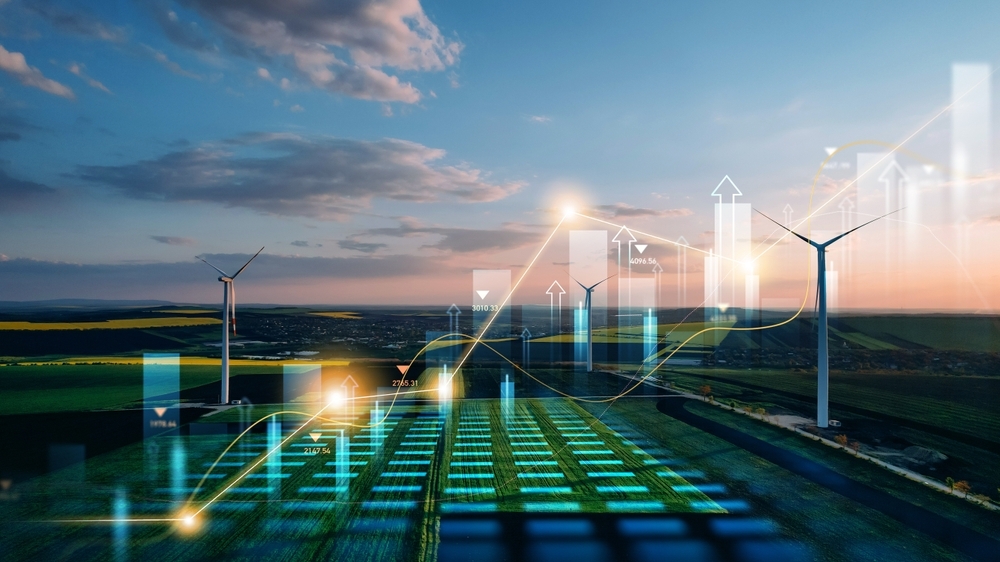
Australia’s renewable energy potential is much more than just political optics. Geography and fortune both play in Canberra’s favour. Particularly for solar and wind energy. One in three Australian households have a solar PV installation – one of the highest solar PV penetration rate in the world. In addition, there is nearly 60,000 kms of coastline with wind speeds most developers would categorise as favourable.
All of this implies a significant renewable energy generation potential. The International Energy Agency expects a renewable energy capacity expansion of over 80% by 2027. By some estimates, an Australian grid with 100% renewable energy could generate energy that is 500 times the level of demand.
Issues regarding coal phase-outs, transmission and grid preparation for renewable energy persist but Australia’s vision of becoming a clean energy exporter looks less likely to face a structural supply side challenge.
Capital allocation can be an enormous force for good
Send it overseas
Australia has known for some time now that to capitalise on its renewable energy potential, it needs to send that energy overseas. “It is safe to say that there is an extraordinary opportunity in Asia for clean energy exports”, said Zoe Whitton, managing director of investment advisory firm Pollination Group at the ACSI conference.
Net Zero Investor's Nature Positive Investment Forum
24 April, London Stock Exchange sign up here
Participants at ACSI 2024 acknowledged the demand for Australian energy in Japan and South Korea in particular. “In Korea and Japan, the demand is there and that demand is trying to generate supply”, said Dr. Guy Debelle who advises the investment committee at Australian Retirement Trust, an asset owner.
The general consensus was that asset owners are on the lookout for demand coordination. Long-term, stable offtake agreements could help align Australia’s economic vision with the super fund industry’s ability and willingness to inject capital.
Financing a vision
“Supers are a sophisticated, important part of our economy” said Sam Mostyn, the chair at Aware Super. The industry’s structure and financial muscle allow it to play a vital role in shaping Australian economic identity both present and future.
Echoing such views, Paul Schroder, chief executive at Australian Super - the largest Australian asset owner said, “Capital allocation can be an enormous force for good”.
Yet, there is some way to go, for this force to be with the vision. For one, the export story is seemingly a work in progress and a risky proposition at present. Questions remain over the financial viability of export projects.
SunCable - an Australian renewable energy company is attempting to develop the ‘Australia Asia Power Link”, a project that is aiming to capture and store solar energy in Australia’s Northern Territory before exporting it to Singapore via 4300 kms of subsea cables. Currently, it is backed by Grok Ventures - the investment firm founded by Mike Cannon-Brookes, the billionaire co-founder of software firm Altasian.
When Grok Ventures invested in SunCable in September 2023, chief executive Jeremy Kwong-Law said, “Once all milestones are reached and we reach a financial investment decision, we have a high conviction that large institutional investors and debt providers will fund the capital expenditure to construct the project”.
Ultimately, there is some way to go before such milestones are reached and superannuation funds can finance the clean energy exporting dream. Regulatory approvals, international transmission technology, grid integration, storage and demand coordination are all challenges waiting to be addressed before export projects climb the financing ladder.
Once addressed, Australia’s economic identity could look starkly different under a transition scenario. The fundamental building block of its economic prowess - exports - could remain intact.