Beyond generation: the next frontier for European renewable infrastructure investing
From grids and storage to mid-market opportunities, the opportunity set is evolving alongside growing investor interest
Earlier this year, Stafford Capital Partners – a fund manager with a legacy based largely in timberland assets – made an announcement slightly out of the ordinary. A freshly integrated team of 11, based in Milan and Zurich, would implement a strategy focused entirely on mid-market renewable energy.
Stafford’s rationale was that renewable energy markets are undergoing a change in not only growth and scale, but also which parts of the value chain new opportunities might come from.
NZI Transition Climate and Investment Forum |22 October 2026 | London | register here
The move is reflective of a wider trend. From its historical focus on large-scale greenfield generation, renewable energy markets are creating new frontiers for investors to consider.
Mid-market
Despite the headwinds to sustainable investing, Stafford chief executive Angus Whiteley says investor appetite for renewable infrastructure is here to stay.
“These are assets which have attractive return profiles, income streams attached and come with sustainability benefits. There’s quite a wide range of investors who are interested in that”, Whiteley told Net Zero Investor.
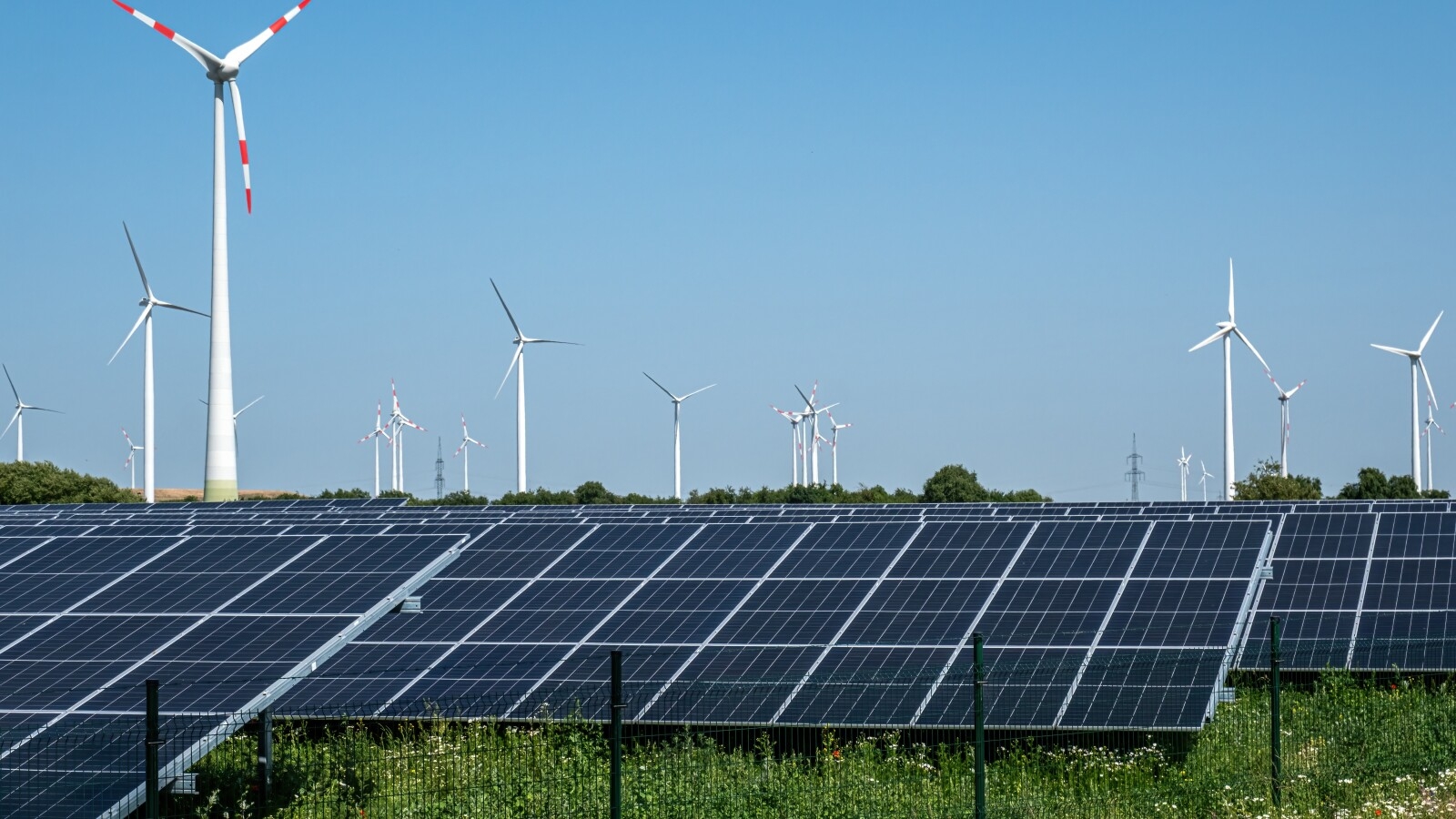
Stafford’s new strategy targets brownfield, mid-market opportunities. For now, solar and onshore wind assets in Italian, Dutch and British markets are the key focus.
“We found that it is important to be part of the market where there isn’t as much capital. We are happy to play in an area where it is smaller scale but with potential to offer compelling upside”, he explains.
The upside potential, Whiteley points out, comes from Stafford’s investment process – one that replaces older technology with more efficient alternatives in a bid to unlock commercial value.
For European renewable energy, the mid-market segment is growing fast. A white paper by Frontier Renewables notes that Europe’s geography and fragmented markets make assets with 50MW – 150MW capacity central to energy transitions.
Crucially, the paper reckons new market segments also bring the prospect of new investment approaches. The mid-market segment has after all, been historically challenging to tap into given misalignment between smaller scale and larger ticket sizes.
Beyond generation
New segments aside, the next frontier of renewable infrastructure investing will likely move beyond generation. At Net Zero Investor’s Renewable Infrastructure Forum last month, investors highlighted why this was likely.
With generation assets now being increasingly integrated into the energy mix, attendees noted the shift in attention – from generation to transmission and storage.
“Within four years, we’re going to have too many renewables on the system”, warned LCP Delta’s head of UK market strategy Sam Hollster. His observation reflected an emerging consensus.
“The grid is becoming the next frontier for investment”, echoed Manuel Dusina, head of real assets at Standard Life.
Ofgem’s director general for infrastructure Akshay Kaul had a timely message for investors that day – policy winds are also moving in that direction too. “Ofgem is working on trying to attract capital into long-duration storage”, he commented.
Stafford’s new strategy then might not be as out of the ordinary after all. If investor focus moves beyond generation, new vehicles and approaches seem a likely consequence. In years ahead, asset owner appetite for renewable energy – whilst on the rise – could find a new home in new frontiers, courtesy of new strategies on the market.
Longview Networks: Institutional Investment Conferences and Summits