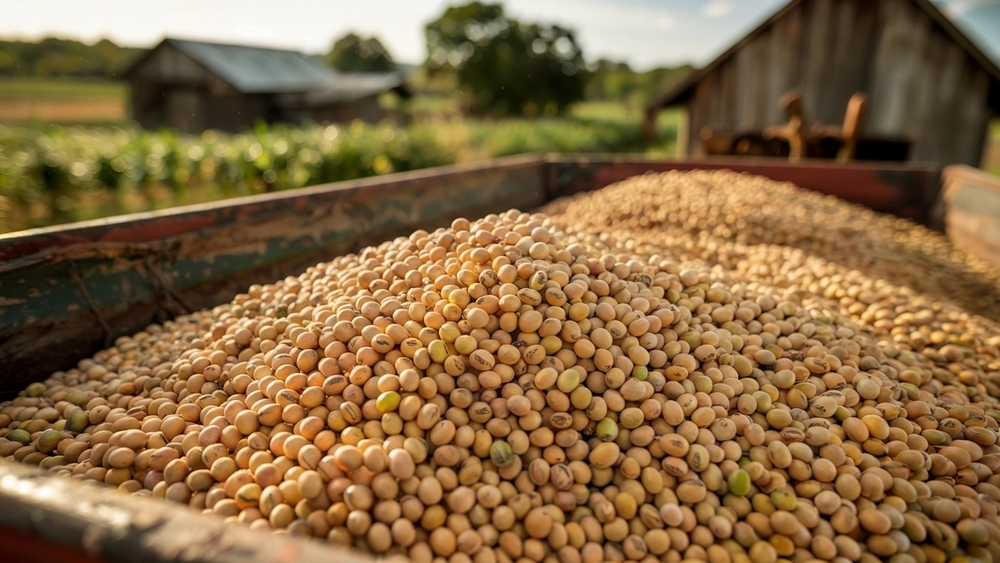
The Green Climate Fund (GCF) has committed $85 million to the Responsible Commodities Facility (RCF), a pioneering initiative aimed at creating deforestation-free soy production in Brazil's critically vulnerable Cerrado savannah.
The Green Climate Fund is the world's largest dedicated fund helping developing countries respond to climate change. Established under the United Nations Framework Convention on Climate Change (UNFCCC), the GCF operates as a financial mechanism to support projects, programmes, policies and other activities in developing countries using thematic funding windows.
Net Zero Investor's Nature Positive Investment Summit | 22 April | London
The investment represents a boost for conservation efforts in one of the world's most biodiverse and carbon-rich ecosystems. The funding will enable the RCF to scale from its current $60m to half a billion by 2028, with the potential to prevent over 25m tonnes of carbon dioxide equivalent emissions.
The RCF operates on a blended finance model, combining commercial capital with financial risk mitigants to create self-sustaining incentives for farmers. Unlike short-term grants, the facility provides below-market interest rate loans to Brazilian soy farmers who voluntarily protect native vegetation beyond their legal requirements.
For institutional investors, facility's blended finance structure de-risks sustainable agriculture investments by combining commercial capital with financial risk mitigants, while delivering verified carbon emissions reductions and biodiversity conservation. The GCF's involvement provides additional credibility and de-risking, with Sustainable Investment Management estimating the investment can be leveraged fourfold, potentially unlocking significant growth opportunities for institutional capital seeking alignment with both financial and environmental objectives.
"This is undoubtedly a turning point for the Cerrado soy programme," said Mauricio Moura Costa, co-founder of Sustainable Investment Management (SIM) and director of RCF in Brazil. "It also offers an opportunity to explore further the development and adaptation of the model for different geographies and commodities."
"The Brazilian Forest Code allows landowners to clear up to 80% of their farms, yet the RCF selects farmers with excess native vegetation and rewards their conservation efforts," explained Pedro Moura Costa, the facility's creator and climate finance pioneer. "Only long-term investment in forest protection can deliver the impact needed to stabilise the climate."
The initiative has attracted diverse investors since its 2022 launch, including UK supermarkets Tesco, Sainsbury's and Waitrose, Dutch development bank FMO, Rabobank, and several other financial institutions. The RCF finances its operations through green bonds known as CRAs (Certificates of Receivables from Agribusiness), registered on both the Vienna Bourse and Brazil's B3 Stock Exchange.
Kristin Lang, Director of the GCF's Latin America and Caribbean Region, highlighted the project's significance: "This blended finance facility will strengthen climate resilience in one of the world's most valuable savannahs. The investment will help align financial incentives for farmers who commit to protecting native vegetation while maintaining Brazil's role as a major global food supplier."
Institutional Investment Conferences & Summits from Longview Networks