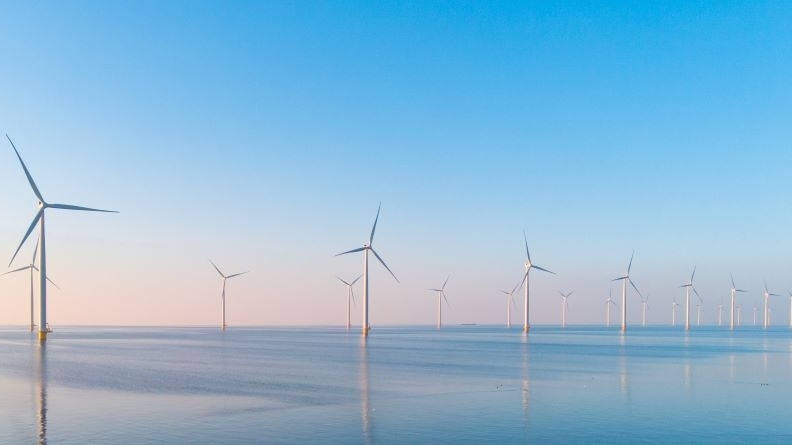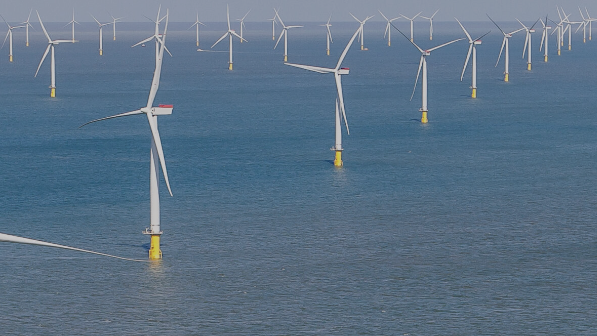
The North Sea Summit, a conference of government and industry figures from nations in the region, have set high targets for offshore wind capacity to be met in less than seven years.
Energy ministers from the UK, France, Ireland, Luxembourg and Norway agreed on a combined target of 120GW offshore wind capacity by 2030, and 300GW by 2050 across the North Sea.
To reach 2030 targets, collectively the nations will need to more than double their current capacity for joint offshore wind.
The UK has committed to supply 50GW of offshore wind, including 5GW of floating offshore, by 2030. There was also an agreement between the UK, Germany, Denmark and the Netherlands to cooperate on developing future production of hydrogen powered by offshore wind.
UK Energy Security Secretary Grant Shapps said: “Today’s deal at the North Sea Summit has the UK centre stage, using its world-leading expertise in renewable technologies to boost the supply of cleaner, cheaper, more secure offshore wind as part of wider efforts across the continent."
The Tory minister added: “But it also sends a strong message to Putin that his control over European energy markets is well and truly over – and that the UK and North Sea countries will be looking to home-grown sources for years to come, boosting energy security and independence.”
The UK will also continue discussions on a hybrid interconnector between itself and Belgium, named Nautilus, as well as identifying opportunities for hybrid offshore wind and interconnector projects in the North Sea with both Ireland and Germany.
Shapps also signed a separate Memorandum of Understanding between the UK and Denmark, which will look to ensure collaboration on the transition from fossil fuels to renewable technologies with focus on offshore wind.
However, as originally reported by Reuters, European energy companies including Orsted and Equinor have claimed to not currently have the capacity to support such a large and rapid upscaling of offshore wind in the North Sea, and called for new regulation to address the issue.
The collective commitment from the countries to increase offshore wind capacity has been labelled the “Ostend Declaration”, named for the Belgian city in which the summit took place.
A report published last week showed that wind and solar generated 12% of global electricity in 2022, a new record.