Brett Himbury on climate conviction amid the ESG backlash
Amidst the backlash, Himbury and his team say they remain true to their climate convictions
Brett Himbury spent a decade at the helm of IFM Investors, an Australian fund manager owned by pension funds. As chief executive, Himbury presided over a defining period for the company – one characterised by an expanding client base coupled with the rise of sustainable investing.
The Sydney local is now the chairman of Stafford Capital Partners, a $9 bn fund manager. Stafford’s investments are spread across timberland, private equity and, more recently, renewable energy infrastructure.
Private markets and Portfolio Construction | 5 November 2026 | Central Court, London
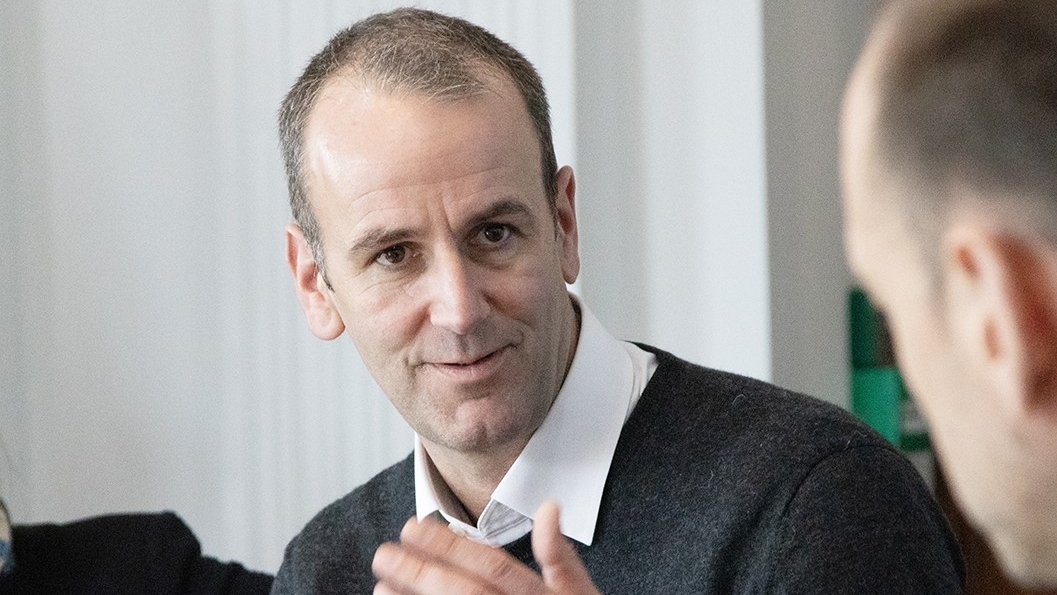
Himbury sat down with Net Zero Investor to discuss how his team navigates the ESG backlash and why he has opted to stay true to his climate convictions.
Decade down under
IFM is currently owned by 15 Australian superannuation funds and Nest, the UK’s largest workplace pensions provider. Looking back, Himbury says the ownership model shaped the organisation’s investment beliefs.
“IFM was an interesting beast in that sense. It was one of the few fund managers in the world owned by industry super funds. That created not just a unique ownership model but a unique purpose: we exist for the benefit of the working people of Australia”, he says.
In the three years leading up to Himbury's departure in 2020, IFM’s funds under management grew from roughly $70bn to over $100bn. Between 2017 and 2019, the company added nearly 150 new clients to its roster, over 90% of which were outside Australia. Simultaneously, IFM adopted net zero targets towards the end of his tenure and a global energy transition infrastructure strategy was launched soon after.
“The reason I think we performed so well at IFM is that there was an authenticity. We believed it. We didn't just say it because it was a slogan on the wall”, Himbury affirms.
Staying the course
With $95.9bn in its infrastructure equity portfolio and $6.8bn in infrastructure debt, IFM is an asset management behemoth. In comparison, Himbury says Stafford is more of a middle power – a feature that shapes Stafford’s sustainable investment beliefs.
“We see ourselves as a middle power. It's important for us to have the courage of our convictions, even when it's not politically fashionable, and sometimes even dangerous, to talk about the importance of climate”, he says.
The backlash put that courage to the test. When larger asset managers initially withdrew from the Net Zero Asset Managers Initiative (NZAM), Stafford chose to stay.
Stafford did, however, evolve its approach. “We've been very conscious that in some parts of the world we need to be a bit more sensible”, Himbury notes.
That meant balancing the scepticism over climate terminology against the consistency of investment beliefs. Through it all, Stafford managed to close $3bn in real asset funds with an energy transition tilt – a record high for the manager.
Close the loop
Himbury says there were lessons to be learnt, one of which, was the value of managers communicating the economics of the energy transition at the company level.
“I think as investors we've made a lot of progress in how we report and demonstrate outcomes, but there is an opportunity to go further and close the loop between those outcomes and the economics of the investment”, he says.
Looking ahead, Himbury acknowledges a pivotal shift in the climate conversation. In his view, the transition is now asset owner-led and grounded in economics.
For managers who want to stay the course, Stafford’s chairman has a message:
“We need to talk about both emissions and economics and demonstrate more clearly how the two connect”.