Greatest global economic risks are climate and biodiversity loss, says WEF report
World Economic Forum sees investors as key drivers in ensuring companies keep to net-zero targets in a ‘polycrisis’ world.
The latest Global Risk Report from the World Economic Forum (WEF) has placed environmental issues as the top four concerns for the next decade.
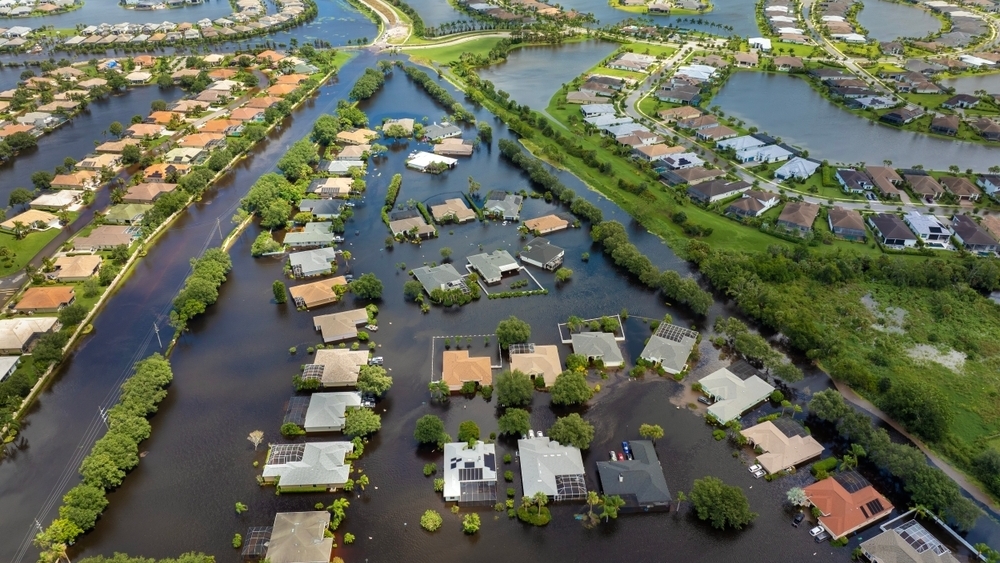
The report identifies failure to mitigate climate change, failure of climate change adaptation, natural disasters and extreme weather events, and biodiversity loss as the greatest risks facing the world and global economy until at least 2033. Natural resource crises and large-scale environmental damage incidents were also ranked at sixth and tenth place.
Produced in partnership with Marsh McLennan and Zurich Insurance Group, the report has been released in advance of the WEF annual meeting in Davos on 16 to 20 January.
Of the role of the financial sector in the fight against carbon emissions and climate change, John Scott, head of sustainability risk at Zurich Insurance Group, said: “Solving climate change is the ultimate team sport. It has to be governments, it has to be business, it has to be the finance sector working together to address these complex and systemic issues.
“There’s an awful lot of companies saying they're doing really good things, and have published transition plans. The finance sector has a really important role here, especially in the investment space, to make sure that companies deliver on what they say they're going to do in these plans.”
In the report’s accompanying Global Risk Perception Survey, which received responses from over 1,200 people across academia, business and government, Scott noted that over 70% of respondents rated current efforts to mitigate climate change as “ineffective”.
According to the report, climate and environmental risks need to be the “core focus” of perceptions of global risks over the next decade, and are the risks for which the global economy is “seen to be the least prepared”.
The report also identified a perceived lack of progress on climate targets, which “has exposed the divergence between what is scientifically necessary to achieve net zero and what is politically feasible”.
Solving climate change is the ultimate team sport.
An ‘uninsurable’ world?
With the four main WEF concerns for the next decade being environment-based, it raises the question of whether certain geographies and industries will become “uninsurable”, as the risk is too high.
Carolina Klint, head of European risk management at insurance broker Marsh, said: “Companies are starting to realise the importance in making mitigating efforts, and a willingness to invest upfront in order to become insurable has increased over time.
“There's also a huge opportunity going forward for public private partnerships to close some of those protection gaps that have arisen from the impact of a world that is so interconnected and incredibly volatile, and dramatic.”
The WEF report also identified that emerging risks could collectively evolve into a “polycrisis” centred on natural resource shortages by 2030. Of concerns within the next two years, the cost-of-living crisis was identified as the top priority.
Previous publications of the Global Risk Report have not always accurately identified upcoming economic and global crises. When the coronavirus pandemic swept the world in 2020, infectious diseases had not been a top five global impact identified in the risk report since 2015.