Investors push steelmakers over rising financial risks of methane
29 investors with nearly $10tn under management have placed a spotlight on methane’s financial materiality
When UN secretary general António Guterres addressed London Climate Action Week this year, he placed a spotlight on methane. “Invisible, odourless and driving nearly a third of today’s global warming”, he said whilst reminding the audience of an often-forgotten conversation.
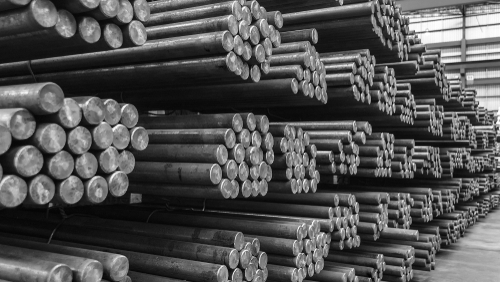
That conversation – around methane’s looming financial materiality – is gathering steam amongst investors. Historically, the focus has been oil and gas companies. Now, investors are expanding that ambit to include steel and the metallurgical coal that goes into its production.
NZI Transition and Climate Investment Conference | 22 October | London | Register here
29 institutional investors with a collective $9.8tn under management have backed a statement calling on companies in the steel value chain to push the envelope on methane abatement.
Steel methane
Methane’s warming potential over a 20-year period exceeds that for carbon dioxide by a factor of 84. It also has a lower atmospheric life than carbon dioxide, meaning its abatement offers near term warming benefits.
Methane enters the steelmaker’s realm through metallurgical coal, courtesy of blast furnaces. The investor statement frames methane intensity as a ‘long-term financial risk for laggards’. It is, by their framing, an issue that is an operational and regulatory consideration.
The statement was signed by Nordic asset owners including AkademikerPension, PFA Pension, Church of Sweden, Sampension. UK asset owners Nest, Church of England Pensions Board, Scottish Widows have backed it too, as have Australian super funds Aware Super, HESTA and Rest.
BNP Paribas Asset Management, Aegon Asset Management, Fulcrum Asset Management, Royal London Asset Management and Fidelity International have pledged their support too.
“Methane from metallurgical coal is one of the most material and actionable emissions challenges in the steel value chain today”, says Sue Lyn Stubbs, associate director for sustainable investing at Fidelity International.
Stubbs reckons methane’s financial materiality for steel players has to do with regulatory risk, commercial competitiveness and cost profiles. “Better measurement and practical abatement can reduce transition risk, improve competitiveness and help protect long-term value”, she explains.
Investor awareness
The scale of capital represented in the signatory sheet speaks to growing investor awareness over methane risks in steelmaking. That awareness has been growing in recent years, building on far more mature conversations already underway in the oil and gas industry – covering leak detection and flaring for instance.
For steel and met coal, awareness is building. “Investor awareness of metallurgical coal methane is moving rapidly from niche to mainstream”, Stubbs points out. Not only are signatories to the new statement a mix of asset owners and managers, but they also hail from a wide range of jurisdictions.
In parallel, Stubbs reckons nuances of the steel industry’s transition are becoming apparent. On the one hand, investors are looking to support low carbon technologies. On the other, these technologies are yet to scale and blast furnace production still remains dominant in the industry.
This has prompted investors to look out for emissions reductions that are viable in the short term. Methane abatement from metallurgical coal is a case in point.
OGMP precedent
A key precedent for investors comes in the form of the Oil & Gas Methane Partnership 2.0. A programme coordinated by UNEP, it remains a cornerstone of industry-wide accountability for methane abatement.
Now, the UNEP is seeking to replicate this for steelmakers under the aegis of its International Methane Emissions Observatory. Investors are urging steelmakers to sign up.
“The steel methane programme has the potential to do for metallurgical coal methane what OGMP 2.0 helped achieve for oil and gas. It can help establish clearer expectations, stronger accountability and a credible pathway to emissions reductions”, Stubbs notes.
For investors the initiative brings a critical tool to the table – credible comparison.
Separating the wheat from the chaff moves methane abatement beyond disclosures. It provides, as OGMP 2.0 did, a language through which progress can be benchmarked. Moreover, it makes the issue more systemic and embedded within transition investment decisions.
The evidence, of which the latest statement is a part, shows investors taking methane seriously. In so doing, they are seemingly addressing what Guterres viewed as methane’s defining challenge – visibility.
Longview Networks: Institutional Investment Conferences and Summits