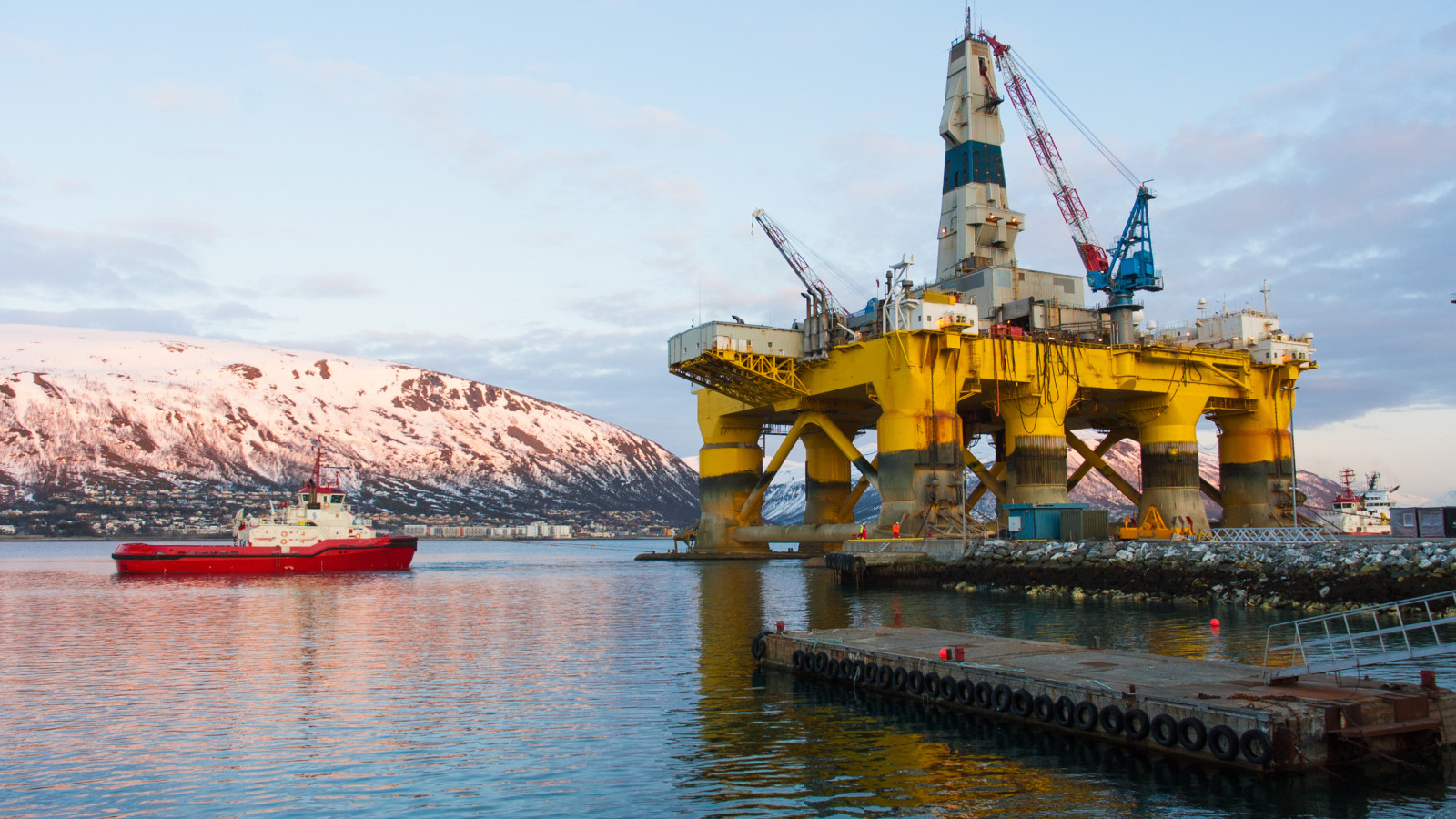
Investors warn EU against linking Arctic fossil fuels to energy security
Ahead of the upcoming strategy update, investors have called for maintaining fossil fuel exploration restrictions
Europe is in the process of updating its view on Arctic oil and gas. The EU’s Arctic policy consultation – now closed – was driven by concerns over climate change and energy security. Investors, companies and researchers have submitted their input, for a new strategy expected to be adopted later this year.
Nordic institutional investors have also weighed in, warning against further oil and gas exploration.
NZI Climate Solutions Summit | 23 June | London | register here
Investor input
Last week, investors – including the region’s pension providers – signed a letter making their position clear. The investors’ concerns have to do with the EU potentially reconsidering its opposition to oil and gas exploration in the Arctic.
“Against this backdrop, we urge the European Union to maintain and reinforce its commitment to protect the fragile ecosystems north of the Arctic Circle from new oil and gas infrastructure”, the letter reads.
Signatories to the letter include Sampension, PenSam, Lærernes Pension, Akademiker Pension, Pædagogernes Pension, KLP and Velliv among others.
Nordea Asset Management has also signed the letter. A group of Danish asset owners had challenged Nordea’s Arctic fossil fuel financing at its AGM in March.
The letter argues that oil and gas exploration would increase pressure on one of the world’s most vulnerable ecosystems – which is already experiencing warming at four times the pace of the global average.
“This is a major decision with far-reaching consequences for the Arctic, the climate and the EU's future energy system. That is why it is also crucial to create a public debate about it”, says Katrine Ehnhuus, senior advisor at Mellemfolkeligt Samvirke's Center for Sustainable Finance.
Energy security
Former German vice chancellor Robert Habeck has also signed the letter. It signals a change in tone for Habeck – who previously negotiated Germany’s energy imports including gas from Norway after Russia’s invasion of Ukraine.
It speaks to the wider debate surrounding energy security and Arctic oil and gas. A debate that has resurfaced during the consultation.
“We naturally acknowledge that first with the Ukraine war and now with the Iran war, there has clearly been an increased need to ensure European security of supply”, says Jacob Ehlerth Jørgensen, head of ESG at Sampension – a Danish asset owner.
“But in our view, new oil and gas extraction in the Arctic is the wrong way to go in this regard”, he adds.
Instead, the signatories note, electrification and home-grown renewables offer a more viable solution.
Investors backing the letter also cite project lead times to back up their thinking. “Project lead times average 13 years on the Norwegian continental shelf and are longer in the Barents Sea due to harsh conditions and limited infrastructure”, the letter highlights before concluding that any new projects would not reach full production before 2040.
“Long lead times mean that new fields would only become operational when Europe should already be well advanced in its transition away from fossil fuels”, Jørgensen wrote in a letter Sampension submitted to the EU in March.
The letter goes a step further, making the case that further exploration of oil and gas in the Arctic could become a security risk.
“The changing geopolitical situation has heightened the security risks in the Barents Sea, with oil and gas infrastructure being potential targets for hybrid warfare due to the proximity to Russian territory and the Northern Sea Route”, the letter warns.
Norwegian clearance
Parts of the southern Barents Sea (north of the Arctic circle) has been opened by Norway for petroleum activities. This has become another flashpoint in the consultation.
“The Commission should reflect in the revised Arctic Policy that the Norwegian part of the Arctic that is open for petroleum activities, are governed by well-established and comprehensive environmental and oceanic management plans and governance”, claimed Norwegian energy giant Equinor in its response to the consultation.
“The current operations take place in areas that are ice-free year-round”, the submission stressed.
Last week’s investor letter takes issue with this view. “The ecological value of this zone is not defined by the presence of sea ice alone, but by the ecosystems linked to it”, the letter responds.
In recent months, the debate over energy security and Arctic fossil fuels has gathered momentum. With investors and companies weighing in, the EU’s response in its Arctic policy update remains to be seen.
Longview Networks: Institutional Investment Conferences and Summits