‘Summer of truth’: Europe plans to tackle climate insurance gap with new alliance
Europe is set to launch a new alliance to tackle the insurance gap for climate-related losses, EC president Von der Leyen announced today
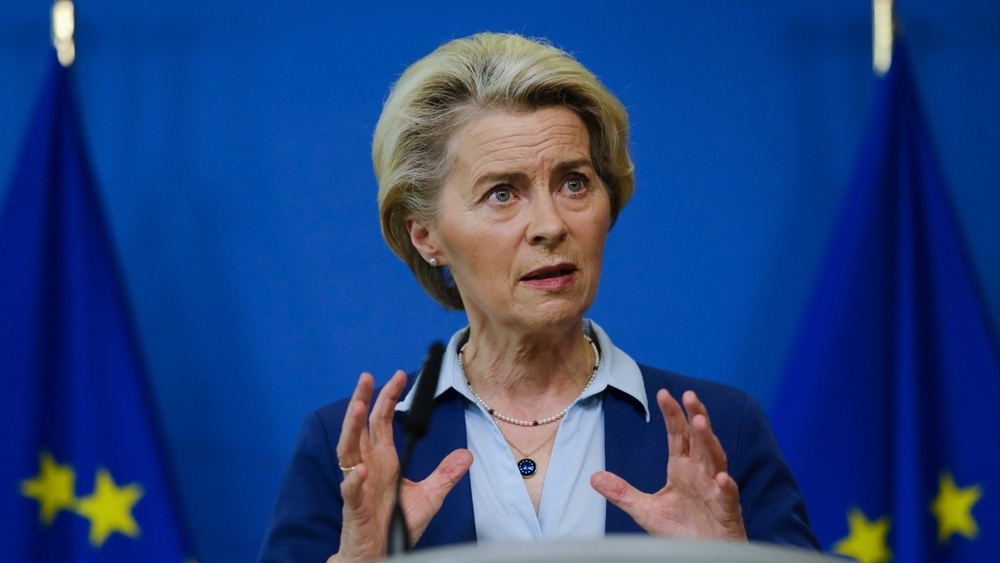
“This summer was the summer of truth”, said European Commission president Ursula von der Leyen in her state of the union address, highlighting the continent's increased vulnerability to climate-related extreme weather events.
NZI Transition and Climate Investment Conference | 22 October | London | Register here
Her speech offered examples of more frequent, severe weather: rivers such as the Danube drying up, 12 million tonnes of damaged crops, 660,000 hectares of land burnt and 35,000 additional deaths linked to the 2026 heat waves. “Almost no part of our continent was spared”, she warned before urging European lawmakers to stay the course on the group’s climate targets.
As part of her address, Von der Leyen also highlighted the widening private insurance gap in catastrophe losses. “Today, only around 25 % of catastrophe losses in Europe are covered by private insurance. This means that, far too often, national budgets become the insurer of last resort.”,
Von der Leyen announced that the Commission would set up a new Climate Insurance Alliance consisting of insurers, investors, risk modellers, public authorities and insurance takers to work on increasing insurance uptake.
Pooling private risks
While Von der Leyen dit not offer much detail on the plans, earlier research by EIOPA and the European Insurance and Occupational Pensions Authority (EIOPA) and the European Central Bank (ECB) offers a key indication on the direction of travel.
EIOPA analysis shows that between 1980 and 2024, roughly a quarter of losses linked to extreme weather events were insured.
In 2024, the two proposed a solution to pool private risks through an EU-wide public-private reinsurance scheme. “By pooling private risks and perils across the EU, this scheme would exploit economies of scale and diversify the coverage of high risks at the European level. It would be funded by risk-based premiums from (re)insurers or national insurance schemes”, reads the 2024 joint ECB EIOPA research document.
Earlier this year, the European Stability Mechanism (ESM) and EIOPA proposed the introduction of a new mechanism for better climate risk management whci hwould combine a Europe-wide natural catastrophe insurance pool with a a loan-based backstop for extreme tail events that exceed the pool’s capacity. Such a pool could seek investments from long-term asset owners such as pension funds and insurers to either take equity stakes or fund the mechanism though fixed income stakes similar to catastrophe bonds.
The incoming Climate Insurance Alliance will therefore have precedents to build on. Set against the backdrop of record-breaking heatwaves and burgeoning catastrophe losses, the alliance will have a tall task ahead – of closing aclimate insurance gap in the world’s fastest-warming continent.
Climate insurance
The theme of widening protection gaps and rising costs in insurance markets reflects a wider, global trend. Analysis from Munich Re estimates global losses linked to natural disasters at $112bn, of which 60% were uninsured.
The Swiss Re report also noted that Europe is the world’s ‘fastest-warming’ continent, warming at twice the pace of the global average. Heatwaves across Western Europe, seen in May and June this year, were some of the hottest on record. A recent world weather attribution report reckons fossil fuel emissions were a key driver.
EC president Von der Leyen echoed these concerns and stressed Europe’s increasing warming rate
“Science is clear. Europe is warming at double the global rate. Of course, the transition is complex. And we will need to adjust and learn along the way. But there is no doubt: Europe can, must and will stay the course on its climate targets”, she said.
A new climate resilience framework, she affirmed, will be announced by the European Commission next month.