
LGPS pool LPPI to launch new Environment Opportunities Fund
Local Pensions Partnership Investments (LPPI), is set to launch a new Environment Opportunities Fund as Net Zero Investor can reveal
The fund, which will be a multi-strategy private markets vehicle, aims to capitalise on the opportunities arising from the global transition towards net zero and is due to launch early next year, LPPI’s Chief Investment Officer (CIO) Richard Tomlinson told NZI's sister publication Private Markets Profile in an exclusive interview.
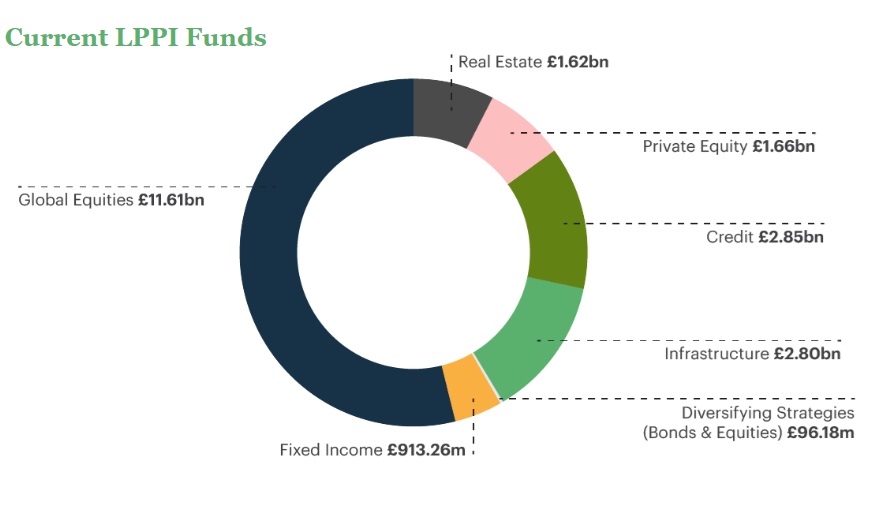
LPPI is the investment manager for the £26.3bn Local Pensions Partnership (LPP) pool which launched in 2016, as a collaboration between the Lancashire County Council (LCC) and London Pensions Fund Authority (LPFA). Unlike some LGPS Pools, it benefited from significant in-house private markets capacity and has been managing private markets vehicles since inception.
Like most of its peers, the LGPS pool has traditionally left asset allocation in the hands of its partner funds, but the launch of this thematic multi-asset strategy signals a shift. As more pools create their own multi-asset strategies, LPPI is following suit with its own approach to tackling climate change.
Responding to client demand
Tomlinson emphasises that the new fund is largely a response to increasing demand from clients committed to net zero targets. “Our clients were talking about climate solutions as part of their broader commitments to net zero,” he explains. For asset owners signed up to the Institutional Investor Group on Climate Change (IIGCC), investing in climate solutions is a natural progression of those commitments.
“Building on these exposures, the key thing for us is the intention. What we currently have in our portfolio are investments with good ESG characteristics. With our new fund, there is a direct intentionality to invest in climate solutions. Obviously, the financial component is a big part of that but there is a subtle difference.”
LPPI has yet to disclose a target size for the new fund, but Tomlinson hints that it will be “meaningful.” He highlights the fund’s unique positioning as a multi-asset private market strategy designed to capitalize on opportunities presented by the global energy transition.
Building on LPPI’s experience in private markets
While the fund’s climate focus may be new, private market investing is not unfamiliar territory for LPPI. Since 2016, the pool has managed significant capital across infrastructure, private equity, and credit strategies. This includes some commitments to renewable energy infrastructure through a collaboration with Infrastructure platform GLIL.
The new Environment Opportunities Fund will build on this expertise but will be managed in-house by LPPI's 70 person strong investment team.
“We have been managing a very significant amount of money in private capital since 2016; this is just building on our existing capabilities,” Tomlinson says. Although the fund will benefit from the broader LPPI platform, it will operate as a separate entity.
The mandate for the fund is designed with flexibility in mind, initially encompassing fund-based investments it is set up to expand into co-investments, and potentially direct investments over time. While the fund’s early stages will focus on infrastructure and private equity, it may expand into other asset classes like private credit, though Tomlinson expects this exposure to remain limited.
Three key objectives: mitigation, adaptation, and nature protection
Tomlinson outlines the fund’s three primary goals: climate mitigation, climate adaptation, and the protection and restoration of biodiversity and ecosystems. “The intention here is clear,” he says, noting that while LPPI’s existing portfolio contains investments with strong ESG characteristics, the new fund will have a direct focus on climate solutions.
Although climate opportunities are a broad category, LPPI is intent on investing in established technologies rather than speculative ventures, reflecting the pool’s focus on long-term, sustainable growth.
Navigating a changing market landscape
The launch of LPPI’s Environment Opportunities Fund comes at a time when the private markets landscape is evolving. Tomlinson remains cautiously optimistic about the fund’s potential, noting the long-term thematic tailwinds of the energy transition. However, he is measured in his outlook, acknowledging the challenges of defining the parameters of such a wide-ranging mandate.
When pressed on return expectations, Tomlinson declines to make any bold predictions, instead emphasising the importance of risk management and solid underwriting. While the fund is not chasing the highest possible returns, Tomlinson is confident that it can deliver “a healthy return over cash with an appropriate risk profile.”
In a climate where private market returns are constantly shifting, LPPI’s new fund seeks to strike a balance between financial performance and environmental impact, offering long-term commitments of 10 to 15 years.