Exclusive: ‘Divest if you foresee an acute risk,’ says Munich Re’s ESG chief
The head of ESG investments at Munich Re speaks about calculating and managing net zero risks in investment portfolios
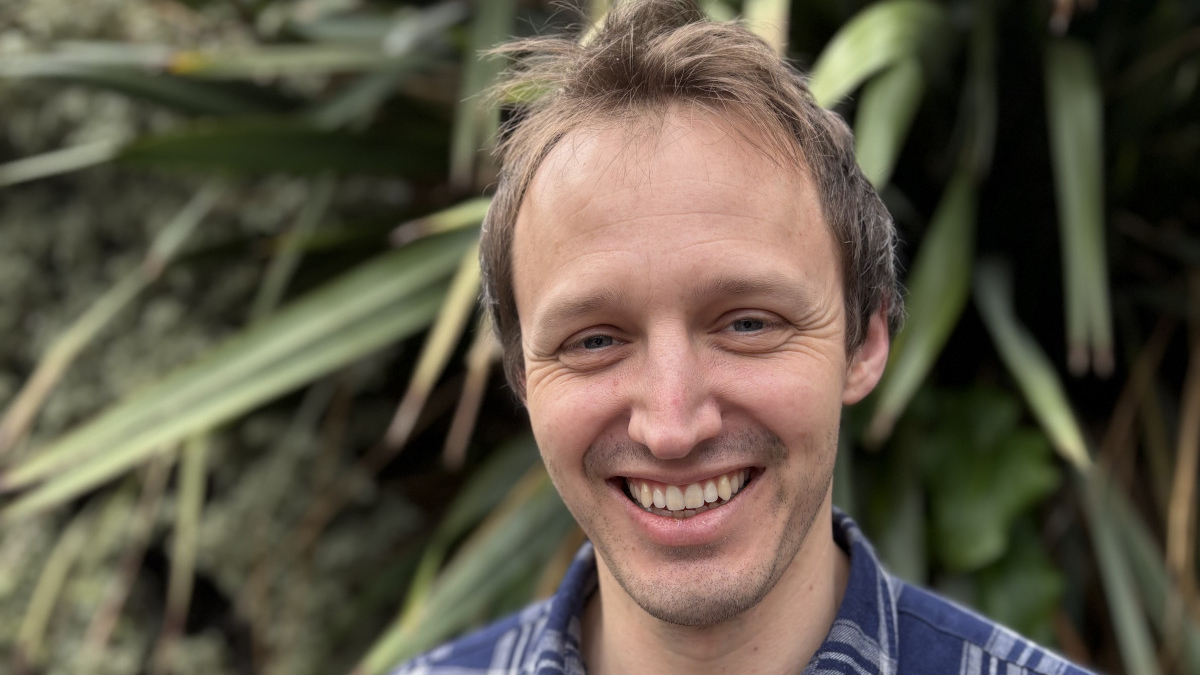
An economist by background, Leonhard Forster has been with German insurance giant Munich Re for about 15 years.
The born and bred Bavarian initially worked at the multinational company’s core business – insurance and reinsurance - where he focused on developing new business models in investment and technology, which have now both been brought into the sustainability field.
At the end of last year, Forster took the reins of the environmental, social and governance (ESG) team at Munich Re.
“It fascinates me that we’re able to use the natural strengths of the group and our capabilities in analysing natural events and developments … to understand its economic relevance and then use that to inform our business decisions,” he told Net Zero Investor in an interview.
Positive impact
Munich Re, which plans to lower net greenhouse gas (GHG) emissions in its investment portfolio by a further 25% to 29% by 2025, engages with investee companies – mostly high-emitting ones – to ensure that they are on the right path in the low-carbon transition.
“I like engagement particularly, because it gives a two-way flow of information,” Forster said.
“We have a chance to mention what is important to us in terms of climate policies, but this is not one-sided. We also get transparency from the companies on their risk management and strategy.”
“That helps both our investment decisions and understanding of the struggles that companies may have. Also, we might get the chance to support their transition path,” he added.
Munich Re is mainly engaging with investee companies within the scope of investor-led initiative Climate Action 100+.
Divestment, on the other hand, is “to some extent a trade-off,” the ESG investment specialist noted. “The question is: ‘how far does divestment have a real-world impact?’”
Sometimes, it might be necessary to divest, especially if you foresee an acute ESG risk.
“As an investor, you have the opportunity to steer decisions to a certain extent. If you want to continue this kind of influence with a positive impact, divestment is not the best option,” Forster pointed out.
“We need to stay relevant to those companies to have a say in their climate and general ESG policies.”
Immediate risks
For the German company, the integration of ESG criteria across all investment processes can help identify risks and opportunities beyond the standard financial analysis. “It includes a decentral approach; we’re working with multipliers across the organisation,” Forster explained.
However, ESG data availability is “very heterogeneous” from one asset class to another, he added.
“How far we can provide to the investment decision takers relevant and useful ESG data still sometimes depends on its availability as the space is evolving … and that might influence the emphasis on ‘E,’ ‘S,’ or ‘G’ aspects.”
The ESG expert flagged that for now, the most data were available on the environmental side.
ESG is also what drives Munich Re to exclude investee companies that are not in line with its responsible investment guidelines.
“We have already reduced our involvement in fossil fuels,” Forster stressed. “We need to follow this path balancing our own impact and the transition we can support.”
“Sometimes, it might be necessary to divest, especially if you foresee an acute ESG risk,” he added, citing as an example a company violating human rights and, as a result, facing litigation risks.
“In that case, we might have to take immediate action and divest rather than trying to convince the company in question or work with it towards respecting human rights,” he stated.
Insurance costs
Last year, losses related to natural disasters amounted to about $270bn and insured losses to roughly $120bn, according to Munich Re. This is pushing insurers, already confronted with high inflation and interest rates, to find solutions to mitigate the risks.
The German firm, which started researching on the subject in the 1970s, points to the importance of investigating the scientific background, analysing large quantities of data and developing high-resolution risk models.
But on the insurance side, Forster said, it’s not just about adjusting risk models, but about finding innovative solutions.
“There are, for instance, very interesting public-private partnerships … like the pool of natural catastrophe insurance for Caribbean islands – known as the Caribbean Catastrophe Risk Insurance Facility (CCRIF), or the African Risk Capacity Group (ARC).”
Looking at where we are in terms of global emissions and warming, the likelihood is high that we will need carbon removal.
As for investments, the group has been supporting, for example, organic farming in the United States.
“If a farmer switches from traditional farming to organic farming, he can’t label his products as organic during a transition period,” the ESG investment chief emphasised. “This might cause liquidity issues for the farmers. We help to mitigate financial outages with specific investments and lending structures.”
In an interview last year, Munich Re’s chief climate scientist Ernst Rauch explained that “the question is not whether this world is insurable – but at what cost it is insurable.” When Germany’s Ahr Valley suffered from flood, many insurance firms increased their premiums. Rauch however said that those could become so high that “it’s simply no longer worth taking out a policy.”
Climate solutions
Munich Re has stopped investing in companies that generate more than 30% of their earnings from coal or extraction from oil sands. It intends to lower its coal-related exposure in its direct and facultative insurance business by 35% by 2025 and reduce GHG from operational oil and gas production in facultative, primary and direct property insurance by 5% by that same date.
At a time when governments are widely betting on climate technologies that may prevent them from imposing sobriety measures to consumers, Forster believes that both are needed.
“We know that significant reductions in emissions are necessary on a global level to be in line with the Paris Agreement,” he noted. “At the same time, looking at where we are in terms of global emissions and warming, the likelihood is high that we will need carbon removal, because GHG emissions will stick in the atmosphere for some time.”
“Both nature-based solutions and technology-based solutions need to be in scope for carbon removal,” he added.
Among financial players, the ESG investment expert pointed to “a lot of good efforts and target-setting.” Yet, “if we look at the state of the world overall and compare it with what has been agreed in Paris, mankind is on a path to potentially jeopardise our objectives.”
As such, Forster is not overly optimistic and called on the world to urgently take action. “But ecological interests and economic substance have to walk hand in hand.”