UK Trustee Roundtable takes stock of FMLC paper on climate change
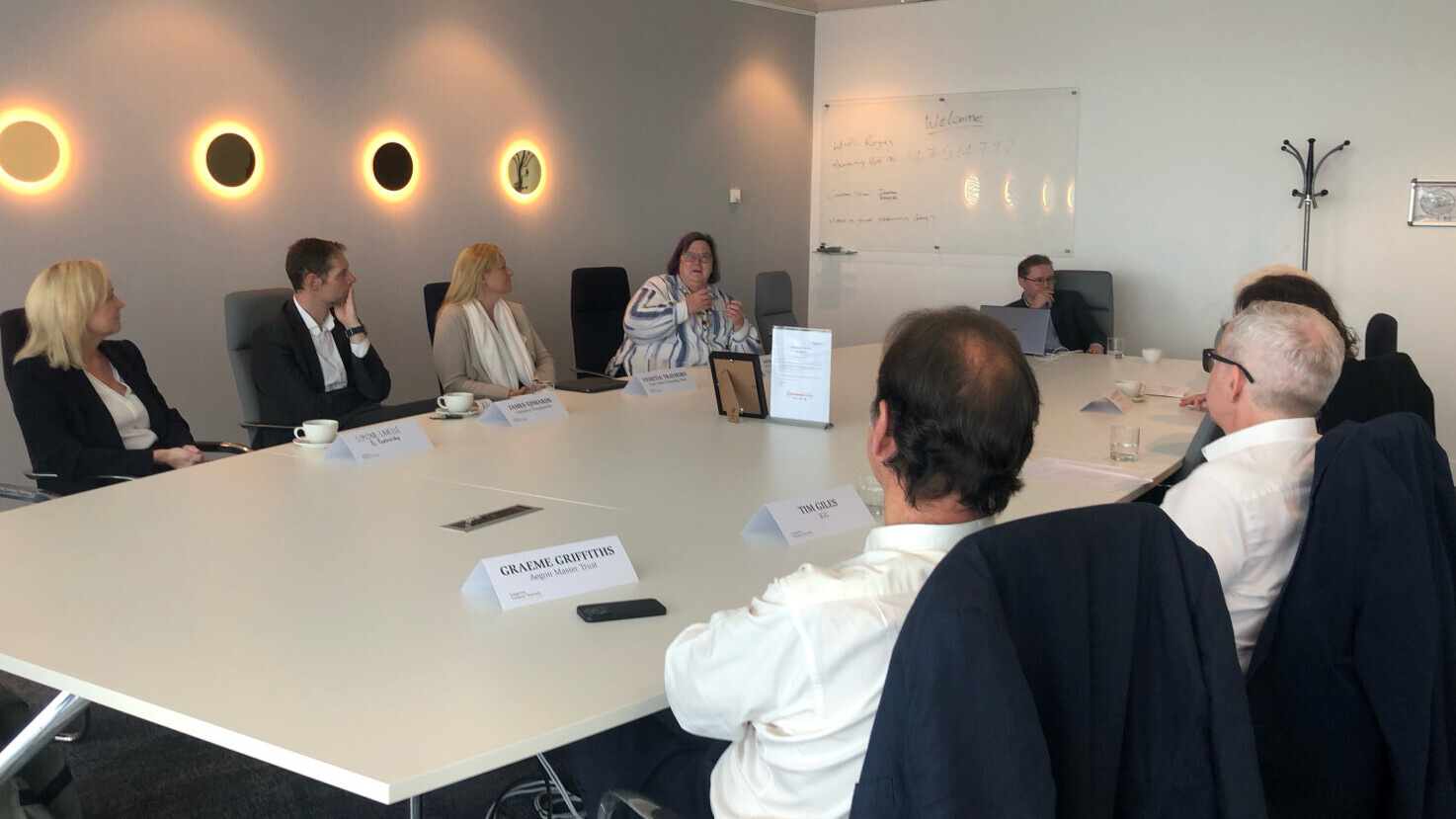
Longview Networks, the publisher of Net Zero Investor, brought together a group of seasoned trustees for UK DB and DC schemes to discuss how they navigate the balance between tackling climate change and fiduciary duty in their investment decisions
The balance between fiduciary duty and mitigating the risks of climate change is delicate. On one end of the spectrum are ESG sceptics who argue that climate-conscious investing is a flawed attempt by do-gooders to bring morals into financial decision-making, potentially risking negative returns for scheme members. On the other side are a growing number of investors who recognise that the tangible financial impact of climate change is likely to have a material effect on their members, some of whom are set to retire in the coming decades. Do trustees have an obligation to factor the financial risks of climate change into their decision-making?
In the UK, a concerted effort has been made to weigh into the debate with a hotly discussed paper published by the Financial Markets Law Committee (FMLC), a body which provides legal advice to financial market stakeholders, at the beginning of this year. The paper argued that climate change was indeed a financially material factor to be considered in investment decision-making.
Five months on from the publication of the paper, Longview Networks, the publisher of Net Zero Investor, brought together a group of seasoned trustees for UK DB and DC schemes to discuss how they navigate the balance between tackling climate change and fiduciary duty in their investment decisions.
Alan Pickering, president and trustee at BESTrustees, broadly welcomed the report as “permissive, rather than prescriptive” but also stressed that as a trustee, his primary responsibility was to ensure the schemes he looked after prospered. Pickering acknowledged that for corporate DB schemes, the scope for investing in climate solutions was now relatively limited due to their shorter investment horizon, while he called out the “rampant conservatism” in DC schemes where he believed regulatory standards were overly focused on liquidity.
DC and DB challenges
Anne Sander, Money Purchase Committee chair at the Aviva Staff Pension Scheme and professional trustee with Zedra Governance also acknowledged the significant differences between investing for DB and DC schemes. Aviva’s Staff Pension Scheme consists of both a legacy DB scheme as well as a DC offering. “On the DB side, you would expect to consider the employer and their view on climate change because ultimately, they are going to pick up the risk. On the DC side, the member risks getting a lower return; that is a harder trade-off.” Sander said a key discussion for the scheme was now whether by not investing in green strategies, they could potentially provide better financial outcomes for members in the short term and to what extent they could afford to take a long-term view.
Indeed, Aviva is currently considering investing in a Climate Transition Fund which includes carbon offsets but would involve compromising on returns over the short term.
Venetia Trayhurn, trustee director for the John Lewis Partnership Trust and director at Law Debenture, added that frequent transfers were an additional challenge for DC investors, even though their investment horizon was potentially much longer. She believed that the problem of balancing fiduciary duty and the need to tackle climate change was still “ill-defined” and that the industry was still in disagreement on the scope of the problem to be solved.
Graeme Griffiths, non-executive director and pension trustee at Aegon UK, stressed that even though corporate DB schemes are increasingly moving towards de-risking, they still remain long-term investors. He argued that climate-conscious investing should not be presented as a dichotomy between lower returns and philanthropy against good returns from high-carbon investments. Over the long run, the financial costs of climate change would become material. With that in mind, he also said that the FMLC guidance, while helpful, was not hugely surprising but merely an acknowledgment that climate change was indeed a financial factor.
The duties of trustees in the UK are currently specified by the UK’s Law Commission, which distinguishes between financial and non-financial factors. In the past, some trustees may have interpreted climate change to be a non-financial factor and therefore not part of their primary duty.
But Tim Giles, trustee director at IGG, argued that this would have been incorrect. “Any material ESG factor is de-facto a financial factor and you would be negligent not to consider it in deciding where to invest.” Consequently, he believed that FMLC guidance was not necessarily a game changer but offered clarification.
Divestment dilemma
He also expressed concern about a trend towards divestment, warning that this could lead to private asset owners picking up carbon-heavy assets at a discount and treating them in an unsustainable fashion.
Griffiths agreed, warning that simply divesting from listed holdings in fossil fuels did not solve the problem: “Divestment might make the members feel better because you can paint a picture of reducing the emissions intensity of your holdings, but on its own it doesn’t solve the problem.”
Across the group, trustees expressed caution on divestment. “We leave these assets in the hands of people who have no real perception of the risk-reward trade-off and are just in there to make a quick buck,” Pickering warned.
While the FMLC guidance didn’t set a legal precedent, it gave some comfort to trustees that if they took climate change and social factors into account, they would now have a good legal defence against being sued, added Simone Lavelle, cio at Pi Partnerships. But she also cautioned that trustees should not become overly reliant on such guidance: "Regulation should not always be the answer; trustees need the ability to form strategic opinions rather than just complying with checklists" she stressed.