Reflections COP16 - the role of empathy in nature-based investments
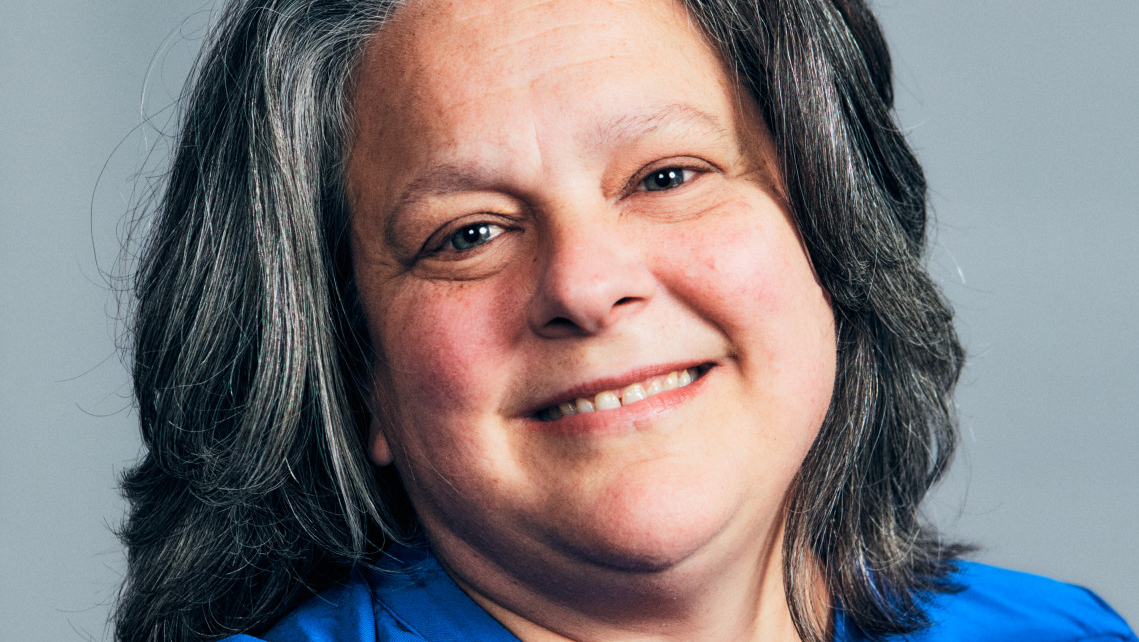
Leanne Clements, head of Responsible Investment at People’s Partnership reflects on her experience at COP16, examining the difficult trade-offs that come with investments in nature-based solutions
Another eventful COP season has ended, with a plenty of commentary on how we have, and have not, progressed in terms of policy commitments on climate and nature.
As we move into another season, Christmas, being known as a time for self-reflection, I wanted to share my perspectives from my Biodiversity COP experience in Colombia (COP16) but from perhaps a slightly different angle. Progress against adherence to policy commitments is pivotal to understand, but underpinning all of that is people and behaviours, and it is vital that we focus on this, especially given that the UN recently referred to COP16 as a “People’s COP to heal the planet”.
We as investors talk a lot at a high level about the need to ensure a ‘just’ transition to a net zero, and a nature-positive economy and the associated trade-offs that will need to form part of investment decision making. After my “People’s COP” experience, I started to ask myself – I am spending a lot of time talking to the same group of people about what we should be doing, who else should I be talking to? How robust is my multi-stakeholder approach to responsible investment decision making?
Leanne Clements will speak on the shape of DC stewardship to come at Net Zero Investor's DC Forum | 30 January | London | sign up here
Three things that The People’s Pension thinks are really important and are acknowledged in its Responsible Investment Policy: Focus (not trying to solve everything), Materiality (do things that matter the most, first) and trade-offs (recognise they exist).
With this in mind, I went into COP16 with a targeted approach rooted in The People’s Pension’s Responsible Investment Policy. The strategy was to focus on food systems given it is a key driver of deforestation, which The People’s Pension, has identified as a priority area, which in turn is a key driver of global emissions. I participated in a roundtable where various members of the food chain were represented, from investors, companies, right down to the farmers. The conversation was deep and informative, but also left me unsettled. There were palpable tensions between the different actors in the room – the “trade-offs” highlighted in The People’s Pension’s Responsible Investment Policy brought to life right before my eyes. One stakeholder’s win was another stakeholder’s deeply felt loss, with no immediate solution in sight. Many questions came to my mind:
Are these new emerging investment vehicles in “nature-based solutions” truly optimising that multi-stakeholder approach to ensure trade-offs are at an absolute minimum?
Are they using empathy as a tool to not only understand stakeholder tensions, but to better appreciate what knowledge they bring to addressing these sustainability challenges? Indigenous communities being an excellent case in point.
Ultimately, trade-offs are difficult, and it was transformational to me to see them play out so visibly. For example, investors may get an attractive return from owning the land in a nature-based solution, but what impact does that have on the farmers, who may have owned the land previously?
However, I still believe that facing into them, rather than ignoring or pretending they don’t exist, which happens far too often, is the way forward.
We stand to leave enormous opportunities off the table if we merely view these stakeholders as a risk to mitigate against - take the social license to operate argument as an example - as opposed to a strategic partner. My numerous discussions with conservationist organisations at COP really brought this idea to the fore. To that end, making indigenous communities a more formal part of the Biodiversity COP process was indeed a political win in Colombia.
Many colleagues at COP encouraged me to view Ernst & Young’s (EY) Four Futures immersive experience, debuted by the global consultancy at a recent climate COP. The immersive experience channels EY’s insights on possible global futures through four imaginary witness testimonies from the 2050s, delivered by AI avatars. Its purpose was to provide a visceral and personable wake-up call, which may be more effective for many than sharing written information. The scenarios are titled: Business as usual, Collapse, Constraint, Transformation (from worst to best case scenarios) – each of which were unpinned by different global warming and resulting social, environmental and economic characteristics.
Whilst some have criticised their approach in terms of whether these characteristics are accurate, I found myself caring less about these perceived failings, focusing more on the empathy I felt in hearing their testimonials, notably and not surprisingly the ones with the worst-case scenarios. The experience has left a lasting impression on me emotionally, and I was left wondering whether the financial sector could benefit from tapping into these immersive experiences, to truly understand at a deep level what dystopian future we are fighting against for the benefit of savers.
Can empathy for our future society help catalyse more action on climate change and biodiversity loss, and to fight against the current complicated political landscape in which we find ourselves? In my view of course it can, the question is – whilst balancing the practicalities of focus, materiality and trade-offs as identified earlier, is our sector prepared to incorporate emotions into our investment decision making? We must, otherwise we will truly leave people, including savers, behind.
Leanne Clements is head of Responsible Investment at People’s Partnership, provider of The People’s Pension