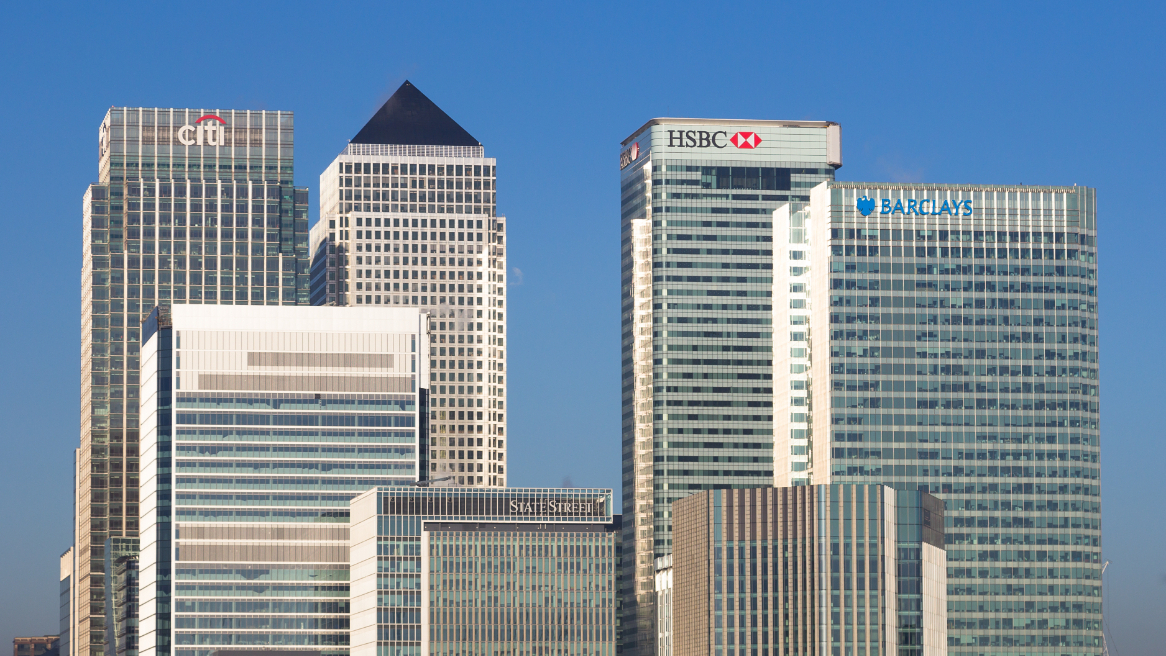
UK banks plough £119bn into fossil fuels despite green pledges
Despite climate pledges, Britain’s biggest banks have channelled twice as much funding into fossil fuels as into green ventures, raising concerns over greenwashing and policy loopholes, InfluenceMap argues.
UK banks Barclays, HSBC and Lloyds have each financed more fossil fuel companies than green companies every year for the past three years, according to a new report by InfluenceMap.
The report assessed the UK’s four largest banks – Barclays, HSBC, Lloyds and NatWest – showing that despite their climate commitments, all four continue to finance high-emitting industries such as oil and gas at rates incompatible with the International Energy Agency’s Net Zero Emissions by 2050 scenario.
This is despite all four banks setting net zero by 2050 targets and introducing restrictions on direct financing to fossil fuel expansion, with their exclusions policies using scope for a continued flow of capital into companies expanding oil and gas exploration.
In fact, the research found that all the banks, except for NatWest, consistently direct more financing to fossil fuel companies than to green companies by “significant margins”.
£119bn to fossil fuels
Between 2020 and 2024, the funding ratio of fossil fuel companies over green companies was 3.1 to 1 for Lloyds, 2.9 to 1 for HSBC, and 1.8 to 1 for Barclays, the report found. NatWest, in contrast, opposed this trend as its total financing deal value for green companies was greater than that for fossil fuel companies, with an average ratio of 1.5 to 1.
Overall, the report identified £119bn in financing from UK banks to the fossil fuel sector between 2020 and 2024, spread across 1,183 individual deals with 354 companies. In contrast, total financing for green companies stood at £59.7bn between 2020 and 2024 – just 3.5% of total financing assessed. This represents half (50.3%) of the deal flow value allocated to the fossil fuel sector.
To put this into context, five oil majors – ExxonMobil, Shell, BP, Aramco and TotalEnergies – collectively received £24.1bn in financing deal flows from UK banks, accounting for 20.3% of total identified fossil fuel financing.
Jeanne Martin, head of the banking programme at ShareAction, said: “As this report uncovers, there is a worrying gap growing between what the UK’s biggest banks are publicly saying about climate and what they are lobbying for behind closed doors.
“Investors must engage with banks on this critical issue, and take action if it is clear banks are working to counter regulations that we urgently need to better protect people and the planet.”
This comes as investor pressure on banks has increased, yet the institutions are still not changing their climate transition strategies. For several years now, investors have questioned the world’s largest banks over the structure of their financing. This year, pressure was back, but so too was the banks’ resistance.
At Lloyds’ AGM in Edinburgh, the Church of England Pensions Board, which manages £3.4bn in funds, called for a full exit from fossil fuel financing. Investors also made their views known at the Barclays AGM on 7 May.
Yet none have so far produced proportionate results, with part of the issue lying in loopholes within the banks’ existing climate commitments, particularly concerning coal.
Banks lobbying against UK climate policy
At the same time, the research found that through direct engagement with the UK government, both Barclays and HSBC lobbied against the ambition of the UK’s proposed sustainable finance framework, “risking the credibility of the transition plan assessments that underpin their exclusion policies”.
InfluenceMap argues that without a clear policy outlining eligibility criteria for transition finance, there is a significant risk of greenwashing by the banks through continued financing of high-emitting activities.
The research also found that in their engagement with government policy, only NatWest and Lloyds recognised the risks of greenwashing and carbon lock-in associated with increased financing to high-emitting sectors.
By contrast, Barclays actively opposed regulatory requirements for determining eligibility for transition finance, while HSBC cautioned the government against defining what constitutes a “credible net zero transition”.
Bonnie Steinberg, senior analyst at InfluenceMap, said: “The banks' continued financing of expansionary oil and gas companies, and Barclays’ and HSBC’s pushback against sound climate-related financial policy, only worsen the long-term risks these banks face.
“To match the ambition of their top-line targets, the banks’ exclusion policies should recognise fossil fuel expansion as a stranded asset while focusing their transition efforts away from carbon lock-in and towards science-based definitions of green technologies.”