UK financial institutions to face legally binding emissions reduction targets
The largest financial institutions in the UK could soon be required to disclose their climate transition plans, or risk sanctions, under proposals announced today
The largest financial institutions in the UK could soon be required to disclose their climate transition plans or risk sanctions, under proposals announced today.
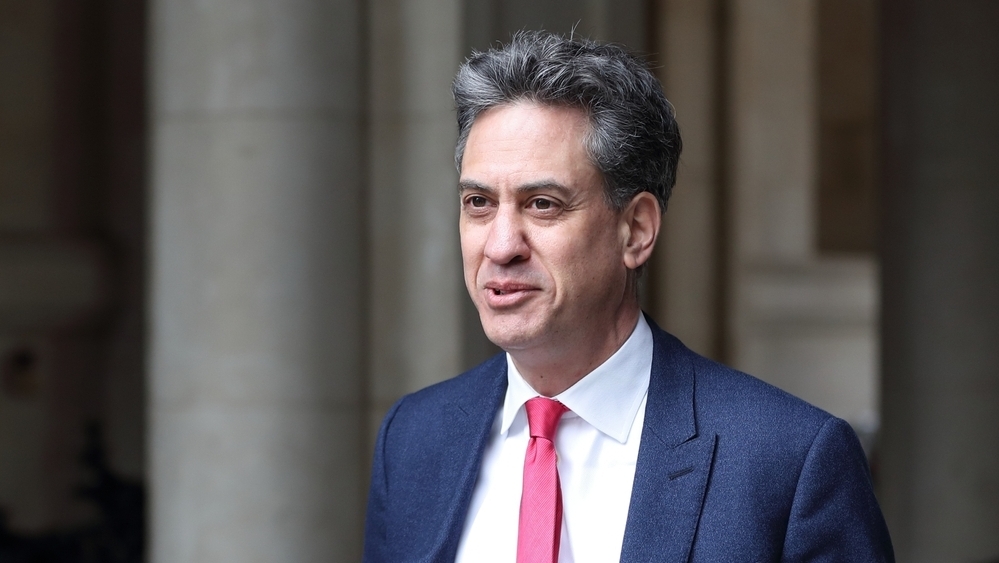
The UK government expects financial institutions, ranging from banks to asset managers, insurers, and pension funds, to step up their climate transition planning, the secretary of State for Energy Security and Net Zero, Ed Miliband, said today.
Speaking at the Climate Innovation Forum during London’s Climate Action Week, Miliband outlined details of a government consultation launched today, which is open for feedback from the financial sector until September. "Our plans will transform our leading financial services sector into a global hub for green investment" Miliband said.
The proposals include three potential pathways for transition planning ranging from the least stringent "comply and explain" requirements, where firms would be encouraged to report on their transition strategy, over mandatory disclosures to the most radical proposal involving mandatory implementation. This could lead to legally binding obligations for firms to deliver on emissions reduction targets and implement climate strategies that fall within their operational control.
Companies would be required to set out Paris-aligned transition plans that comply with the UK Sustainability Reporting Standards (UK SRS), modelled on the IFRS S2. This would involve setting interim five- and ten-year emissions reduction targets, covering Scope 1, 2, and potentially Scope 3 emissions.
The consultation does not currently specify an assets under management (AUM) threshold, but refers instead to “economically significant entities”.
The UK already has binding TCFD reporting requirements in place for all DC master trusts and occupational pension schemes with more than £1bn in assets, asset managers with over £50bn in assets, and other asset owners with over £25bn in assets.
NZI Climate Solutions Summit | 11.09.2025 | London | find out more here
Faith Ward, chief responsible investment officer at Brunel Pension Partnership and chair of the UK's Transition Finance Council said: "I hugely welcome the HMG announcements today. Having been deeply involved in supporting the International Sustainability Standards Board and Transition Plan Taskforce, I am delighted to see the UK take this vital step to regain its leadership role as global centre for green finance.
"Investors want to allocate capital to growing businesses that are taking action to address climate and sustainability risks - and that are looking to business opportunities so that they deliver financially over the long term. They need globally consistent reporting on climate and sustainability actions, alongside critical insights into corporate plans for the transition" she added.
James Alexander, CEO of the UK Sustainable Investment and Finance Association (UKSIF), welcomed the consultation: "We welcome the government's commitment to bringing forward the consultation on climate transition plans for banks and large companies. These are essential for enhancing growth and global competitiveness as the UK and other countries decarbonise. They can also give industry leaders valuable insights into their business’s long-term resilience, guiding strategic thinking."
They were also warmly received by Dr Ben Caldecott, director of the Oxford Sustainable Finance Group at the University of Oxford, who highlighted that investors could benefit from greater transparency. “Transition plans consolidate and simplify corporate sustainability reporting, while supporting private sector investment and innovation. They are an internationally recognised antidote to tick-box sustainability disclosures and are a principles-based approach for bringing the climate transition into corporate strategy and the boardroom.
“Transition plans help investors to understand whether companies are transitioning to net zero and whether they are going as quickly as they reasonably can, considering what is feasible and economic. They also help governments to understand what is holding back company progress, supporting better industrial and energy policy” he added.
Nature takes centre stage as London kicks off Climate Action Week