
UK master trusts step up climate efforts but face criticism over fossil fuel exposure
UK master trusts have made some progress on climate ambitions this year, with several of the largest providers ramping up their climate commitments. However, fossil fuel holdings remain a significant concern
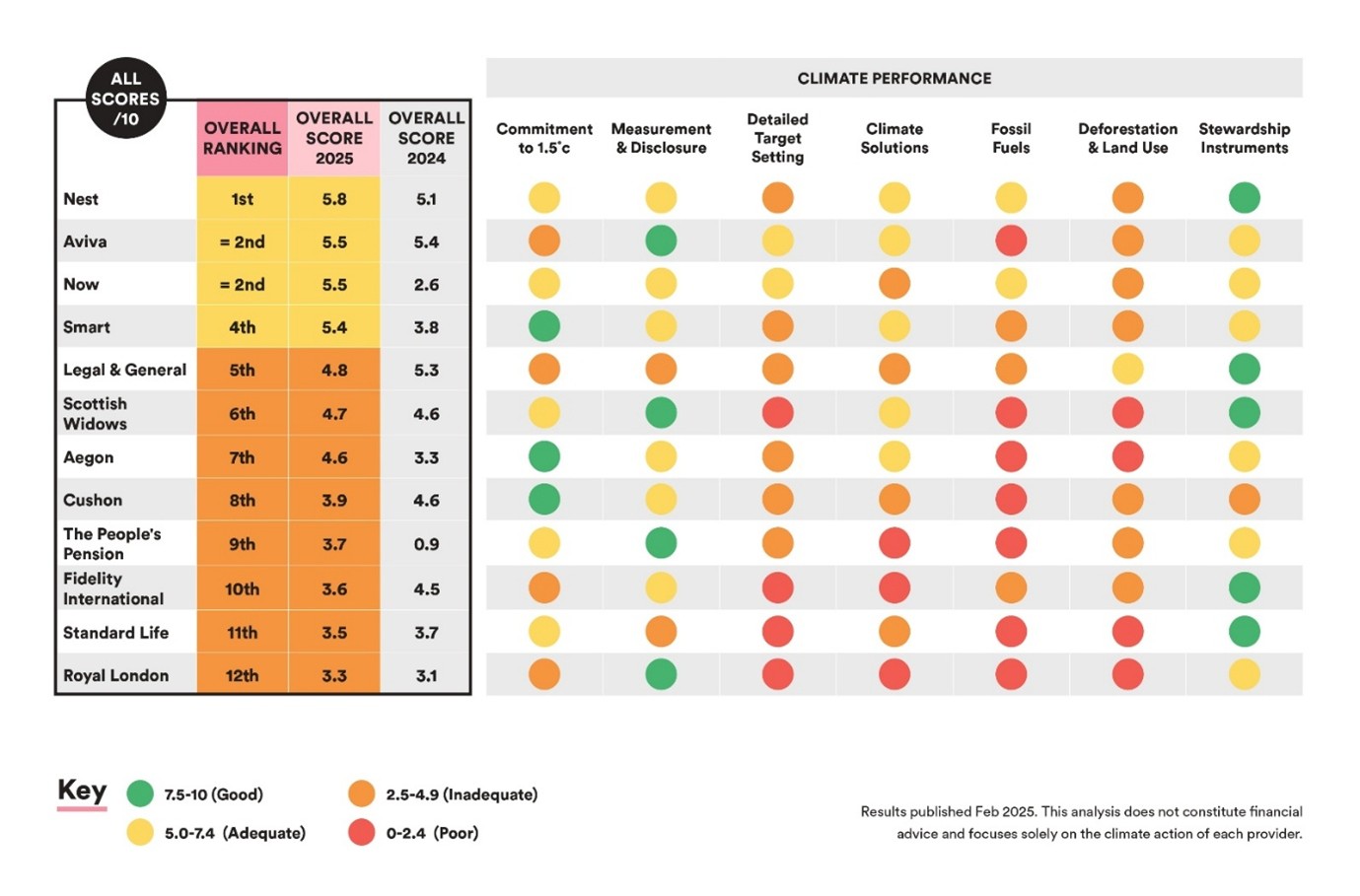
Master trusts are taking steps to put their net zero pledges into action, with some of the UK’s largest providers—including Nest, Now: Pensions, Smart Pension and the People’s Partnership—significantly increasing their efforts. Meanwhile, Standard Life and Royal London have been criticised as “lethargic,” according to the latest Climate Action Report produced by the campaign group Make My Money Matter in collaboration with Dutch research organisation Profundo.
Tony Burdon, CEO of Make My Money Matter, commented on the findings: “Whilst it is good to see that some providers like Nest—now ranked number one—along with Now and Smart, have responded by improving their policies on climate and nature, others like Standard Life and Royal London continue to fail their savers.”
Fossil fuel exposure
The report revealed that pension providers received the weakest scores in their commitment to phasing out fossil fuels, with funds averaging 2.9 out of 10. It also highlighted that seven of the 12 providers surveyed—including Aegon, Aviva, Fidelity International, Legal & General, Royal London, Standard Life, and Scottish Widows—continue to invest in ExxonMobil, despite the oil giant’s plan to increase its oil and gas output by 18% over the next five years.
Many pension funds that continue to invest in fossil fuels argue that doing so gives them greater leverage to influence the transition strategies of heavy emitters. However, the report also showed that Aviva and Legal & General voted with management 44 out of 45 times at the Shell and BP annual general meetings in 2024, including voting for the chair, directors, and remuneration.
Jan Willem van Gelder, director of Profundo, argued that UK master trusts lag behind their European peers. Some of the largest Dutch pension funds—including ABP, PMT and PFZW—have already sold the bulk of their fossil fuel holdings.
“Especially in dealing with the fossil fuel sector, most UK pension providers are not taking the steps that are required. While the International Energy Agency demonstrated back in 2021 that no new oil and gas fields should be developed anywhere in the world, the oil and gas sector is consciously denying the urgency of the climate threat by investing billions in new developments.”
Unlike last year, when research focused on the 20 largest providers, campaigners this time focused on the 12 largest DC master trusts by membership, reflecting a shift towards prioritising pension scheme members. This year, it also focusses on investment strategies for the master trust's default fund rather than considering wider sustainability metrics for the overall business.
Improvers
Nest, the UK’s largest DC provider, has now overtaken Aviva to top the league table after addressing deforestation risks in its investment portfolio. The £48bn master trust also confirmed its first investments in timber this year and is now rated 5.8 out of 10.
Other significant improvers include Now: Pensions, whose rating jumped from 2.6 to 5.5, and Smart Pension, which moved from 3.8 to 5.4. Now: Pensions’ progress follows the £4bn master trust taking the management of all its assets in-house, effectively divesting from third-party managers such as BlackRock, as first reported by Net Zero Investor in May.
Meanwhile, the People’s Partnership, which last year scored only 0.9, managed to improve its rating to 3.7. Its latest TCFD report revealed a marked improvement in portfolio-level carbon emissions after the £30bn manager shifted more than half of its portfolio into a climate-aware equity strategy, as first reported by Net Zero Investor in March. However, the master trust continues to receive a weaker score for its lack of investments in climate solutions.
At the bottom of the league table is Royal London, which has been criticised for a combination of weak interim targets, continued investment in fossil fuels, failure to invest in climate solutions, and exposure to deforestation risks.
The findings align with research conducted by Net Zero Investor, which analysed interim targets, implied temperature rises, and emissions intensity across UK master trust portfolios. The research found that many master trusts were overshooting the temperature alignment points in their portfolios, presumably due to investee companies failing to meet their decarbonisation targets.
Recommendations
Make My Money Matter concludes its report with several recommendations for pension providers aiming to improve their ratings next year. The campaign group argues that providers should commit to ambitious short- and medium-term decarbonisation targets, set detailed emissions reduction goals, divest from fossil fuels, address deforestation exposures, scale up investments in climate solutions, and adopt a tougher stance on voting at this year’s AGM season, including implementing a clear escalation strategy.
Where do the UK's master trusts stand on meeting their net zero targets?
Now:Pensions ditches third party managers over stewardship alignment
Solid returns: how Nest is branching out into timber
Strategic overhaul at The People's Pension: £15bn to be invested in climate-aware stocks