Why DB schemes offer a silver bullet for private investment in climate action
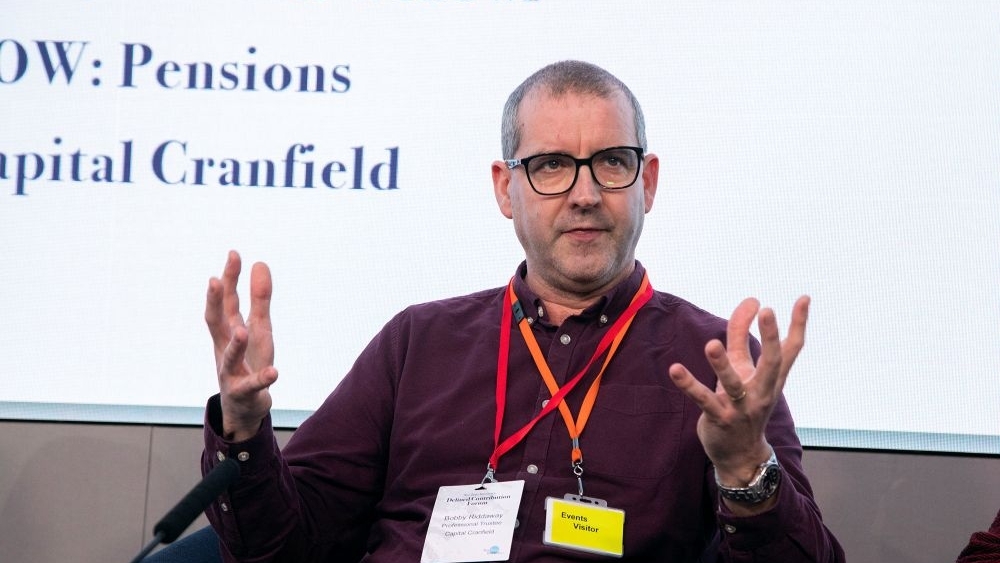
Bobby Riddaway, professional trustee and managing director at HS Trustees Ltd and chair of Trustee Sustainability Working Group argues that corporate DB investors could soon play a bigger role in funding climate solutions
Recent policy developments — including the Mansion House Accord, which targets 10% allocation to private markets with at least 5% in UK assets — have reignited debate around the role of pension schemes in supporting domestic investment. Much of the focus has been on the Local Government Pension Scheme (LGPS) and large Master Trusts. However, there is a unique and timely opportunity for the Treasury and the Department for Work and Pensions (DWP) to unlock a broader wave of investment from Defined Benefit (DB) schemes.
Having worked in the UK pension industry for over 30 years, I believe this is the first time we’ve seen such alignment between policy ambition, market readiness, and regulatory momentum. If harnessed correctly, this moment could catalyse a significant shift in how pension capital supports the UK’s energy transition and fosters the growth of domestic unicorns — rather than watching promising companies migrate to the US.
The role of UK pension schemes in solving the climate crisis
UK private sector pension schemes currently manage over £1trn in assets. According to the Purple Book 2024 (PPF), the distribution is as follows:
Under £50m: ≈60% of schemes, ≈2,984 schemes, ≈5% of total assets, ≈£58bn
£50m–£2bn: ≈35% of schemes, ≈1,741 schemes, ≈34% of total assets, ≈£397bn
Over £2bn: ≈5% of schemes, ≈249 schemes, ≈61% of total assets, ≈£712bn
Since October 2021, schemes over £5bn, authorised Master Trusts, and CDC schemes have been required to report on climate change via TCFD disclosures. This was extended to schemes over £1bn in 2022. Additionally, since 2020, DB schemes have had to produce implementation reports detailing stewardship policies and significant voting activity — much of which focuses on climate-related issues.
Notably, pension schemes were required to produce TCFD reports before many financial institutions, including FTSE 100 companies. Asset managers only began reporting in 2023.
While TCFD aimed to recognise climate change as a financial risk and improve investment decision-making whilst enhancing transparency and accountability, its impact on actual investment decisions remains debatable. Moreover, schemes under £1bn are exempt, leaving a large portion of the market untouched.
The reporting has improved emissions data and increased resources at asset managers and consultants. Yet, many reports are seen as compliance exercises rather than drivers of action. Climate risk modelling remains underdeveloped, and it was arguably premature to expect pension schemes to lead in this area.
Why investing in UK climate solutions makes sense
The UK is fertile ground for innovation in climate and biodiversity solutions. A recent conversation with a US private equity firm — not focused on sustainability — revealed that over 90% of its UK portfolio targets climate or biodiversity challenges. This aligns with insights from the British Business Bank and others.
There is a clear need to support UK venture capital firms in scaling domestic unicorns. Currently, many promising companies relocate to the US, where they can raise significantly more capital. UK pension schemes could play a pivotal role in reversing this trend.
Infrastructure investment is another area of opportunity. The UK must upgrade its energy infrastructure to support renewable energy adoption. These projects offer long-term, stable returns — ideal for pension funds — while contributing to climate goals.
In both cases, reallocating a portion of equity holdings to private assets and infrastructure could deliver strong financial and environmental returns.
Mobilising capital beyond regulation
Despite the regulatory push, many TCFD and implementation reports are seen as box-ticking exercises. Some schemes spend as much as £500k annually on these disclosures, diverting resources from more impactful climate initiatives.
Implementation reports, especially for schemes under £100m, are often generic and consume a disproportionate share of consulting budgets. This leaves little room for proactive climate strategy.
The reality is that only a minority of schemes would engage with climate issues if not required to report. The industry’s sustainability advocates — trustees, consultants, asset managers — are often stuck in a reporting loop, rather than educating or innovating.
This presents a unique opportunity: to engage the broader pension community in climate-positive investment, not through mandation, but by showcasing the financial and societal value of UK private assets.
Barriers to increasing investment
Even with education and awareness, several structural and behavioural barriers remain:
1. Lack of a supportive framework
A coherent national framework for climate transition is essential to de-risk investments and improve the success rate of new ventures and infrastructure projects.
2. Limited appetite for development risk
Smaller schemes are typically risk-averse. In emerging markets, structured finance models allow large institutions to absorb development risk, leaving lower-risk tranches for pension funds. A similar model could be adopted in the UK.
3. Reliance on consultant long lists
Investment decisions often hinge on lengthy fund research processes. To act swiftly, schemes should be empowered to rely on consultant due diligence rather than exhaustive fund lists — especially when co-investing alongside LGPS or Master Trusts.
4. Unfamiliarity with private assets
Pension schemes are comfortable with equities but often misunderstand their volatility. Private assets, while less familiar, can offer more stable long-term returns — particularly in infrastructure and climate-related ventures.
To overcome these barriers, we need new partnerships, better education, and a shift in mindset across the industry.
The silver bullet
The key to unlocking pension capital for the climate transition lies in refocusing the efforts of sustainability experts. Currently, these professionals are consumed by reporting obligations, leaving little time for strategic engagement or education.
We could unlock their potential now with a moratorium on TCFD and implementation statements for pension schemes. This would free up expert time for:
- Educating trustees and consultants
- Developing structured finance models
- Building confidence in private asset classes
- Signal government intent to prioritise action over compliance
- Encourage collaboration between schemes, government bodies, and institutions like the British Business Bank and National Wealth Fund.
The government could then observe how successful the industry is at the above before deciding on its long term requirements. My ideal longer term strategy would be to:
1. Replace TCFD with Transition Plans
For larger schemes, transition plans should replace TCFD reporting — not supplement it. This would allow for deeper engagement with sustainability goals.
2. Simplify Implementation Statements for Small Schemes
A tailored transition plan with a small-scheme stewardship initiative could replace generic implementation statements. This would redirect existing budgets toward meaningful climate action.
This approach would empower sustainability experts to focus on solutions, not just disclosures, and foster a culture of proactive investment across the industry.
Conclusion
After three years as a professional trustee and one year as chair of the Trustee Sustainability Working Group, I am encouraged by the direction of regulatory conversations. We are at a pivotal moment. If the Treasury embraces the proposals outlined here — particularly the moratorium on reporting — we could see a short-term surge in UK investment and lay the groundwork for long-term growth in private markets.
This is a rare opportunity to align pension capital with national climate and economic goals. The time to act is now.