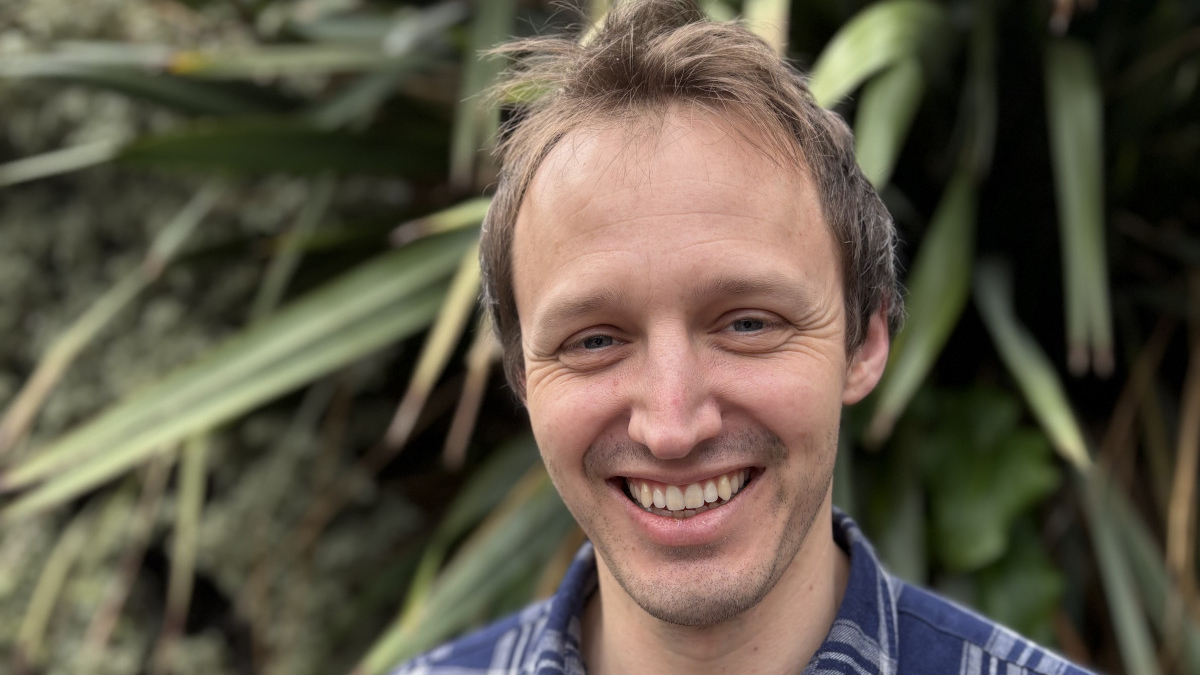
Balancing speed and impact: Aon’s Jo Sharples on net zero targets for DC
With net zero targets set, Aon's CIO for DC Solutions Jo Sharples discusses the need for real impact over symbolic actions and explains the potential of private markets to accelerate the transition
The challenge when it comes to moving quicker or faster on net zero, is that we want to make a “proper difference”, says Jo Sharples, chief investment officer for DC solutions at AON.
The £4.6bn master trust has committed to achieving net zero by 2050, setting further interim targets of a 30% reduction by 2025 and a 50% reduction by 2030.
Explaining her reasoning behind these targets, Sharples tells Net Zero Investor: “Going faster felt as though we would end up having to do things such as offsetting, that just felt artificial. I was worried that the things that would make us feel good didn’t make any difference at all”.
Jo Sharples will be speaking at Net Zero Investor’s Annual Conference, Investing for the transition, in London on 24 October. Click here to join us on the day.
Focusing on carbon intensity
Currently, AON’s main default strategy has seen a 56% reduction in its carbon footprint since 2019. For its second default strategy, the defined contribution (DC) fund has achieved a 66% reduction over the same period.
However, to “caveat” that, Sharples explains, the way carbon footprint is calculated is sensitive to asset movement, so these figures will fluctuate.
At present, AON is more focused on carbon intensity rather than absolute emissions, Sharples says. One big challenge for the master trust in hitting carbon reduction targets is the massive growth of its assets, with AON’s AUM doubling just in the past year.
“When you acquire new clients, they come with their own assets and associated emissions. So, eventually you must get your absolute numbers down and, that will come with reductions in your carbon intensity, but you must be really careful how you frame it.
“So, you can be reducing your carbon intensity, but if you have doubled your assets, you need a very big intensity reduction to see the overall emissions come down,” Sharples states.
If you want to make a bigger impact, you probably need private capital as well

Decarbonising through public markets
Currently, AON MasterTrust is invested solely in public markets. Sharples explains that the master trust has been working on decarbonising its portfolio in different ways, to support this, it has invested in the UBS climate transition fund equity fund. It also offers members access to a gobal impact fund, and a global emerging markets equity transition fund.
AON’s climate transition fund equity fund has built in decarbonisation targets as well as specific objectives around investing more in green technology, whether it's renewables or technology.
“It's got objectives around net zero including investing in businesses that have a credible transition plan and also has an impact objective. So, we invest more in businesses that are aligned with some of the UN Sustainable Development Goals (SDGs),” Sharples explains.
Sharples goes on to explain that the climate transition fund, launched in 2022, tilts towards companies with revenue aligned with selected SDGs relating to health, clean energy and climate action.
The fund leans towards companies that are better placed for the transition to a low-carbon economy and have higher sustainability characteristics than the benchmark.
Private capital = bigger impact
However, decarbonising a portfolio solely invested in public markets can sometimes prove hard due to the lack of direct control, transparency and broader regulation.
When asked if she thinks it’s possible to decarbonise purely through public markets, Sharples says that “theoretically” it is, but adds, “if you want to make a bigger impact, you probably need private capital as well”.
“It is doable. It's possibly slightly harder to go public only. With private ownership, you would have more control over it, but equally, you've got to have the right sort of control.”
“As we go through this journey, engagement is going to become increasingly important and getting companies on side and holding them to account,” Sharples states.
Currently, AON has no investments in private markets but is one of the DC funds signed up to the Mansion House Compact, which commits the master trust to invest at least 5% to unlisted equities by 2030.
“We think having private assets should be beneficial to expected outcomes for members, if done well. With Mansion House, you can argue it has pros and cons, but it is helping to unlock private assets for DC schemes,” Sharples tells Net Zero Investor.
The head of DC solutions at AON states that the pension fund is looking into private markets, but acknowledges that “it’s fair to say that it is taking time to do, and rightly so”. “Once you've made your commitment, it's really hard to backtrack, and it has to be done right,” she says.
"This is not to say that we are not committed to investing in the asset class, with half of AON’s research team focused on the market, there is simply a lot of to consider", Sharples adds.
She notes that the areas AON is exploring for investment in unlisted markets include real estate, infrastructure, private equity and natural capital.
“I’ve seen some very interesting natural capital, agriculture-type strategies. Some of the best ones I've seen have integrated the concept of sustainable farming at another level and responsible land stewardship.
“I grew up in the middle of a farm and you see that and understand how things like that work,” Sharples adds.
LTAFs
In a policy response aimed at increasing investing in private capital, the UK government and regulators launched Long-Term Asset Funds (LTAFs) in 2021. Funds which allow DC pension schemes to more easily allocate to private markets due to liquidity management, regulatory flexibility and improved governance structures.
Sharples comments that LTAFs are positive developments, making the “life wrapping of investments [into private markets] much easier”.
However, she points out that there are some challenges: “As a master trust grows, is that they want to be a little bit more nuanced in terms of how they choose investments. They might want to differentiate themselves and say we would like a focus on renewable energy here or want to invest in the venture market here. This may not be accessible to you through an a third party LTAF”.
Jo Sharples will be speaking at Net Zero Investor’s Annual Conference, investing for the transition, in London on 24 October. Click here to join us on the day.