Barbados completes debt-for-climate swap to address water shortages
The government of Barbados has successfully completed its first debt-for-climate swap aimed at making the island nation more resilient to climate change
As part of the transaction, Barbados bought back $293m of its own debt and refinanced it with the backing of the Inter-American Development Bank (IDB) and the European Investment Bank (EIB). By replacing outstanding, higher-interest debt with more affordable financing, the country has generated $125m in fiscal savings. These funds will be used to enhance water resource management and improve water and food security.
The Sustainability-Linked Loan transaction was finalised last week, with CIBC Caribbean acting as the lead arranger. The loan was supported by US$300m in guarantees—US$150m each from the IDB and the EIB, the latter under the European Union’s Global Gateway Initiative.
The debt has been refinanced in three series. Most of the debt has been refinanced at an 8% interest rate with no discount to face value. Smaller portions of the debt (3% and 4%) have been refinanced at lower interest rates of 3.75% and 4.25%, respectively, but with a higher discount to face value.
The debt-for-climate conversion has been structured as a Sovereign Sustainability-Linked Loan (SSLL). According to the EIB, it is the first SSLL tied to a sovereign water security project.
The loan contains predetermined sustainability performance targets related to the volume of water produced by the South Coast Water Reclamation Facility. If the targets are not met, the government incurs a financial penalty, which will be paid into a specialised trust for environmental investments, the Barbados Environmental Sustainability Fund, a spokesperson for EIB confirmed.
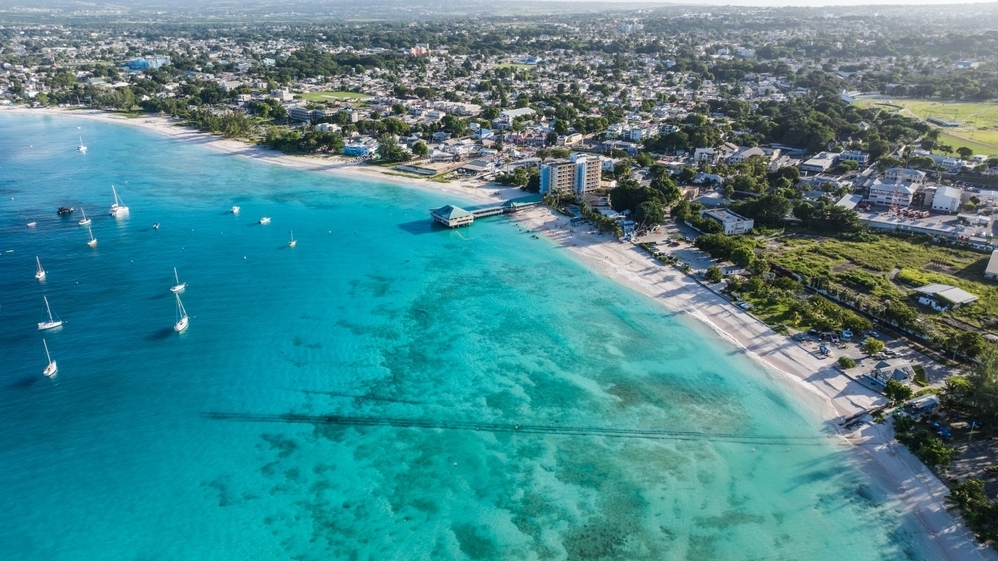
Despite being surrounded by water, Caribbean islands such as Barbados face acute water shortages, hampering food production and resulting in high food import costs.
Mia Mottley, prime minister of Barbados, described the transaction as a ground-breaking model for vulnerable island states. “With upfront funding from our partners, we are building a state-of-the-art facility to boost water management, food security, and resilience—showcasing how innovation and cooperation drive environmental and fiscal gains,” she said.
The $125m in interest savings will fund the development of the island’s South Coast sewage treatment plant, transforming it into a modern water reclamation facility. Associated facilities will produce water of suitable quality for agricultural irrigation and groundwater recharge.
Interest in debt-for-nature swaps is growing among emerging market issuers, which are struggling with high refinancing costs amid rising global interest rates. Mechanisms like these are being promoted by multilateral organisations such as the World Economic Forum, the IMF, and the UNDP.
The World Economic Forum estimates that debt-for-nature swaps could free up $100bn globally to restore ecosystems and help countries adapt to climate change.
In a similar vein, Ecuador last year finalised a significant transaction involving blue bonds aimed at restoring the Galapagos Islands. The deal reduced Ecuador’s debt burden by $1 bn, with the new bonds maturing in 2041.
For institutional investors, such arrangements offer reduced risk due to guarantees from multilateral development banks. However, investors in turn have to compromise by accepting comparatively lower returns.