Canada’s Boreal: how investors can widen their stewardship efforts on nature
Ahead of this week’s PRI In Person Event in Toronto, Will Martindale, co-founder of Canbury reflects on a visit to Canada’s Boreal Forest urging investors to widen their efforts on nature stewardship
The scenery was a moonscape, which sounds odd for a forest. We were a couple of hundred kilometres north of Thunder Bay, northwest of Lake Superior.
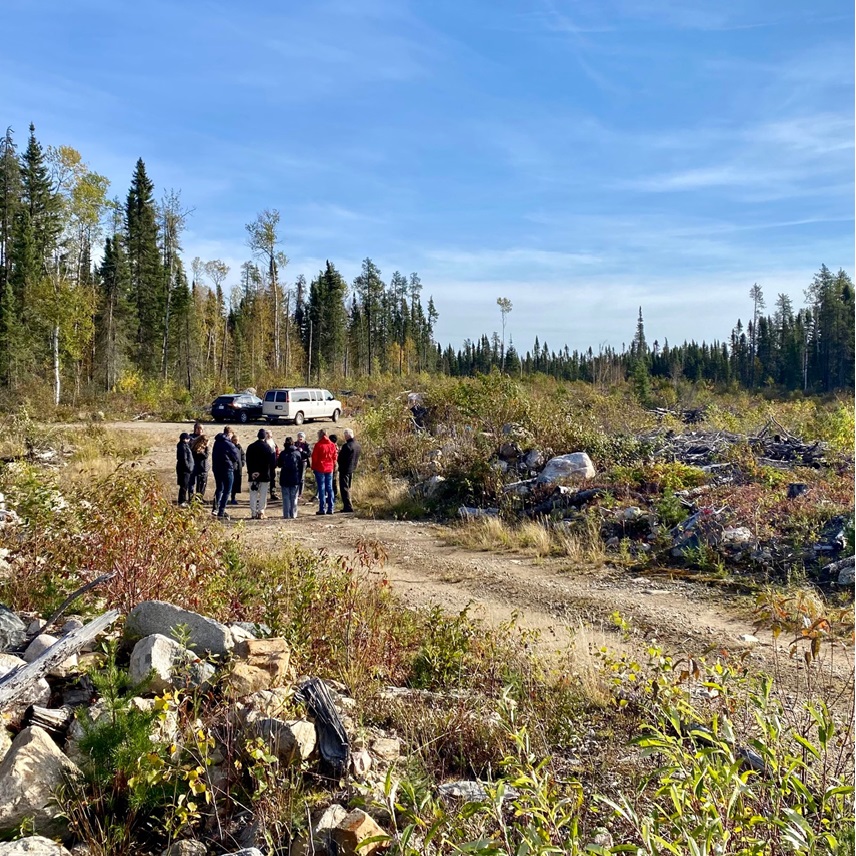
Grey white twigs were piled almost 3 metres high, bare rock, one or two trees stood tall, stripped of their branches, as if struck by lightning.
“When it comes to FSC certified sustainable logging, this is it.” “This is the gold standard”. It certainly didn’t look sustainable.
We were standing in what’s called a ‘clearcut’, on a dirt-track logging road that disappeared into the distance. The roads alone, known by environmentalists as ‘linear features’, account for 10% of forest loss.
Linear features disrupt roaming woodland caribou, which have been listed as threatened on the Species at Risk Act since 2003. A species threatened by company activity.
A few poplars were standing, lonely on the moonscape, just one or two jackpines, no spruce, nesting birds. Moose nor caribou could hide from predators here.
The poplars have an interconnecting root network, and so across the moonscape ground, were sapling poplars, perhaps a few months old. Regrowing poplars can be problematic, stopping other trees from growing, changing forest habitat, reducing biodiversity.
Deforestation vs degradation
Deforestation is the purposeful clearing of forested land that is then converted to non-forest use. What we were seeing was not technically deforestation – that land-use was unchanged – but rather degradation, for which definitions vary.
“This will need to be sprayed”, we were told. The ‘spray’ is glyphosate, a herbicide that would kill poplars. Other trees could then be replanted. “You could do it by hand, but it’s cheaper to spray”. In many places, glyphosate is banned, it detrimentally affects insect life, bird and mammal life.
We were nearing the end of a two-day trip, part of a group of 12 responsible investment and stewardship professionals.
Net Zero Investor’s ANNUAL CONFERENCE | 24-10-2024 | BOOK YOUR PLACE
We started our trip the previous day at Clean Air Metals in downtown Thunder Bay. Clean Air Metals is a mining exploration company, known as a “junior”. Palladium and platinum, metals necessary for the energy transition, can be found under the boreal.
If Clean Air Metals is successful in extraction, “Would a refiner” (typically owned by larger mining companies, such as Glencore or Impala) “pay more for sustainably sourced palladium?” I asked. “No”.
We were then briefed by the Nature Conservancy of Canada, buying ecologically precious land, to preserve in perpetuity.
We learnt about, what the Truth and Reconciliation Commission concluded was the cultural genocide of Indigenous peoples, and Indigenous peoples’ rights to land, the importance of conservation for livelihoods, alongside economic opportunity.
From Thunder Bay we drove to Armstrong, 240 kilometres to the north, staying at Wabakimi Lodge, a multi-room, multi-cabin lakeside hunting, fishing and canoeing lodge.
Charismatic owners, Margaret and Bruce, welcomed us. Bruce is an environmentalist, forester, and a two-term member of the federal parliament. Bruce played a key role in the initial banning of insecticide DDT back in the 1970s after reading Carson’s Silent Spring. Margaret also had instrumental roles in policy, helping to write and pass Ontario’s Crown Forest Sustainability Act.
We visited the forest in four stages of health. We started at a successful biodiverse regrowth ending at the moonscape. The purpose of the trip, organised by Canbury, with support from the National Resources Defense Council, was to shine a spotlight on Canada’s boreal, a forest often overlooked by responsible investors.
The boreal forest is the largest carbon sink on land and has the greatest number of intact forest landscapes. The vast wilderness serves as critical habitat for numerous species at risk, while simultaneously holding immense cultural and economic value for Indigenous peoples and forest-dependent communities.
Intricate links
The boreal is intricately linked to global commodity supply chains, particularly in the forestry, mining, and oil and gas industries, and almost certainly finds its way into investor portfolios.
It has become increasingly relevant in the context of evolving international regulations, including the EU Deforestation Regulation (EUDR), Corporate Sustainability Reporting Directive (CSRD), Corporate Sustainability Due Diligence Directive (CSDDD), and the recommendations set out by the Taskforce on Nature-related Financial Disclosures (TNFD).
Despite this, responsible investors tend to focus their engagement efforts on tropical forests.
The trip was the precursor to a research report, launched Monday 7 October, at the University of Toronto, ahead of PRI In Person. The report uses the methodology established by PRI’s Spring initiative, identifying commodity flows relevant to forest degradation, relevant policy frameworks, lobbying activities undertaken by trade associations, and company influence on those trade associations.
The report was authored by Canbury, in partnership with MSCI Sustainability Institute and BNP Paribas Asset Management. It shortlists 32 companies deemed to have the most influence via trade associations, that could be prioritised for investor engagement. Next steps would be to facilitate that engagement.
To end with a broader point: trips like this are – or at least, ought to be – the future of investor stewardship. I learnt more in two days than in months of research. Many investors do this well. But the system as-a-whole still incentivises quantity of engagement over quality.
Zoom calls with investor relations teams, lengthy ESG disclosures, and non-binding votes remain an important part of stewardship. But that should not be at the expense of high conviction stewardship, focused on outcomes. An approach practised by the investors that joined us in Thunder Bay.
PRI launches 'Spring' Initiative to help investors tackle nature loss