Green energy outlook 2025: three trends to watch
With Trump due to take power in the US and carbon markets entering a new phase, what are the key energy transition trends investors should consider for 2025?
Despite the COP28 pledge to triple renewable power capacity and double the rate of energy efficiency improvement by 2030, the energy transition remains off track.
Fossil fuels continue to dominate the global energy mix and the chances of meeting the 1.5 temperature target have become increasingly remote.
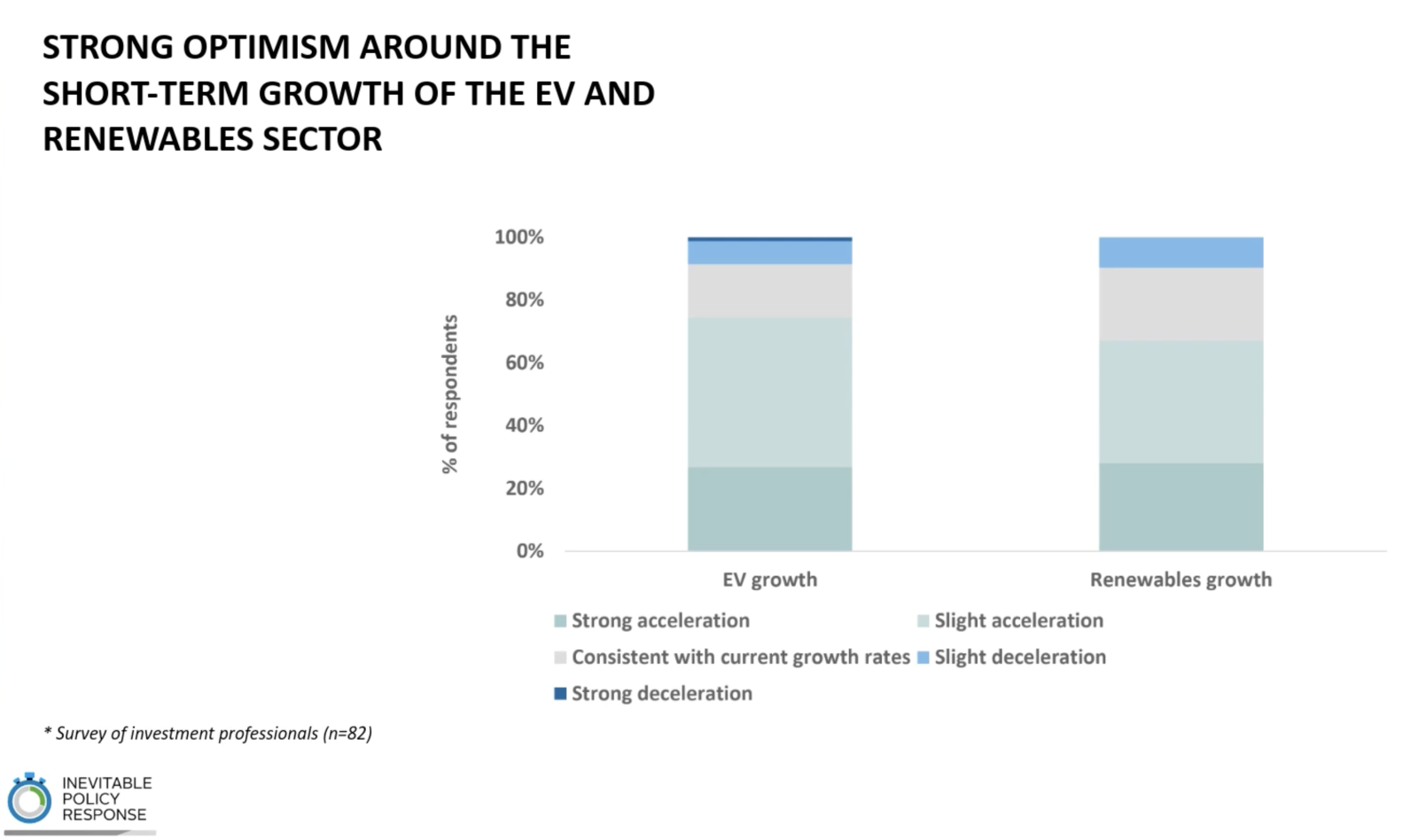
However, it isn’t all doom and gloom. Investors surveyed by the UN-affiliated Inevitable Policy Response on average forecast net zero by 2080, which is still consistent with a two degree warming scenario.
Some sources argue that the transition is now an unstoppable force as renewables make not only ethical but also financial sense.
“We see a cautiously upbeat picture for the energy transition going into 2025,” said Tom Atkinson, portfolio manager at AXA Investment Managers. “The majority of the core trends are unchanged: solar and wind remain the cheapest generation technologies, renewables penetration continues to grow and China remains the dominant manufacturer of increasingly commoditised energy transition equipment."
Chris Bekouwer, portfolio manager at Robeco, said "the overall outlook for the green transition remains positive" despite a global escalation in clean tech protectionism and the re-election of climate change denier Donald Trump in the US.
Morningstar expects renewables "to continue to boom" in Europe, as falling costs for wind and solar energy projects along with high renewable ambitions and countries’ support have led to a jump in investment during the last decade. In 2024, renewables overtook fossil fuels in the UK's energy mix for the first time. This is an "historic" turning point for the UK's energy grid, according to James Alexander, CEO of UK Sustainable Investment and Finance Association.
1. Even Donald Trump’s re-election and the anti-ESG agenda can’t change overarching economic forces
2024 was a mega election year, with changes in government in several important countries, notably the US, where the president elect Donald Trump threatens to derail the climate agenda.
However, many investors and analysts take the optimistic view that the hostile agenda of a single country, even if that country is the US, isn’t enough to turn back the economic tide, which favours renewables.
“The economic argument is over and renewables won,” declared Sean Kidney, CEO of Climate Bonds Initiative, at a recent Principles for Responsible Investment conference. “The question isn’t whether the net zero transition is happening, but the speed.”
Citing countries like Pakistan, which imported a whopping 13 gigawatts of solar panels, mostly from China, in just the first half of 2024, Kidney predicted that energy security concerns will fuel renewable energy growth around the world in the next four years.
An asset owner source close to Net Zero Investor cautioned the optimism. “While some parts of the net zero value chain are now unstoppable, not everything is a slam dunk,” they said.
There are, for example, many decarbonisation solutions for industrials that have yet to be widely accepted and deployed at scale.
Atkinson predicted that Trump's recent election will likely lead to a broader approach to ensuring energy security with support for gas and nuclear in addition to onshore wind, solar and storage.
“Supply side tightness on labour and equipment will perhaps be bigger issues than diminishing availability of tax credits,” he added, referring to the possibility of Trump repeals to Biden’s landmark Inflation Reduction Act.
“On the demand side, we expect large corporate buyers of power to continue to sign long-term contracts (Power Purchase Agreements), locking-in supply and in turn de-risking growth for developers.”
What to watch out for:
- The increasing uptake of renewables as more countries follow Pakistan’s lead and turn to renewables for their energy and energy security needs.
- The fact that renewables are becoming ever more cost-competitive vis-à-vis their fossil fuel counterparts.
- Progress on decarbonisation solutions for industrials.
2. Carbon markets enter a new phase
After years of stalled negotiations, COP29 finally delivered the full operationalisation of Article 6 of the Paris Agreement. This is a decisive step towards unlocking international carbon markets.
Under Article 6 of the Paris Agreement, countries can trade mitigation units among themselves, potentially reducing the cost of implementing their national climate plans (NDCs) by up to $250 billion per year.
Alex Godfrey, investment director for natural capital at Octopus Investments, told Net Zero Investor that the agreement on Article 6.2 “provides much-needed clarity on how countries will authorise the trade of carbon credits”, “crucial for ensuring transparency and environmental integrity”. While Article 6.4 addressed the historical challenges of credibility and efficiency within the market.
Asset owner sources noted an “atmosphere of excitement stemming from the possibility of enhanced certainty” among those involved in carbon markets and carbon trading.
Asset owners who invest in carbon credits often do so as part of a sustainable forestry strategy.
"The progress made at COP29, including Article 6’s global framework for carbon credit trading, introduces opportunities but also adds new complexity," said Andrea Remyn Stone, CEO at Zema Global. "Investors absolutely must ensure projects align with new standards, particularly those tied to environmental and human rights safeguards."
What to watch out for:
- How the international carbon markets evolve as a result of the landmark COP29 outcome.
3. Continued uncertainty over the transition timeline
Despite the aforementioned optimism around the energy transition, there is still a wide dispersion of views among investors regarding the timing of the transition.
Jacob Thomä, project director at Inevitable Policy Response, noted a “dramatic disconnect” between “bottom up optimism” and “top down optimism”.
The “top down pessimism” refers to the general negative aura round the COP negotiations and the fact that countries keep on missing their financing targets.
The “bottom up optimism” refers to the belief in accelerated growth in renewables and the scaling up of other climate solutions.
The overall impact of this disconnect is to create a climate of contradiction and confusion.
“The majority of investors in our recent survey still think we’ll reach net zero by 2080, which is consistent with a two degree warming scenario,” Thomä said. “Yet when we ask those same investors about the temperature outcome, it’s all over the place."
Earlier this year, Net Zero Investor noted divergent views around the timing of peak oil, a key date in the net zero transition.
What to watch out for:
- How continued dispersion of views around the transition timeline impacts investment strategies