PensionDanmark’s ESG chief: ‘To maintain high returns, we take a little more risk’
PensionDanmark’s ESG head Jan Kæraa Rasmussen explains to Net Zero Investor why his pension fund is betting big on renewables
PensionDanmark is one of the 50 largest pension funds in Europe, serving some 815,000 members. The non-profit labor market pension fund, which had about €40bn worth of assets under management at the end of last year, is generally seen as one of the key drivers of the net zero agenda in Scandinavia.
Spearheading those green efforts is Jan Kæraa Rasmussen, the pension fund’s head of ESG (environmental, social and governance) and sustainability.
The industry veteran started his career at Denmark’s Ministry of Finance and worked many years as chief economist within the Danish Trade Union Confederation, before joining the pension industry to take the sustainability reins at PensionDanmark.
“I shifted from a national macroeconomic perspective that dominated most of my daily working life, while in the pension business … the focus is more on global trends and issues that occupy our minds,” he told Net Zero Investor in an exclusive interview.
Rasmussen recalled that some 10-20 years ago, opinion thought there was a conflict between being a responsible investor and get the best possible returns.
But evidence showed that it was possible to be a responsible and financially successful investor, he said. “It is possible to do good and do well at the same time.”
Expected returns
Asked when PensionDanmark had started looking into climate issues, Rasmussen said it had all begun when seeking higher stable returns in the aftermath of the great financial crisis in 2008.
“Interest rates had fallen to very low levels, meaning that expected returns from the whole fixed income asset class was not very high,” he explained.
“And that was on the other hand a substantial part of our asset allocation, because we needed some stable income stream to service our members with pensions when they retire.”
To maintain high returns, we want to be in the developing phase … and take a little more risk.
Of PensionDanmark’s €42bn in assets, nearly a fifth goes to either renewable energy infrastructures or sustainable buildings.
“We found that infrastructure investments, especially in renewable energy, was an interesting asset class, because we would have some purchasing power agreements (PPAs), off-take deals … that would give us relatively stable cash flows for a number of years,” Rasmussen stated.
“The interesting thing was that the expected return was significantly higher than from the bond universe.”
Amid recent investments, the Danish pension fund invested directly in cleantech company Stiesdal and committed to pour €100mn in the CI Advanced Bioenergy Fund I (CI ABF I) to speed up the development of green fuels.
Development risks
PensionDanmark found attractive returns in renewable energy investments, but it implies taking development risks.
As a founding partner of Copenhagen Infrastructure Partners (CIP), a large renewable energy infrastructure fund, Rasmussen said the Danish pension fund has had a great impact.
“We have showed investors that it was feasible to invest in renewable energy, both the traditional renewable energy like solar and wind, but also … green hydrogen solutions and advanced biotechnology.”
“I think we have helped mature the global market for this kind of investments,” he added.
The sustainability chief however pointed that the renewable energy space was getting crowded.
“So, to maintain high returns, we want to be in the developing phase, we want to harvest the development premium and take a little more risk than those who will just invest in an offshore wind farm and keep it on their books for 10 years,” he explained.
“We would rather finance the development and take some risks, and then sell it to another investor.”
Rasmussen finally summarised PensionDanmark’s investment ratio in the energy sector this way: “every time we put a euro into the fossil fuel sector, we invest about €10 in the sustainable energy and housing sector.”
Limits and influence
The Danish pension fund, however, is not willing to entirely exclude fossil fuel companies from its portfolio.
“We
need to have limits and influence over the fossil fuel sector, and if we divest
it totally, we won’t have that,” Rasmussen noted. “We need to have some
leverage, and the main leverage here is to be active owners.”
Fossil fuel players are left with two options, he stated: one is to move their operations towards low-carbon energy production and away from fossil fuel expansion as fast as possible; the other is to pay out the “superprofits” they have made in the last couple of years on the back of high oil and gas prices as dividends to PensionDanmark and other shareholders.
We need to have some leverage (on the fossil fuel sector), and the main leverage here is to be active owners.
“When you have a high dividend payout, it’s a signal that investors do not see this as an industry of the long term,” Rasmussen pointed out.
“It is as a general rule desirable that these companies pay substantial cash dividends out to their investors,” he added – a request made as part of coalitions of investors, like Climate Action 100+.
But it does not mean that PensionDanmark is willing to invest in all oil and gas companies.
“We need to see some kind of willingness (from them) to participate in the green transition,” he highlighted. “But of course, we recognise that for some companies, it’s not that easy and they may have contracts that they need to honour. However, they should still set short- and long-term targets to demonstrate ambition.”
Short-term dilemma
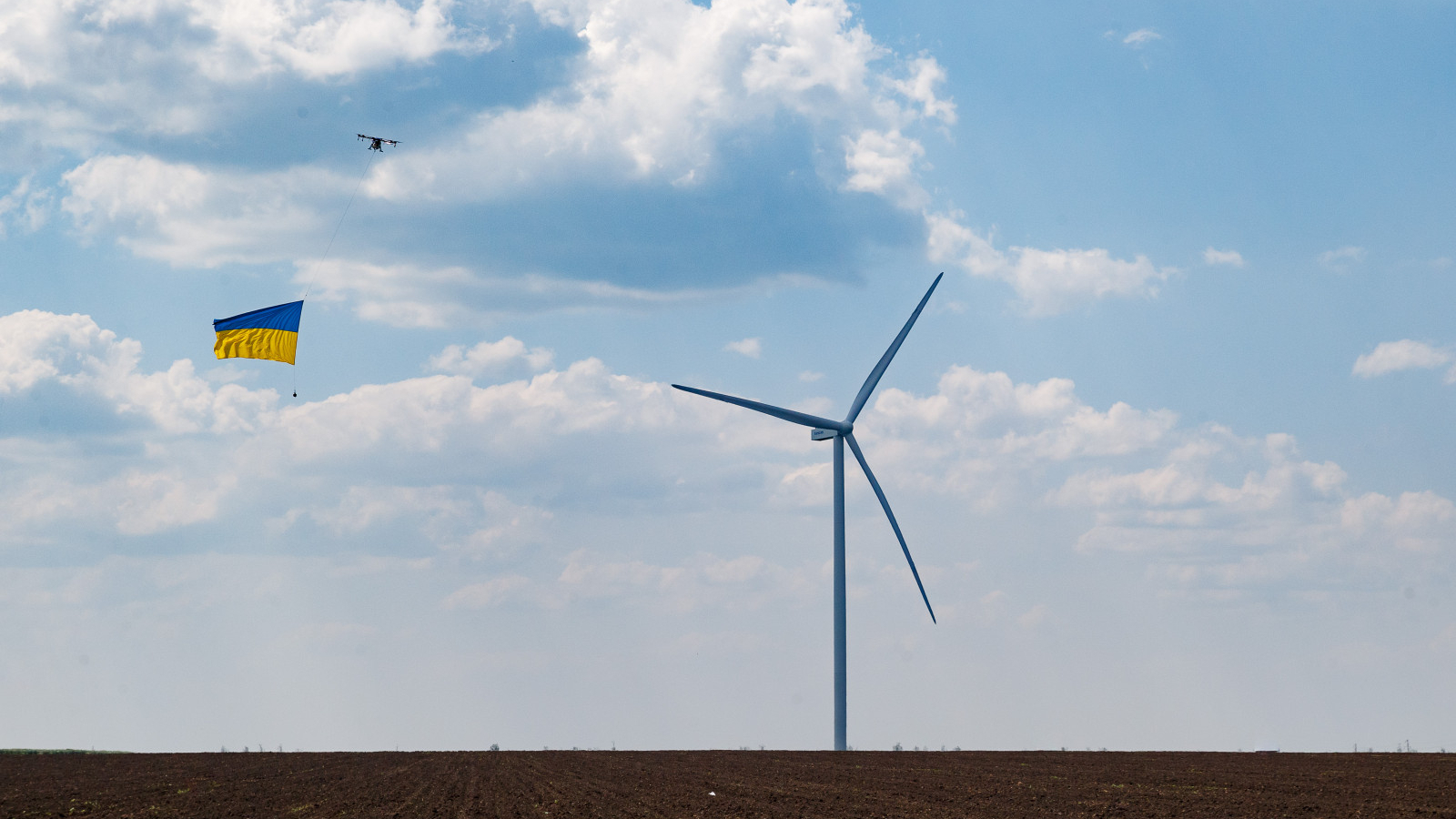
Although European countries have rushed towards liquefied natural gas (LNG) and fired up old coal plants to plug the energy gap Russia’s exports squeeze has left, Rasmussen sees very good long-term plans for renewable energy expansion on the continent.
“From an energy security point of view, it is understandable, at least, that Germany and other countries wanted to scale up their capacity to receive LNG, because the alternative would be some kind of energy shutdown,” he noted.
“It is a short-term dilemma we have here, and I think that’s what happens when war creates chaos,” Rasmussen stressed.
“But in the long term, we will look at each other and find that Russia’s invasion of Ukraine accelerated the green transition of Europe.”
He pointed to promising capacity prospects in the North and the Baltic Seas.
Last August, eight European nations around the Baltic Sea agreed to hike offshore wind power generation capacity to 20 gigawatts (GW) by 2030, with potential to reach up to 93 GW by mid-century.
On the North Sea side, nine governments pledged to produce at least 12 GW of offshore wind energy by 2030 and 300 GW by 2050.
According to Rasmussen, these regions could be “the future green power plant of Europe.”