Temasek’s ESG lead on joining the dots for the transition to net zero
Temasek's sustainability head Kyung Ah Park explains why holistic thinking is essential for a successful transition
Founded in 1974 by the Singapore government to own and manage companies on its behalf, Temasek is a global investor with an overall net portfolio value of around $290bn.
With over three-quarters of their assets in Asia, the investment company maintains a strong regional focus, and is keen to use its financial abilities and capabilities to accelerate the region’s transition to net zero while generating sustainable returns.
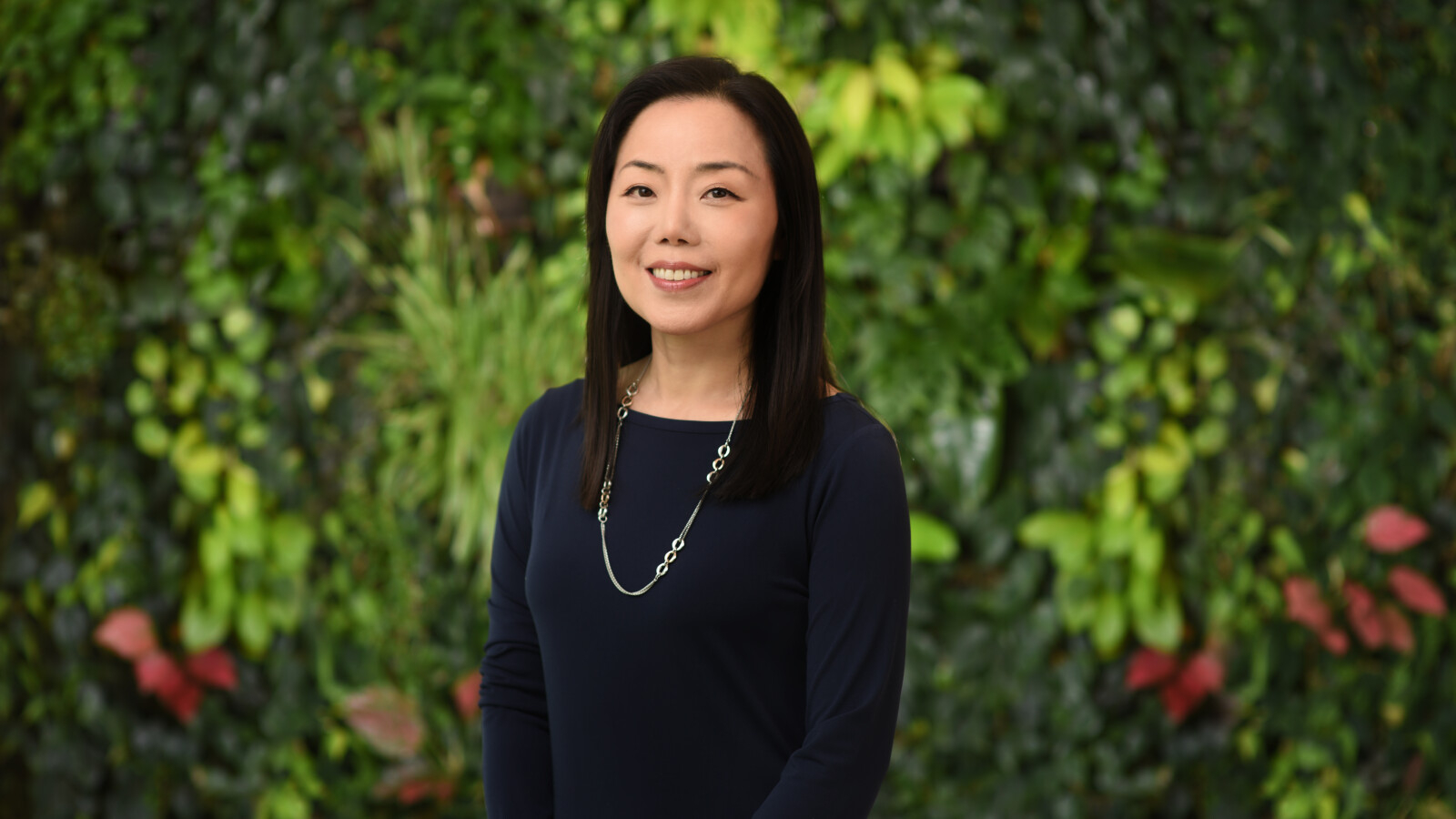
Kyung Ah Park, who leads Temasek's Sustainability and ESG efforts, stresses that a stewardship mindset in which every generation prospers goes “hand-in-hand” with the long-term resilience and sustainable value generation of their portfolio.
Given the scale and urgency of the climate and nature crises, Temasek firmly believes that “holistic, systems-wide” thinking is essential for a timely transition not just in Asia but across the world.
Park talks Net Zero Investor through the five main prongs of that holistic thinking.
1. Integrating ESG across all investments
Climate-change and nature degradation pose a combination of both physical risks and transition risks to portfolios.
Temasek sees the integration of ESG considerations across all investments as not only a way to manage these risks but also to drive increasing value creation for their portfolio companies.
In practice, that means a combination of pre-investment due diligence and post-investment engagement.
“We need to think about not only our engagement levers with each company and their receptivity to our engagements, but also where they are in their transition journey,” Park explains.
She highlights the energy company Sembcorp Industries as an example of how ESG-focused stewardship can drive value creation in a portfolio company.
Sembcorp used to have a lot of exposure to fossil fuels, especially coal, but has since grown its green revenue share through renewable energy. Its gross renewables capacity now comprises 68% of its energy portfolio. Around 75% of its CapEx is earmarked for renewables, with much of the rest going towards transition measures such as making their gas fleet “hydrogen-ready”.
Markets have responded well to its greener direction: Sembcorp’s share price has tripled in the last three years.
2. Working with hard-to-abate sectors
Like many large funds with diverse portfolios, Temasek prioritises working with hard-to-abate sectors over divestment.
Around 22% of its portfolio – the largest share by percentage – is invested in transportation, industrials, energy, and resources, all of which are carbon intensive sectors.
Transition frameworks such as those provided by the TCFD and the UK Transition Plan Taskforce provide both an overall framework and sector-specific guidance that can help inform engagements.
However, Park stresses that such work is a “very heavy lift” and there is no silver bullet.
Interestingly, just five of Temasek’s companies – Sembcorp, Singapore Airlines, PSA International (formerly Port of Singapore Authority), Olam (a food and agri-business), and ST Telemedia (an investor with a large portfolio in data centres) account for around 80% of Temasek’s portfolio emissions.
Each of these companies face unique challenges and require bespoke solutions. For example, the conversation around Singapore Airlines is focused on increasing the demand signal and uptake of sustainable aviation fuels, while PSA is working towards electrification of port facilities and end-to-end green logistics.
Singapore has the “additional challenge of being a small island and therefore does not have the physical space for large-scale renewable energy generation”. This is one reason why Temasek sees a space for LNG and natural gas in the region’s transition plans while it scales renewable energy imports and other clean energy.
3. Investing in climate solutions
Transitioning hard-to-abate sectors may often depend on the scaling up and increased affordability of emerging technologies, such as green hydrogen or carbon capture and storage, as well as the decarbonisation and improved connectivity of grids.
In addition to investing in renewables, such as wind and solar, Temasek is also making targeted investments in emerging technologies.
Under its joint venture partnership with BlackRock, Decarbonization Partners, it has invested in carbon capture and storage (CCS) company “Neustark”, which combines carbon captured from biogas facilities with recycled concrete to enable reuse.
“Neustark’s mission to reduce resource use, reduce waste, and capture carbon in the same process makes it a particularly attractive CCS investment,” she said. “The main challenge with emerging climate tech is to make sure that the solution not only works but is also scalable and economic.”
Temasek also believes that carbon markets should play a vital role in the transition to net zero, especially for residual emissions in hard-to-abate sectors.
“We have to learn from the mistakes of the carbon market and improve it rather than throw the baby out with the bathwater,” Park said. “This might be hard work, but we need to use every available lever because time is running out.”
Temasek aims to be net zero by 2050 and halve its portfolio emissions (compared to 2010 levels) by 2030.
Southeast Asia is home to nearly 15% of the world’s tropical forests. However, the region is also among the world’s major deforestation hotspots, and ranks among the highest in terms of severe biodiversity loss, mostly due to the conversion of intact forests into plantations, such as for palm oil.
Temasek believes that a high integrity carbon market could help reverse this alarming trend. Its investment platform GenZero, which focuses on carbon markets solutions, aims to do just this through its efforts in driving carbon markets adoption, which can help bring down the green premium in emerging technology solutions and also restore and protect natural ecosystems.
Park stressed the importance of nature-based solutions in tackling the climate and nature crises together.
4. Catalysing investments in “un-bankable” projects
The emerging markets in the APAC region present various “real or perceived” risks to the cautious eyes of international investors.
However, net zero transition can’t happen without those markets. Not only do 50% of the world’s emissions come from Asia, but Asian energy demands are set to double by 2050. It is also a region where over 900 million people still lack access to reliable energy.
To unlock marginally bankable sustainable infrastructure projects, Temasek is leaning in through its joint venture with HSBC, called Pentagreen. It is also working with the Monetary Authority of Singapore on the Green Investments Partnership to increase bankability of green and sustainable projects in Asia, by catalysing commercial capital from investors. The public sector, along with MDBs and other organisations, can provide concessional capital to de-risk investments and thereby catalyse Asia’s energy transition.
Temasek itself has recently ring-fenced SGD $100m as concessional capital for decarbonisation and climate action in Asia. Funded by its community gifts, the goal is to leverage Temasek’s philanthropic giving to have a multiplier effect in crowding in mainstream capital to address the climate challenge, particularly in EMDEs.
5. Collaborating with like-minded partners
Strategic partnerships with like-minded investors and the establishment of dedicated investment platforms allows the asset owner “to accelerate and scale the deployment of financial capital while joining up capabilities, critical knowledge, and support networks.”
Its various collaborations and partnerships work across various growth stages.
“Even though we are a direct investor and a bottom-up investor, we're increasingly focusing on partnerships and a systems approach,” Park said. “We can’t do this alone; we need to build synergies.”
Temasek took part in a new fund, dubbed Select, under Breakthrough Energy Ventures to help late-stage clean-tech startups scale and build new facilities in key markets including Asia.
It has also partnered with BlackRock to establish Decarbonization Partners, which invests in late-stage venture capital and early-stage growth equity companies targeting de-risked technologies across carbon capture, utilisation and storage, bio and low carbon products, next generation energy, advanced mobility, carbon management services and the digital transformation.
As a 50/50 joint venture, Decarbonization Partners represents a partnership that aims to bring together the best of both companies.
“As a leading global asset manager, BlackRock not only has significant corporate relationships, but also significant technology platforms like Aladdin and eFront,” Park said.
BlackRock can also raise capital and “crowd-in other like-minded investors”.
Launched in 2022, the partnership brought together some of the “best investors” from BlackRock and Temasek. Meghan Sharp, formerly Global Head of BP Ventures, was then hired to build up and lead the new, independent team.
To date, Decarbonization Partners has raised $1.40bn through Fund I and has invested in nine decarbonisation-focused companies around the world.