Australia mulls changes to superfund performance test over sustainable investment concerns
Treasurer Jim Chalmers has pledged to strengthen the test amid criticisms over its effect on climate-driven investment
“This is the most significant and ambitious budget in decades”, said Australian Treasurer Jim Chalmers as he delivered the country’s latest financial plan on Tuesday. The budget was set against the backdrop of the war in Iran and the energy price shock it has brought along.
The government’s ongoing efforts to take the sting out of oil prices was a recurring theme in Chalmers’ speech. As were a range of policy reforms on the table with sustainable investment implications.
NZI Climate Solutions Summit | 23 June | London | register here
Key amongst these is Your Future Your Super, a superannuation fund performance test. YFYS has been criticised in recent years for its constraining effect on climate investing.
In his budget speech, Australia’s Treasurer vowed to strengthen the performance test – having launched a consultation to that effect just days prior.
Performance testing
The YFYS has been around for over five years. First introduced in 2020, the test was motivated by prudential concerns over rising fees and falling returns within Australia’s superannuation system.
Its preferences over performance measurement methodology – notably the choice of benchmarks – have drawn bulk of the criticism. Investor groups have raised concerns over the test’s ‘short-term and benchmark-hugging’ design.
“The current performance test is highly prescriptive, meaning it locks funds into a narrow set of benchmark indices. Investments that fall outside those benchmarks, including energy transition investments, are not effectively represented under the current performance test design”, explains Ryan Cook, system lead for sustainable finance at Monash University’s Climateworks Centre.
The chilling effect on capital allocation into the energy transition has been a point of concern.
“As a result, super funds may avoid these opportunities altogether. This limits the flow of private capital into the very infrastructure Australia needs for its energy transition”, Cook adds.
These concerns are hardly new. Back in 2022, the Conexus Institute, FTSE Russell, the Australian Sustainable Finance Institute and the Responsible Investment Association of Australasia released a report reaching a similar conclusion – ESG investing seemingly increased the probability of a fund failing the test.
A ‘false positive test failure’, as the authors called it. Investor demand for regulatory reform has been bubbling in the background ever since.
Tuesday’s speech gave the Treasurer an opportunity to respond. Respond he did.
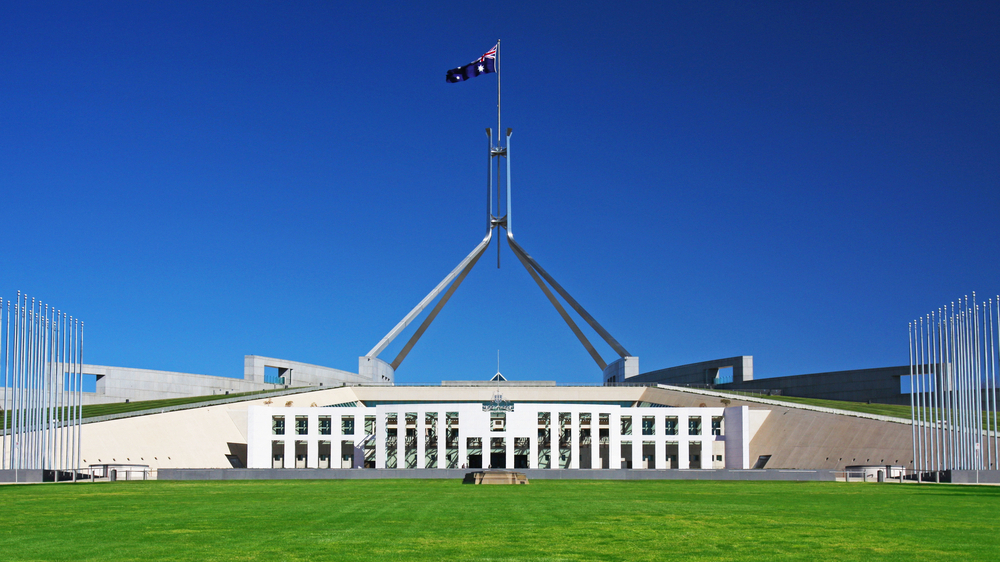
“We’re also strengthening the performance test, so our A$4.5 trillion super sector isn’t being discouraged from investing productive capital in areas like energy and housing”, he told the Australian Parliament.
Reforms ahead
Five days before the budget was presented, the Treasury opened a consultation, seeking feedback on what strengthening the test could look like.
Adjusting benchmark measurements to ‘reduce any unintended investment constraints, particularly for emerging and alternative assets’ is one of the explicitly stated objectives.
One option on the table is the CPI + X benchmark approach for such assets where X represents a margin above the consumer price index.
“The objective is to accommodate investments that are novel, evolving, or not yet widely adopted, and whose return characteristics are not well captured by existing market indices”, the consultation paper explains.
Climateworks Centre’s Cook sees the move in positive light. “We are supportive of proposed adjustments for emerging and alternative asset classes; particularly into investment thematics the Treasurer has outlined including renewable energy projects and venture capital”, he says.
Mixed signal
Reforming the test seems a necessary yet ultimately insufficient condition to catalyse climate solutions investments. Analysis from the Australian Sustainable Finance Institute, while welcoming the YFYS reforms, highlights its wider policy context.
“The government must also be willing to introduce risk-sharing and policy settings that make sustainable investments more commercially attractive”, the note reads.
To that end, the budget sent mixed signals to Australian asset owners. Alongside YFYS reforms, the budget incudes investment signals for some clean energy technologies.
Simultaneously, it has raised the prospect of higher capital gains tax affecting investment into renewables and omitted new funding for adaptation.
“With the Iran war disrupting energy supplies, it beggars belief that the government’s proposed changes to capital gains tax is putting up a ‘keep out’ sign for global investment into the renewables”, warns Frankie Muskovic, executive director of policy at Investor Group on Climate Change (IGCC), a network representing superannuation funds.
The YFYS performance test redesign reflects growing concerns over its effect on climate investing. The consultation – which closes on 19 June – is the latest in a five-year long debate over benchmark-based performance assessments down under.
Longview Networks: Institutional Investment Conferences and Summits