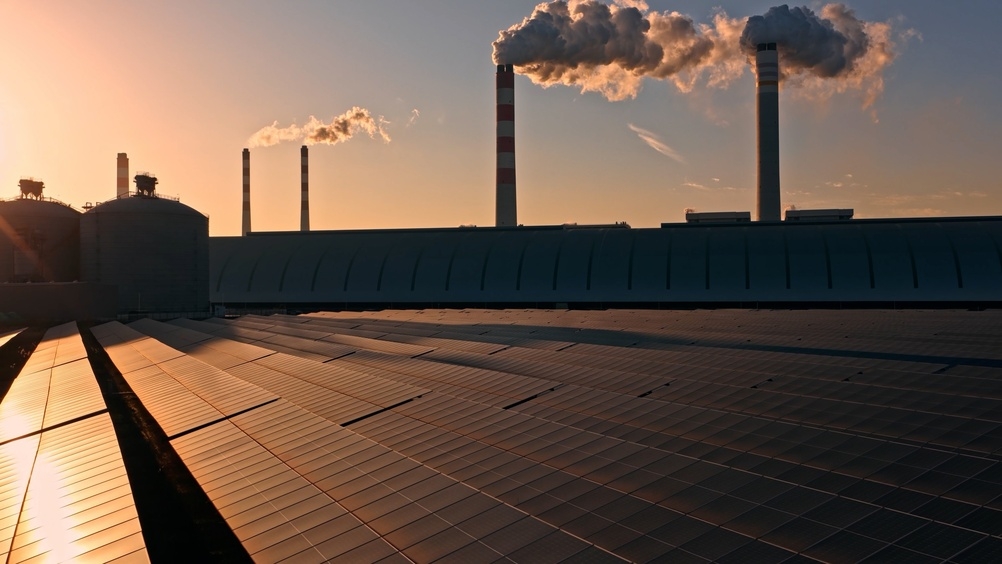
Is China finally kicking the coal habit?
New research from Ember suggests China’s energy transition is more structural than ever before
In the decade following the Paris Agreement, the global renewables buildout had a clear forerunner – China. By 2025, Beijing added nearly 1700 GW of wind and solar generation, equalling the scale of its entire power system in 2015.
Yet, for all their ferocity, China’s renewables rollout was always additional to its coal fleet. A coal power backbone has, over the years, been the lingering pinch of salt China’s energy transition came with.
NZI Transition and Climate Investment Conference | 22 October | London | Register here
Now, things are changing. Analysis from Ember, a think tank, shows the principle of additionality being replaced with deeper integration.
The breaking
Hitherto, Chinese leaders have embraced a philosophy of building the new before breaking the old. Ember’s research suggests China’s coal habit could now be breaking and 2025 was likely a turning point.
“You can see fossil fuel use flattening out, sector by sector and province by province”, says Miyu Yang, a senior analyst at Ember. Ember’s research found 17 provinces, collectively accounting for over 50% of China’s thermal power capacity, showed signs of coal generation flattening.
A lot of it had to do with a landmark pricing shift announced in February 2025. The change, which moved renewables from benchmark tariffs to market pricing, kicked in four months later. Developers, keen to latch on to benchmark pricing, commissioned projects faster than they otherwise would.
Consequently, for the first time in a decade, China’s coal use declined. All new power demand in 2025 was met by clean energy sources. In a historic first, China’s coal use declined alongside expanding power demand.
“Coal generation has also been flat on a 12-month rolling average since early 2024, which suggests 2025 was not a one-year anomaly”, the report concludes.
Going electric
With a supply-side shift now more structural than additional, the demand side equation is shifting too. Electrification is on the rise. Ember’s analysts tracked 11 industries, eight of which they reckon have already passed their fossil fuel peak.
“The declines are substantial: fossil fuel use is down 26% in food and beverages, 52% in transport equipment and 71% in fossil fuel extraction. Behind them is a steady deepening of electrification”, Ember’s research finds.
These shifts are drawing investor attention. Across the China climate fund universe, electrification is now a common theme. Take for instance BlackRock’s Systematic China Environmental Tech Fund. Its largest holdings include battery behemoth CATL, electric vehicle manufacturers Nio, Xpeng and BYD as well as the Beijing-Shanghai High Speed Railway Co – a partial play on electric railways.
Electrification also brings energy security benefits, Ember’s researchers point out. Few countries were as exposed to the Strait of Hormuz closure as China was. “A structurally declining need for oil reduces the exposure itself, a layer of security that is available to any economy dependent on imported fuels, not only to China”, the analysis suggests.
China potentially kicking its coal habit has global significance. For 25 years, over 50% of the world’s increase in oil demand came from China. That could change by the end of the decade. By 2030, Beijing has set its eyes on electrification potentially meeting 35% of energy consumption.
The data shows policy tailwinds yielding real-world change. Having reviewed the latest evidence, Ember reaches a sobering conclusion – ‘the peak is coming’.