Trump’s trade war unintentionally accelerated Toronto’s energy transition
A trail of city council documents reveals Mayor Chow’s push for electrification in response to US protectionism
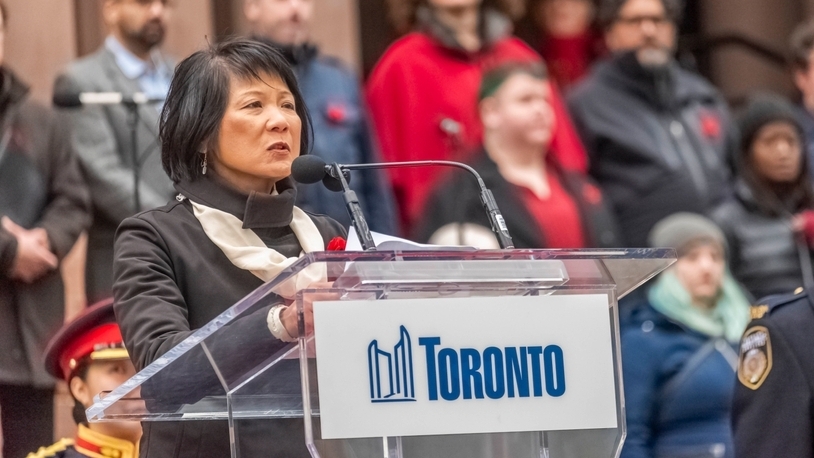
“Canada is facing a senseless and wasteful trade war”, opined Toronto mayor Olivia Chow nearly a year to date. In the months that followed, Chow – the first woman of Asian descent to hold the office – convened the city’s stakeholders to formulate a response.
Mayor Chow’s plan pulled on several levers. Cutting Toronto’s dependence on US fossil fuels and expediting the city’s net zero plans were key amongst them.
A trail of documents from Toronto city council meetings shows how Trump’s tariffs inspired a push to accelerate the city’s energy transition.
NZI Climate Solution Summit | 23 June | London | register here
Net Zero Toronto
In March 2025, Mayor Chow assembled an advisory ‘Economic Action Team’ as part of her response to Trump’s trade war. Ontario Municipal Employees Retirement System (OMERS) chief executive Blake Hutcheson was part of it. As was Brian Topp, chair of the city’s government-owned utility Toronto Hydro.
The mayor’s action plan recognised that President Trump’s tariffs were a short-term signal of a long-term shift.
“The rising tide of US protectionism may likely outlast the current US administration and require us to question the fundamental premises of our economic model. Stated plainly, a business model for the economy that is based on free access to the US market may not return”, the plan reads.
The mayor’s action plan, adopted by the city council months later, flagged concerns with Toronto’s dependence on US oil and gas for its energy needs.
Feedback followed. Bryan Purcell, vice president for policy and programs at The Atmospheric Fund – a regional climate agency – weighed in. In a letter dated July 2025, Purcell welcomed the idea and offered recommendations.
Recapitalising electric vehicle incentives, supporting heat pump adoption, electrifying city-owned buildings and removing zoning barriers for renewable energy installations were part of the advice.
Months later, in December 2025, the council adopted a new four year action plan aimed at implementing Toronto’s net zero by 2040 target.
The target itself was set back in 2021, two years after the city declared a climate emergency. The 2030 action plan draws into focus the largest source of Toronto’s carbon footprint – natural gas used for heating buildings.
TAF’s Purcell weighed in again. The plan, he cautioned, does not go far enough. His letter drew attention to a missing link – the building emissions performance standards. Reducing natural gas imports from the US, Purcell pointed out, was one of the benefits of adopting the standards.
Purcell saw the action plan as an opportunity to step up when other levels of Canadian leadership were taking a step back.
“Toronto cannot control the actions of other levels of government, which are presently stepping back from climate action. However, true leadership means continuing to lead even when others are abdicating their responsibilities”, his letter outlined.
Electrifying Toronto
This was not the only strategy document in the works. Purcell’s team at TAF – alongside Toronto Hydro – were working on a blueprint the mayor requested back in July 2025: the Electrification Advantage Report.
Earlier this month, the city council’s infrastructure and environment committee met again. The Electrification Advantage Report was on the agenda.
The report – itself part of the mayor’s push to cut US fossil fuel dependence – identified what the advantages of electrifying Toronto were and what progress depends on.
Top of its list of benefits is energy security. The report reveals ongoing efforts by Toronto Hydro to not only reduce procurement of inputs from the US but also review the feasibility or relocating manufacturing operations back to Canada.
Electrification, the report recognises, would not only decouple Canadian energy from geopolitical volatility but also make the system more resilient and affordable. Progress will require collaborative efforts across the system. Canadian policymakers, system operators and asset owners like OMERS all seemingly have a role to play.
OMERS presented an update to their climate action plan to the city council in the same meeting. In it, the fund outlined three reasons why it views climate change as a pressing concern. It is, by OMERS’ account, a systemic fiduciary imperative that impacts communities – including the ones governed by the council.
As the report’s recommendations move further towards adoption, progress will be closely monitored too. A report on the city’s net zero progress, in line with the electrification report, is expected each year.
The trail of Toronto City Council documents leading up to and including the Electrification Advantage Report show a newfound zeal for the city’s energy transition. It traces back to the mayor’s decision to respond to Trump’s trade war by reducing her city’s reliance on US fossil fuels.
Purcell’s April 2026 letter to the council, the latest in their correspondence, points out what Trump’s trade war has unintentionally achieved in Toronto: a visible, evidence-backed acknowledgement that Toronto’s energy transition can build what American dependence is eroding – energy security.
Longview Networks: Institutional Investment Conferences and Summits